
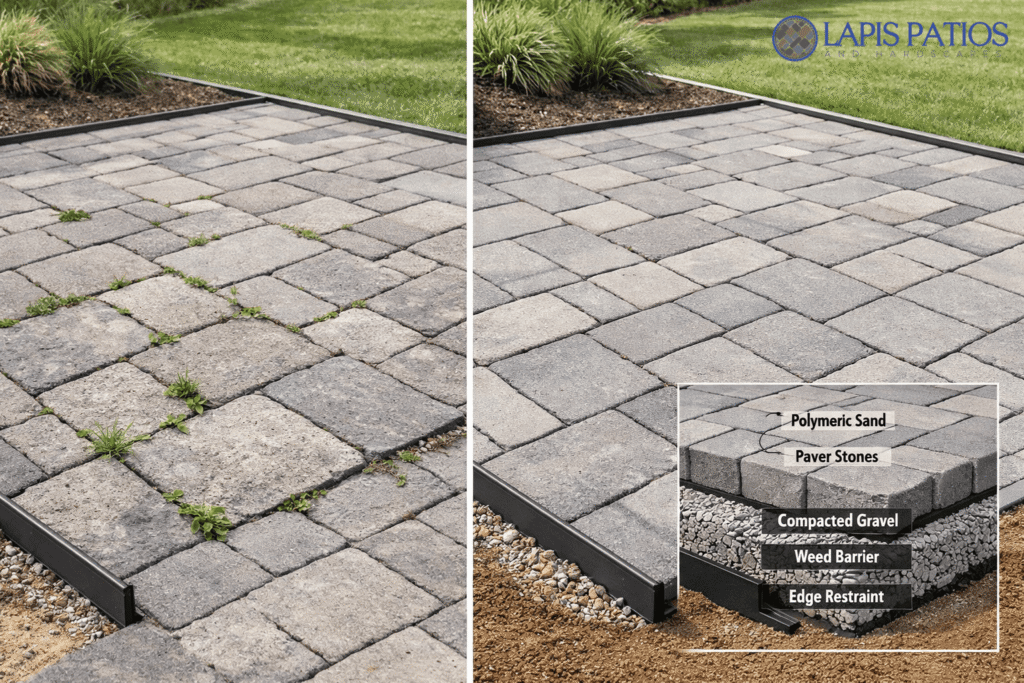
Learn how to prevent weeds on patios with smart installation methods and long-term hardscape strategies that stop regrowth for good.
Stop pulling weeds every spring. The real solution is simpler: build the patio right the first time. Weeds don’t break through stone. They sprout in the empty spaces between your pavers. A correct installation fills and seals those spaces with a solid, locked base that leaves weeds nowhere to grow.
For commercial properties, this isn’t a gardening issue; it’s a construction standard. At the Charlotte Premium Outlets, we use a process designed for heavy daily use and local building codes. It starts with digging down 8 to 12 inches, then compacting the soil and gravel in precise layers.
Finally, we lock the pavers in place with a specialized sand. This system lasts for years, while surface treatments fail in months. For developers and property managers in Charlotte, NC, here’s how a permanent solution works. Keep reading.
Weed Prevention Fundamentals for Long-Lasting Patios
- Weeds only grow where there is space and loose material for their roots.
- Excavating deep and compacting thoroughly removes the conditions weeds need to establish.
- Using polymeric sand and securing the patio’s edge creates a long-term barrier against weed growth.
Why Do Weeds Grow on Patios in the First Place?
Weeds don’t break through solid concrete. They grow in the spaces you give them. Airborne seeds land in the gaps between your pavers. A little dirt and moisture collect there, and that’s all a weed needs to start.
Studies show some weed seeds remain viable in soil for years, awaiting gaps and moisture (e.g., NCSU organic weed resources), just waiting for the right conditions. Even the best-built patio has tiny spaces where sand or dirt can gather. Seeds blow in from lawns, flower beds, or even from dust on outdoor decorations.
The main reasons weeds take over are simple:
- Dirt, leaves, and dust are building up in the joints
- Water that doesn’t drain away, keeping the gaps wet
- Cracks in concrete or pavers that slowly get wider
- Sand between the pavers that washes out over time
At places like the Charlotte Premium Outlets, the maintenance crews see this pattern. Weeds usually start because of dirt and water sitting on the surface, not because the patio is falling apart. That means stopping them for good requires more than just spraying what’s already grown.
How Does Proper Site Preparation Stop Weeds Long Term?
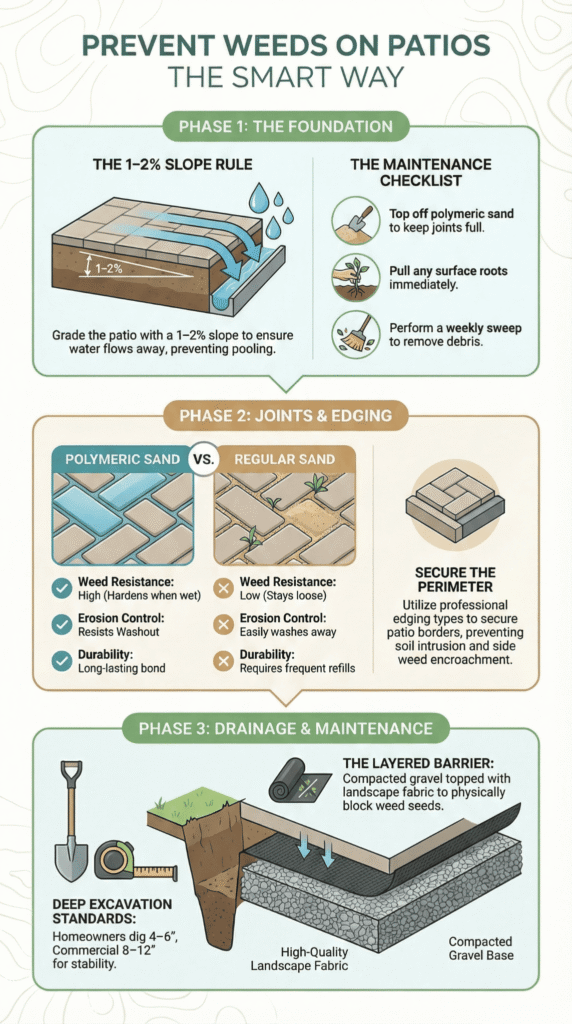
The best way to kill weeds is to never give them a place to live. That work happens before a single paver is laid. You have to dig deep, remove all the soft organic soil, and build a solid, compacted base.
For a commercial patio that gets heavy use, you need 6-12 inches for commercial/heavy use; homeowners need 4-6. A typical homeowner might only dig 4 inches, but that’s not enough for a shopping center or restaurant patio. According to industry guidelines, not digging deep enough is a leading cause of patio failure.
At Lapis Patios, our site preparation for clients in Charlotte follows a strict sequence. It’s designed to handle thousands of footsteps and to meet local building codes and HOA requirements.
Here’s the commercial process:
- Strip away all organic topsoil.
- Compact the exposed earth until it’s rock-solid.
- Excavate to a total depth of 8–12 inches.
- Add and compact a 4–6 inch layer of gravel, following proper gravel patio installation standards that focus on density and load distribution.
- Top it with a 1–2 inch layer of leveling sand.
A base built this way doesn’t shift or settle. If the pavers don’t move, gaps don’t form. No gaps means no place for seeds to take root. For a property manager or developer, this upfront investment cuts way down on future maintenance costs and complaints. The fight against weeds is won with a shovel, not a sprayer.
Is Landscape Fabric Necessary Under a Patio?
Yes, but it has to be installed correctly. A good landscape fabric acts as a physical barrier, stopping weeds from growing up from the soil below while still letting water drain through. The trick is making sure there are no gaps for weeds to sneak through.
UF extension notes fabric can block weeds if installed seamlessly, but may clog/degrade long-term; best with a proper base. For a commercial project, we lay a heavy-duty woven fabric over the compacted dirt before any gravel goes down. Every seam must overlap by at least 6 to 12 inches, and we seal any cuts made for drains.
A proper fabric install means:
- Using a strong, commercial-grade woven fabric
- Overlapping all seams by 6–12 inches
- Minimizing cuts and sealing any you must make
- Ensuring it stays permeable so water can drain
In the Charlotte area, this layer is part of a system. It helps stop weeds from below, but it won’t fix problems caused by a bad base or poor drainage. In fact, a fabric installed poorly can trap water and cause new issues like moss. It’s one important piece, not the whole solution.
Why Is Polymeric Sand More Effective Than Regular Sand?
Credits: The Self Made Man
Regular sand just fills the space. Polymeric sand locks it shut. When you wet it, the polymers activate and harden, gluing the pavers together and creating a joint that’s tough for weeds and weather to break apart.
Polymeric sand significantly resists joint erosion and washout compared to regular sand, per industry sources. For a property manager, that means far less maintenance. The difference is clear when you compare them side-by-side.
| Feature | Regular Sand | Polymeric Sand |
| Hardens when wet | No | Yes |
| Washes out easily | Yes | No |
| Stops weeds | A little | Very well |
| Needs frequent refreshing | Yes | Rarely |
| Locks pavers in place | No | Yes |
To get these results, the installation has to be right. The joints must be completely clean and dry before the sand goes in. We use a pressure washer between 1500 and 3000 PSI to blast out every bit of dirt.
This step follows proven patio pressure washing tips that protect the joint structure while removing debris that allows weeds to return. Maintenance guidance from the Royal Horticultural Society (RHS Advice) reinforces this principle:
“Repoint paving to fill gaps, use a chisel and stiff brush to remove any loose pointing, then fill gaps with a dry mortar mix or ready-made jointing compound.” – Royal Horticultural Society (RHS Advice)
Common mistakes that cause it to fail include applying it on a damp day, leaving old debris in the joints, or using too much water when activating it.
Some property managers reach for strong chemical weed killers when weeds appear. Those sprays kill what’s there but don’t fix the loose joint that let the weed grow in the first place. Polymeric sand fixes the structure. For commercial patios in Charlotte that see constant use, stabilizing the joint is the only reliable, long-term strategy.
How Do Edging and Perimeter Control Prevent Weed Intrusion?
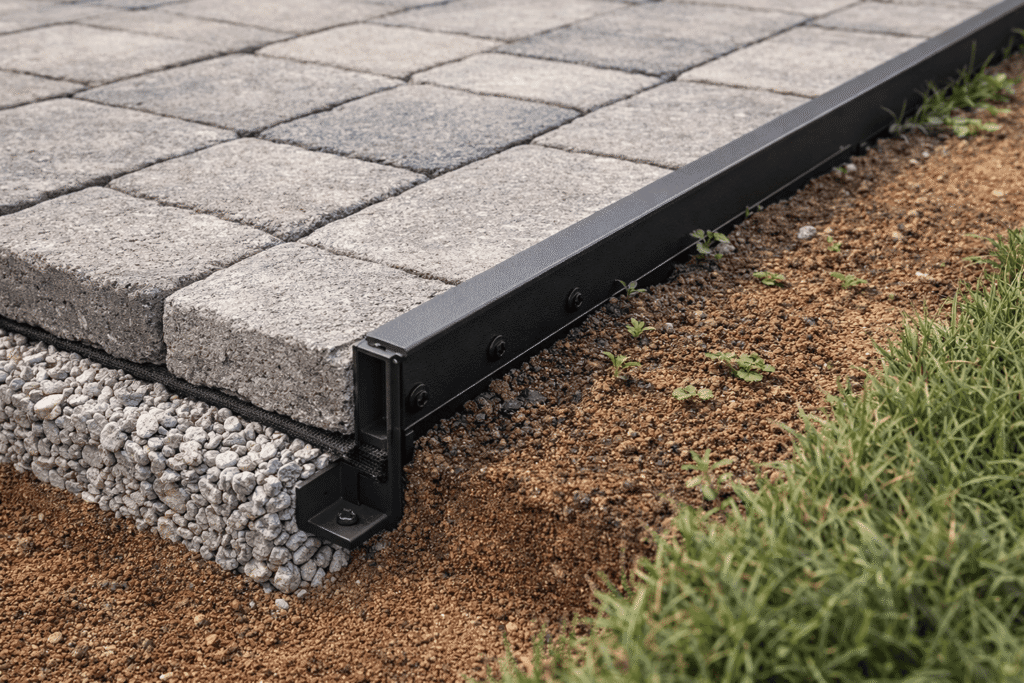
If the edge of your patio fails, the whole thing starts to come apart. A solid, rigid border keeps the patio locked in place and stops dirt, mulch, and grass from creeping into the joints. Once that organic material gets in, weeds follow.
Industry reports show that edge failure is one of the main reasons patios begin to shift and fail within just a few years. The perimeter isn’t just for looks; it’s a crucial part of the structure.
Proper edging for a commercial site involves:
- Using buried concrete or steel restraints
- Locking the border pavers securely in place
- Creating a barrier against soil creeping from lawns or beds
- Protecting the sand in the joints from being washed or pushed out
Without this control, soil slowly invades the gaps between your pavers. That soil brings weed seeds and nutrients. For property managers in Charlotte, a proper edge is non-negotiable for meeting long-term HOA standards and avoiding constant repairs.
Does Drainage and Grading Affect Weed Growth?
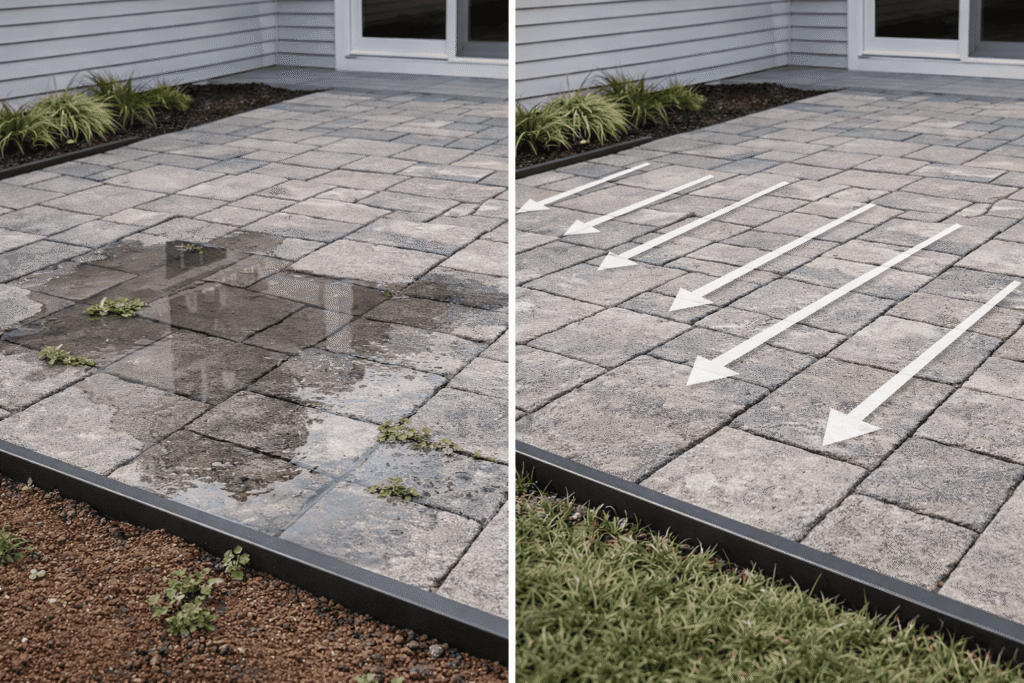
Water that sits on your patio doesn’t just look bad. It creates the perfect home for weeds, moss, and algae. A slight slope is all it takes to guide that water away.
The EPA highlights proper grading as a basic requirement to prevent pooling water in any built area. Where water stands, it breaks down the sand in the joints and lets organic matter build up. That moist, dirty gap is exactly where a weed seed will sprout.
Getting drainage right means:
- Building on a 1–2% slope away from buildings
- Adding channel drains in problem areas
- Connecting to dry wells or other drainage systems when needed
- Checking for puddles after a heavy rain
Even the best paving stones will grow a slippery algae film if they stay wet. That film traps dust and leaves, which then turn into soil. For a commercial property, the drainage plan is a weed prevention plan. Managing water and stopping weeds are the same job.
Should You Seal a Patio to Reduce Weed Growth?
Sealing can help, but it’s not a magic fix. A good sealer locks the sand in the joints and makes the surface less absorbent, so water and seeds don’t soak in as easily. This can slow down weed growth.
Most sealers need to be reapplied every two to three years, especially in high-traffic commercial areas. They work best as part of a maintenance plan to keep the patio looking new and cut down on cleaning.
The benefits of sealing are:
- It reduces how much water soaks into the pavers and joints
- It makes the patio more resistant to stains
- It helps hold the joint sand in place
But sealing has limits:
- It’s a recurring expense and task
- It can damage some types of natural stone
- It will not fix problems caused by a bad base or poor drainage
For a shopping center or apartment complex, sealing is often a smart step to maintain appearance with less frequent power washing. Just don’t expect it to replace a well-built foundation.
What Ongoing Maintenance Actually Works?
Good maintenance is simple and consistent. Strong patio maintenance habits stop small problems before they get big. According to local experts, pulling a weed before it drops seeds is the single most effective thing you can do to reduce future growth. As noted by Purdue University’s College of Agriculture,
“The best strategies for controlling weeds in the home garden and landscape include mulching, hand-pulling, using tools such as the hoe and rototiller, and preventing existing weeds from going to seed.” – Purdue University’s College of Agriculture
For a property manager, an effective routine includes:
- Sweeping the patio weekly during the fall to clear leaves and dirt
- Pulling weeds out by the root, not just cutting the tops off
- Adding fresh polymeric sand to any spots where it has washed away
- Using a pre-emergent herbicide very carefully, if at all
Some people try home remedies like pouring boiling water, vinegar, or baking soda on weeds. These might kill the leaves you see, but they rarely kill the deep root. The weed usually grows back.
The real secret to low maintenance is in the original construction. A patio built with a deep, compacted base, proper edging, and polymeric sand can reduce weeding work by 90% compared to a poorly built one. Your time is better spent on a quality install than on choosing a spray.
FAQ
How can I stop weed growth between paving slabs long-term?
Weed growth begins when airborne seeds settle into loose jointing sand and moist gaps. To achieve long-term weed control, install a compacted gravel base, a proper weed barrier, and landscape fabric during paver installation.
Fill joints with polymeric sand or joint stabilizing sand so the material hardens and locks tightly. Apply a paver sealer to reduce moisture penetration and limit future weed population.
Does boiling water or white vinegar really help kill weeds?
Boiling water can kill weeds on contact by damaging plant tissue, but it rarely eliminates perennial weeds because the roots remain alive. A white vinegar or vinegar solution mixed with dish soap in a spray bottle can dry out small weeds.
However, these methods provide temporary weed control and do not replace pre-emergent weed control or proper jointing compound in paving stones.
What is the best joint material for brick paver patios?
For brick pavers, brick patios, and brick paver patios, polymeric sand or paver locking sand provides stronger joint stability than loose jointing sand. These materials harden after activation with water and reduce weed growth by sealing gaps.
In some cases, patio grout, latex-based grout, or permeable jointing compounds are used. Proper joint material protects structural integrity and reduces ongoing weed control needs.
Can pressure washing damage paving stones or concrete cracks?
Pressure washing and power washing remove dead foliage, dirt, and buildup from paving stones effectively. However, excessive pressure can widen concrete cracks and displace jointing sand between large or small pavers.
Always use controlled pressure settings and avoid directing water straight into joints. After cleaning, refill joints and apply paver sealer to maintain structural integrity and reduce weed growth.
Should I use chemical weed killers on stone slabs and natural stone?
Chemical weed killers can reduce a heavy weed population, but improper use may stain natural stone and stone slabs. Some chemical weed killers may also affect nearby container shrubs and decorative outdoor items.
Remove dead foliage with a garden fork before treatment. Combine chemical methods with landscape fabric, a weed barrier, and proper paver installation for more reliable long-term weed control.
Build It Right: The Permanent Solution to Patio Weed Growth
Weeds don’t start on the surface. They rise from what was ignored beneath it. In Charlotte, shortcuts show up fast, cracks, stains, and green lines that drain value.
Commercial-grade installation stops weeds at the source with a compacted base, geotextile separation, locked joints, and proper drainage. Build it right once, and your patio protects curb appeal, safety, and long-term ROI.
Stop paying for repeat fixes. Invest in a commercial patio installation that’s built to resist weeds from day one. Partner with a proven team serving Charlotte and Lake Wylie to secure durable results, clear timelines, and 5-star workmanship that stands up to heavy use and scrutiny.
References
- https://www.rhs.org.uk/weeds/weeds-on-hard-surfaces
- https://www.purdue.edu/hla/sites/yardandgarden/wp-content/uploads/sites/2/2016/10/HO-217.pdf