
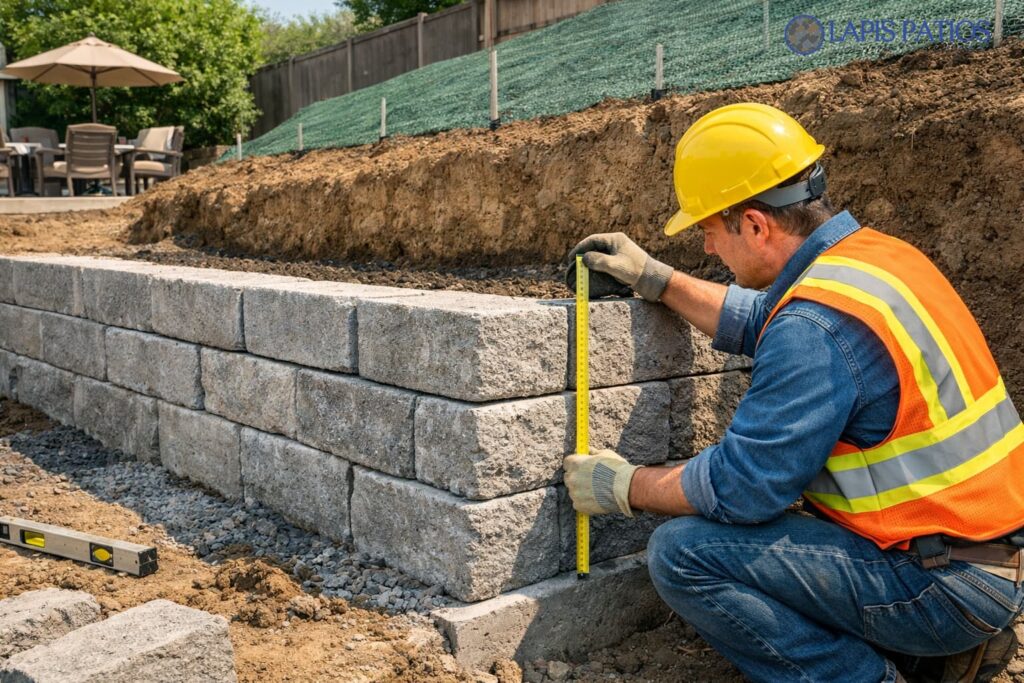
Understand retaining walls design cost and construction so you can plan patios slopes and large projects with accurate budgets and fewer surprises.
Retaining walls support soil, control drainage, and make sloped land usable for commercial builds. In Charlotte, NC, they are a standard part of patios, walkways, and large hardscape projects where stability and code compliance matter. Developers and property managers work with experienced contractors like Lapis Patios to handle design, permits, and construction at scale.
A well-built wall does more than hold back earth. It protects structures, manages water, and keeps sites functional over time. From material choice to drainage planning, every detail affects performance, cost, and lifespan.
Keep reading for a clear breakdown of how these systems are built and what to expect.
Retaining Wall Essentials
- Retaining walls need engineered plans, proper drainage, and strict code compliance to remain stable over time.
- Commercial projects often use reinforced systems such as segmental retaining walls or poured concrete.
- Most failures come from poor drainage and weak base preparation.
Retaining Wall Materials
Material choice affects strength, lifespan, and how the wall fits into the rest of the site, especially when selecting retaining wall materials for commercial applications.
Concrete block systems are the standard for commercial work. Segmental walls can reach over 20 feet when engineered and reinforced. They handle pressure well and allow flexible layouts across large sites.
Natural stone costs more and takes skilled crews to install. It is often used in visible areas like hospitality patios or HOA communities where appearance matters.
Poured concrete is used for heavy-duty applications. It works best for straight runs, structural walls, and multi-level retail or commercial builds.
Common options include:
- Concrete block systems (segmental or CMU)
- Natural or cut stone
- Timber (short lifespan, often 15–20 years)
- Poured or cantilever concrete walls
Material selection should match soil conditions, wall height, and local building codes in North Carolina. On commercial projects in Charlotte, Lapis Patios plans these choices early to avoid costly changes later.
Retaining Wall Design
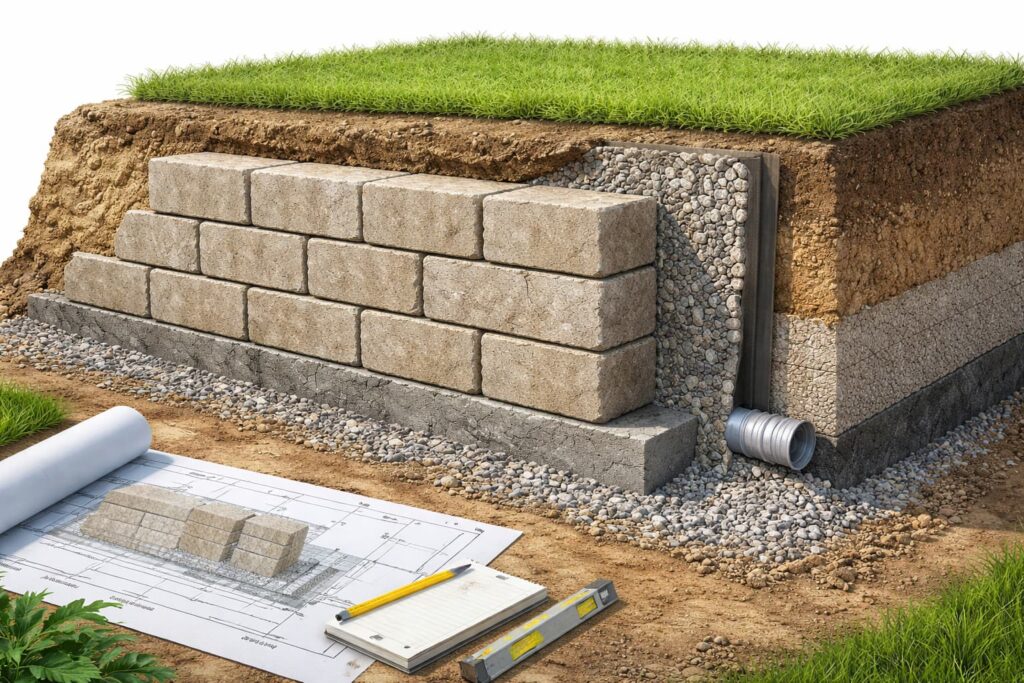
Design starts with engineering, not appearance, since proper retaining wall design determines long-term stability and drainage performance. The wall must handle soil pressure, water flow, and site use.
In a recent analysis by the Chester County Planning Commission
“Ideally, with any development, all site improvements should be planned to harmonize and accentuate the natural features of a site. Development should fit the topography… so that grading and other site preparation, such as retaining walls, is minimized.” – Chester County Planning Commission
Most commercial designs follow established masonry standards and include load calculations before construction begins. This is where many smaller contractors fall short.
In real projects, retaining walls tie into the full site plan:
- Paver patios and walkways
- Outdoor seating areas
- Landscape beds and lighting
On sloped properties, crews often build several shorter walls instead of one tall wall. This reduces pressure and creates usable levels for tenants and foot traffic.
Key factors include:
- Soil type, especially clay vs sand
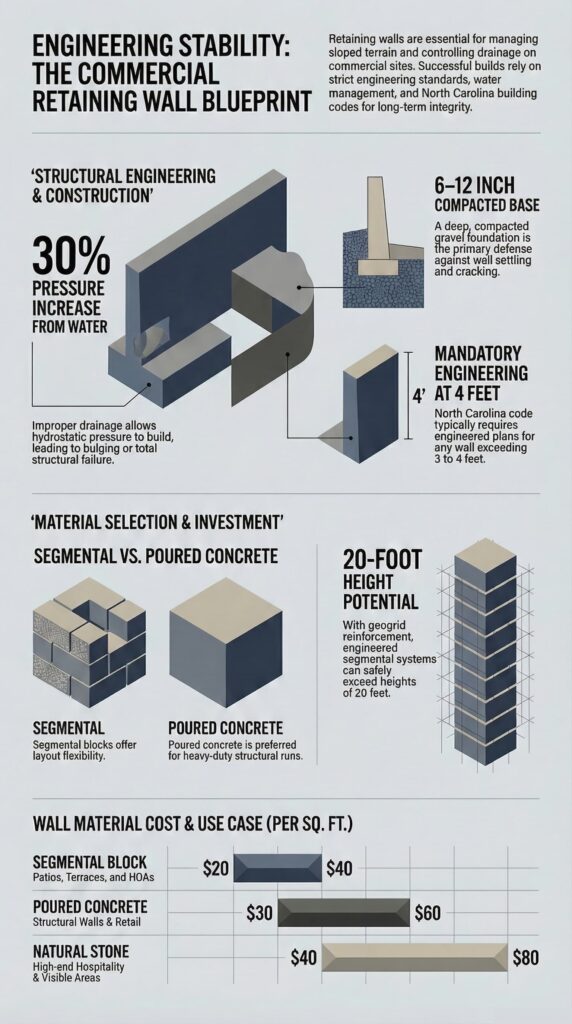
- Wall height, with engineering often required above 3–4 feet
- Load from vehicles, buildings, or heavy use
- HOA rules and Charlotte permitting requirements
Lapis Patios designs with these limits in mind, so projects move from plan to build without delays.
Retaining Wall Construction
Construction quality decides whether a wall lasts decades or fails in a few years, which is why experienced crews focus heavily on retaining wall construction standards.
The process starts with excavation. Crews remove weak soil and cut the slope back to make room for the base and drainage.
A compacted gravel base, usually 6–12 inches deep, supports the wall. Poor compaction is one of the most common failure points.
Typical steps include:
- Excavation and grading
- Compacted aggregate base
- First course set below grade
- Layered backfill with gravel
- Reinforcement for taller walls
For commercial builds, reinforcement is standard. This may include geogrid, anchors, or structural concrete systems depending on the height and load.
Mistakes during this phase lead to bulging, cracking, or full failure within a few years. That is why developers in Charlotte rely on experienced crews like Lapis Patios for large-scale work.
Retaining Wall Cost
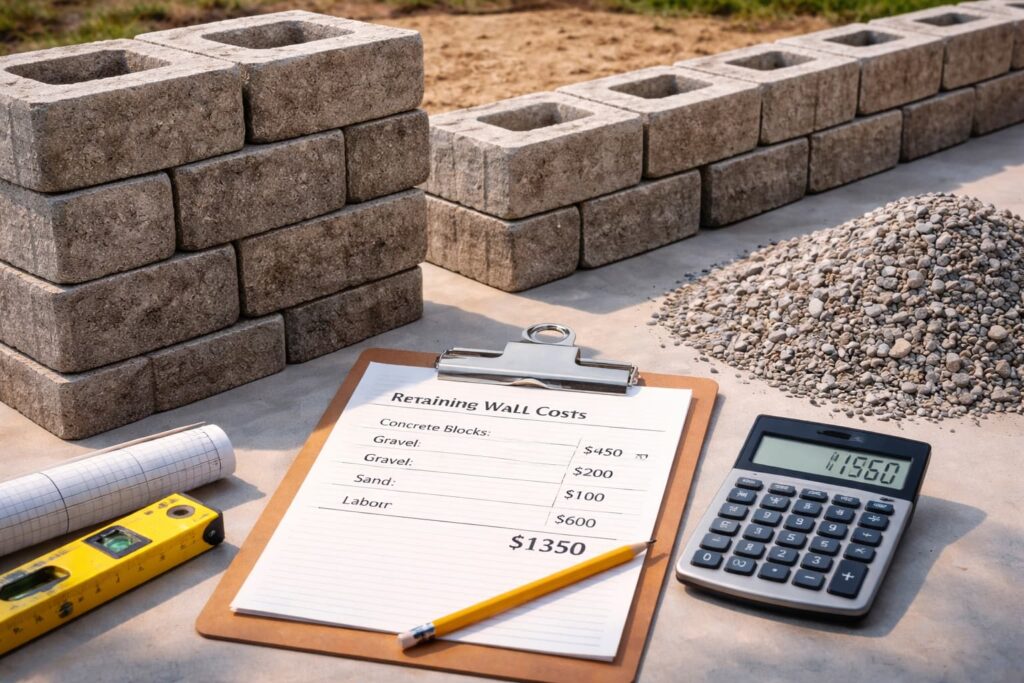
Costs depend on size, materials, and site conditions, with retaining wall cost varying significantly between residential and commercial projects. Commercial projects vary widely, but there are clear ranges.
- $40–$120 per linear foot for standard segmental walls
- $20–$53 per square foot based on height and reinforcement
- Large commercial builds often exceed $50,000 for multi-tier systems
Typical ranges by wall type:
- Segmental block: $20–$40 per sq ft, used for patios and terraces
- Poured concrete: $30–$60 per sq ft, used for structural walls
- Natural stone: $40–$80 per sq ft, used for high-end spaces
- Reinforced systems: $50+ per sq ft, used for large commercial sites
Costs increase with wall height, poor soil, complex drainage, and required engineering.
Planning early helps control costs. Lapis Patios works with developers and property managers across Charlotte to build walls that meet code, pass inspections, and hold up long term.
Gravity Retaining Walls
Gravity retaining walls hold back soil using their own weight. They work best for shorter walls and simple layouts.
Most stay within 3–4 feet unless reinforced. Beyond that height, soil pressure increases fast, and heavier systems are needed.
These walls are usually built with:
- Concrete blocks
- Stone masonry
They cost less and install faster than reinforced systems. Still, they have limits. They are not suited for steep slopes, heavy loads, or commercial sites with traffic and structures nearby.
For larger projects in Charlotte, Lapis Patios rarely relies on gravity walls alone. Most commercial builds need added reinforcement and engineering.
Segmental Retaining Walls
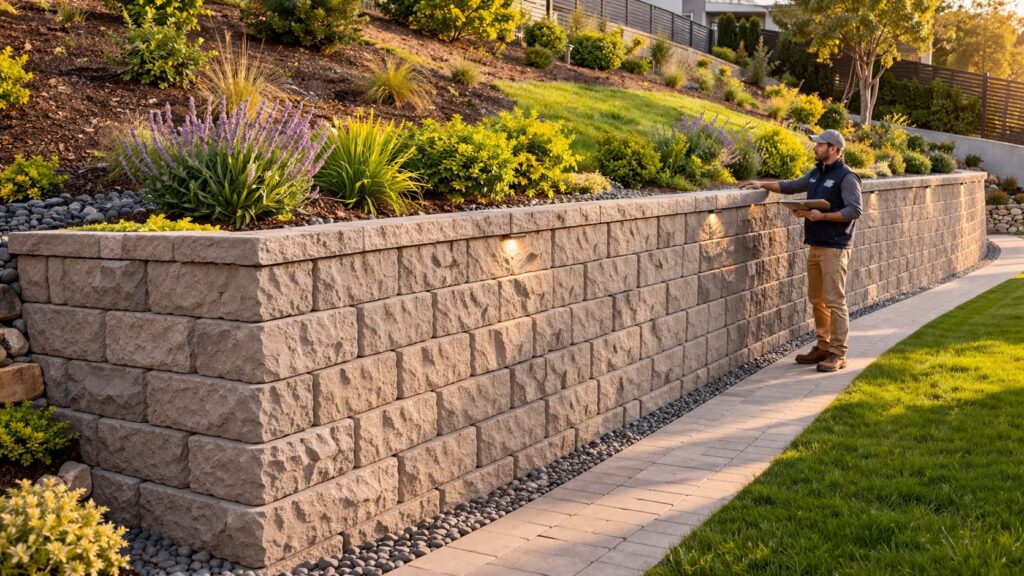
Segmental retaining walls handle larger, more complex projects. They use precast concrete blocks that lock together and form a stable structure.
With geogrid reinforcement, these walls can exceed 20 feet when properly engineered. That makes them a common choice for commercial work.
You will see them in:
- Commercial patios
- Retail developments
- HOA-managed communities
They allow curved layouts, tiered designs, and built-in seating. They also pair cleanly with paver patios and walkways.
Even with their flexibility, these walls still require engineering for load-bearing conditions. This includes areas near parking lots, buildings, and high-traffic zones. Lapis Patios handles these details to meet Charlotte code requirements and pass inspection.
Retaining Wall Drainage
Proper retaining wall drainage controls pressure behind the wall. Without it, water builds up and pushes the wall forward.
Water can increase pressure by more than 30 percent. That alone can cause failure, even in well-built walls.
A proper system includes:
- Perforated pipe at the base
- Gravel backfill, at least 12 inches deep
- Filter fabric to keep soil out
- Outlets to move water away
Drainage issues often lead to:
- Bulging or leaning walls
- Cracks and settling
- Full structural failure
Clay-heavy soil in the Charlotte area makes drainage even more important. Lapis Patios designs each system based on site conditions, not a standard template.
Retaining Wall Maintenance
Most commercial retaining walls need little upkeep if built correctly, though regular retaining wall maintenance helps prevent costly structural issues. Still, regular checks help avoid major repairs.
Annual inspections should cover:
- Cracks, bulges, or movement
- Block alignment and surface changes
- Drainage outlets and water flow
- Nearby landscaping and root growth
Walls can last over 50 years with proper care. Problems usually start small, then grow if ignored.
Property managers and developers in Charlotte often rely on Lapis Patios for both installation and long-term performance. Routine oversight keeps the structure stable and protects the investment.
Retaining Wall Benefits
The retaining wall benefits become clear when sloped ground is transformed into usable space while controlling soil and water. For commercial sites in Charlotte, they are often required to meet grading plans, safety standards, and code requirements.
Research from the International Journal of Advance Research in Science and Engineering (IJARSE) shows
“Retaining walls are often used for grade changes, and for other functional reasons such as widening driveways, walkways or creating more space in an outdoor area.” – IJARSE
They allow developers and property managers to build patios, walkways, and outdoor areas where flat ground does not exist. Without them, much of that space would go unused.
Key benefits include:
- Erosion control and slope stability
- Better stormwater flow and drainage control
- More usable square footage for tenants and visitors
- Stronger property value and cleaner site layout
On commercial projects, retaining walls often serve more than one purpose. They can act as built-in seating, define outdoor dining areas, or support raised planter beds.
Design and construction must match the demands of the site. Load conditions, drainage, and local codes all factor into how the wall performs over time. Lapis Patios builds these systems for long-term use, with a focus on large-scale projects, HOA compliance, and Charlotte-area regulations.
FAQ
How does a Gravity Retaining Wall help prevent soil erosion?
A Gravity Retaining Wall uses its weight to hold back soil and prevent soil erosion on sloped land. Property owners often choose Gravity walls made from concrete blocks, reinforced concrete, or natural stone because these materials provide strong support.
Proper drainage systems and Weep holes help reduce water pressures behind the wall. Good soil conditions and the correct safety factor also help the retaining wall stay stable for many years.
What should Property owners consider before building a tiered retaining wall?
Property owners should study the soil conditions and slope before building a tiered retaining wall. A strong design improves safety, drainage, and curb appeal at the same time. Many homeowners add native plants, Rock Gardens, concrete planters, or a vertical garden between the wall levels. A landscape architect may also design spaces for a water feature, outdoor kitchen, or FIRE PITS to create a more comfortable outdoor area.
When do contractors use steel retaining walls or sheet pile wall systems?
Contractors use steel retaining walls and sheet pile wall systems in areas with weak soil or limited space. These systems help control active earth pressure, passive earth pressure, and surcharge loads near roads, buildings, or waterfronts.
Large projects may also require an anchored retaining wall, diaphragm wall, or bored pile retaining wall for additional support. Engineers carefully check bearing capacity and water pressures before construction begins.
Why do retaining wall inspections matter in New York State?
Retaining wall inspections help identify structural problems before they become dangerous. In New York State, some retaining wall structures must follow NYC Construction Codes and NYC Administrative Code requirements. The Department of Buildings may require a condition assessment report during each inspection cycle.
A Qualified Retaining Wall Inspector, licensed professional engineer, or registered architect checks the wall for cracks, drainage problems, and weak soil conditions that could affect safety.
Which materials work best for a garden retaining wall?
A garden retaining wall can be built with natural rock, gravity stone, Precast Concrete, cinder block, or gabion wall systems. The best material depends on the project budget, soil conditions, and landscape design goals.
Some builders also use reinforced soil, mechanically stabilized earth, cellular confinement systems, or the soil-retaining mesh TR2 system for extra erosion control. These materials can improve durability, reduce maintenance needs, and create long-term cost savings.
Built for Stability, Backed by Experience
When retaining walls fail, you deal with shifting soil, drainage issues, and costly repairs that slow down your entire project. It adds risk. In commercial settings across Charlotte, that kind of delay affects timelines, budgets, and compliance with HOA and local building codes.
Lapis Patios offers a straightforward path forward with engineered solutions designed for long-term performance and large-scale demands. From planning to execution, you get a team that understands site conditions and code requirements. Start with a retaining wall consultation and move your project ahead with confidence.
References
- https://www.chescoplanning.org/MuniCorner/eTools/74-RetainingWalls.cfm
- https://www.ijarse.com/ADMIN/admin/postimages/images/fullpdf/1490729358_GS261ijarse.pdf