
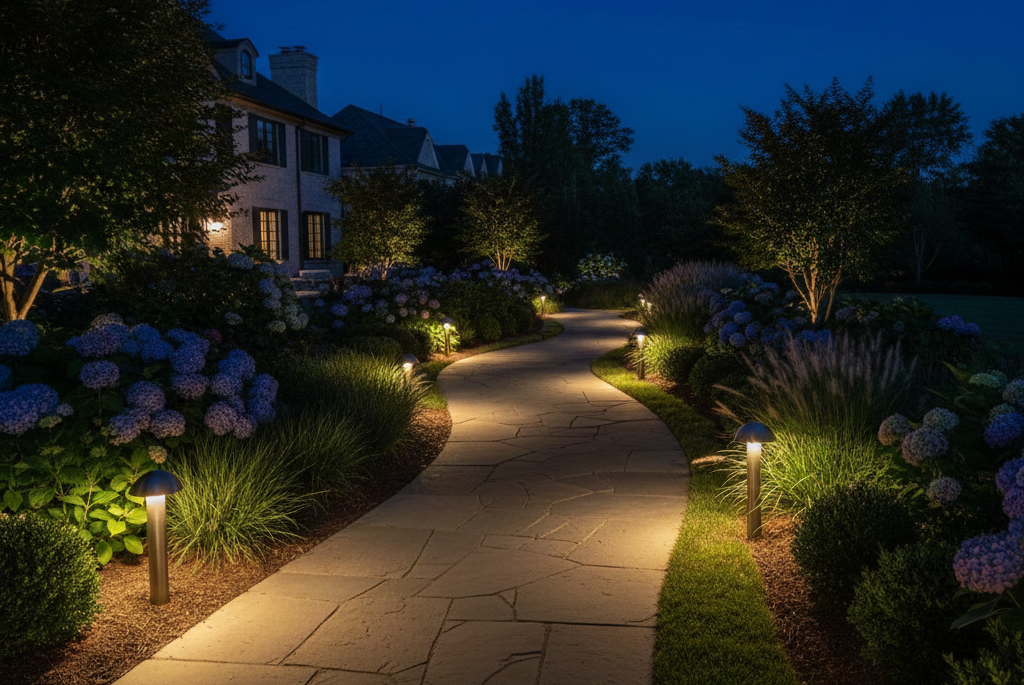
Lighting for garden paths helps prevent stumbles and adds a warm, welcoming glow. This guide shows how to light paths safely and beautifully.
The most straightforward answer is that garden path lighting prevents trips on uneven surfaces and deters unwanted visitors, all while making the garden usable and beautiful after dark. It is a simple upgrade with a significant impact.
For Charlotte residents dealing with clay-rich soil that can shift and create subtle tripping hazards, this illumination is not just decorative, it is a safety essential. The key is choosing fixtures and a layout that complement the garden’s style without creating harsh glare, while also working in harmony with nearby patio lighting so the entire outdoor space feels connected after dark.
The following sections walk through the options, from easy solar stakes to more permanent low-voltage systems, helping create a path that is both safe and stunning. Readers can continue on to find the perfect light for their walk.
Key Takeaways
- Safety First: Proper lighting eliminates dark spots and highlights potential trip hazards on uneven paths.
- Choose Your Power: Solar lights offer easy installation, while low-voltage LED systems provide brighter, more reliable illumination.
- Design with Light: Strategic placement and warm-toned bulbs create ambiance without disturbing the natural evening environment.
Understanding Your Lighting Options
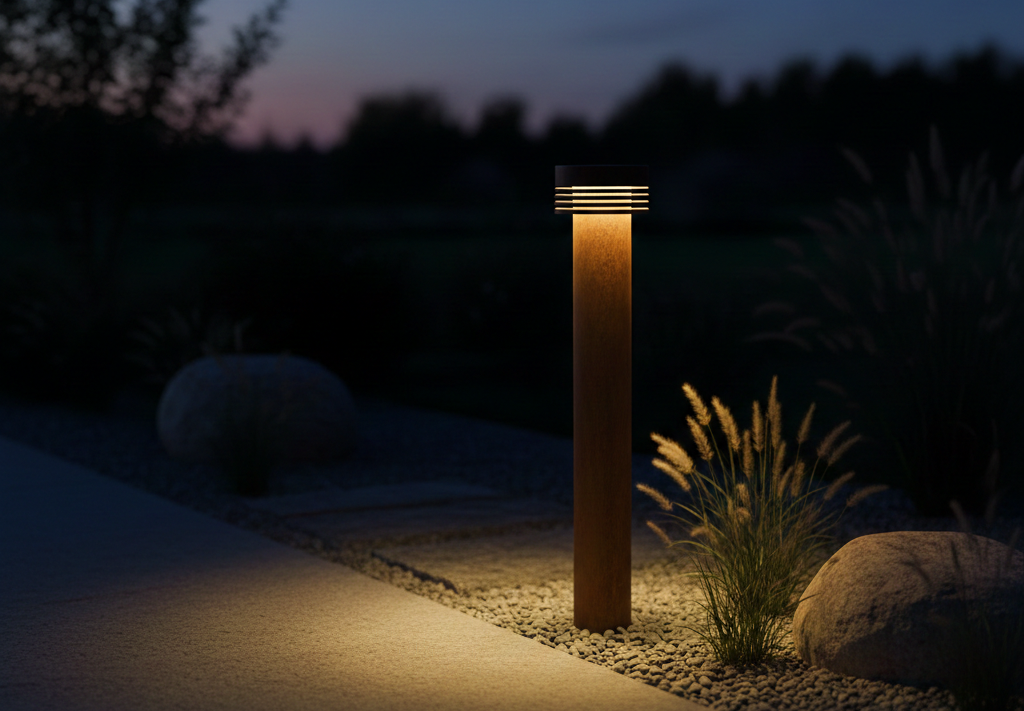
Path lighting is not one-size-fits-all. The fixtures selected set the tone for the entire garden. Pathway lights are the most common choice, providing a soft, downward glow that marks the way without being intrusive. They often have hat-like tops to shield the bulb, reducing glare for a more comfortable experience.
Bollard lights stand a bit taller, usually around two to three feet high, casting a wider pool of light. They work well for defining the edges of a straight path or a driveway. For a more minimalist look, in-ground or recessed fixtures are installed flush with the pavement or surrounding soil. These create a sleek, modern effect, washing light across the surface of the path itself.
Directional lights can be mounted on short stakes or even in trees. They allow the beam to be aimed precisely, perhaps to cross-light a textured flagstone path or to graze the edge of a planting bed. Each type serves a different purpose, and many gardens benefit from a mix. Thoughtful path illumination works best when it supports a wider plan, including layered patio lighting for outdoor spaces that balances safety with atmosphere.
Path Lights: Low-level, diffused light for general guidance
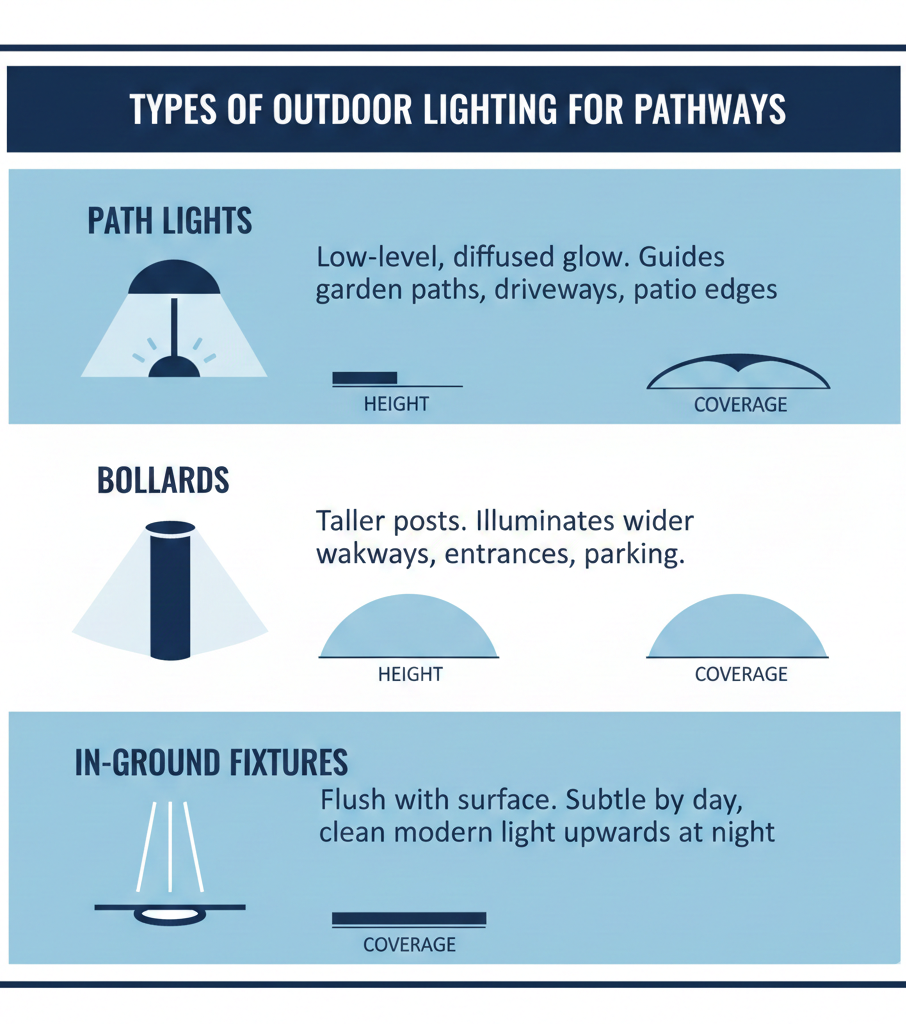
Path lights always feel a bit humble. They sit close to the ground and give off a gentle, low glow that guides your steps instead of flooding the whole yard.
You see the path clearly, but your eyes are not hit with harsh light, so walking feels calm, almost quiet, an effect often achieved through thoughtful creative garden lighting designs that prioritize mood over brightness. These lights work well along:
- Garden paths
- Driveways
- Patio edges
Bollards feel more deliberate. They are taller, more like small posts that mark where to go and where not to go. Because the light starts higher, it reaches a wider area, so they suit:
- Wider walkways
- Building entrances
- Parking areas
In-ground fixtures are the most subtle of the three. They sit flush with the surface, so during the day, you barely notice them. At night, they send light upward or across the ground, and the scene feels clean, modern, almost invisible gear doing visible work.[1]
Powering Your Path Lights
| Power Type | Installation Effort | Brightness Consistency | Best For | Key Considerations |
| Solar Path Lights | Very Easy (DIY) | Low to Medium | Sunny yards, quick upgrades | Performance drops in shade and winter |
| Low Voltage LED | Moderate | High and Reliable | Most residential paths | Requires transformer and wiring |
| Mains Voltage | Professional Only | Very High | Large commercial areas | Higher cost, electrician required |
The power source is the real engine of path lights, and this choice shapes everything else.
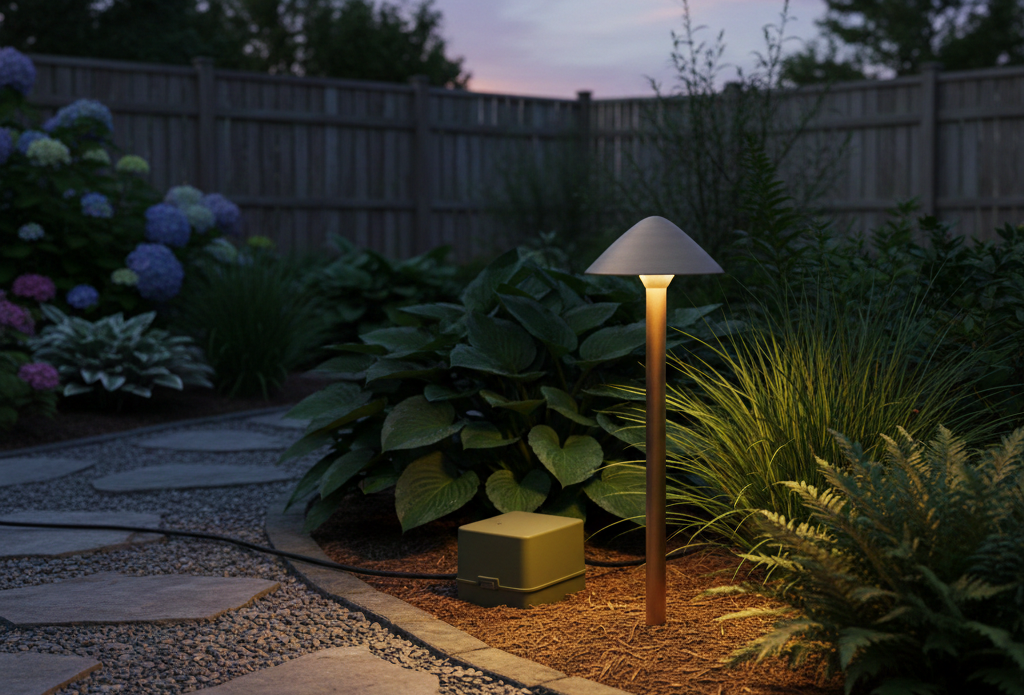
Solar-powered lights are simple and DIY-friendly.[2] No wiring is needed, just push the stake into the ground. They are energy-efficient and work well if the yard gets good sun. But in Charlotte, with tall trees and shady spots, they may not charge fully, especially on short, cloudy winter days, so brightness can be weak and inconsistent.
Low-voltage LED systems are often the professional favorite. They use a transformer to step household current down to a safe 12 volts, with cables run underground to each fixture. Installation takes more effort, but the result is steady brightness, energy efficiency, and the ability to power more fixtures from one transformer.
Mains voltage systems are the brightest but usually unnecessary for a garden path and require a licensed electrician, so for most homes it comes down to solar convenience versus low-voltage reliability.
Reliable lighting keeps paths usable well into the evening, making it easier to reach seating areas furnished with the best outdoor patio furniture sets without navigating dark or uneven ground.
Designing Your Illuminated Path
Credits: Neil Sutcliffe Garden Designer
| Design Element | Recommended Range | Purpose |
| Fixture Spacing | 6–8 feet apart | Avoid dark gaps and runway effect |
| Distance from Path Edge | 1–2 feet | Even light spread without glare |
| Light Output | 50–100 lumens | Comfortable visibility |
| Colour Temperature | 2700K–3000K | Warm, inviting ambiance |
Installing lights is one step, but placing them well is another. Good design is what turns a basic path into one that feels almost magical at night.
The “runway effect,” where lights are perfectly mirrored on both sides, can feel harsh. Instead, fixtures are usually spaced about six to eight feet apart. On straight paths, they can alternate sides. On curves, lights are often placed on the outside of the bend to guide both the eye and the foot.
Each light should sit about one to two feet off the path edge. That way, the beam washes over the surface instead of shining into people’s eyes. The goal is soft, overlapping pools of light, not harsh brightness or dark gaps.
Fixtures should be aimed downward so light falls onto the path, not up into the sky or into a neighbor’s window. For a more unified look, path lights can be tied into nearby features, like a tree downlight or subtle patio lighting, for one connected nighttime scene.
A well-lit path often leads to places meant for lingering, such as seating areas styled with the best outdoor patio furniture sets that remain comfortable and usable after sunset.
FAQ
How does garden path lighting improve safety and nighttime path visibility?
Garden path lighting improves nighttime visibility by reducing shadows and trip hazards. Using pathway lights, outdoor path markers, and even illumination along the path helps feet land safely. Garden path safety lights placed with proper path light spacing guide movement clearly without glare, especially on curved and straight paths.
What types of pathway lights work best for different garden layouts?
Pathway light design depends on layout. Meandering path lights suit garden trail lighting, while linear lighting fits straight paths. Flagstone path lights, gravel path illumination, paver path lamps, and stepping stone lights pair well with hardscape paths. Stake lights, bollard lights, and path edge lights can be mixed to handle different widths.
How do solar garden path lights compare with low voltage path lighting?
Solar garden path lights use small solar panels and rechargeable batteries, which makes installation simpler. Low-voltage path lighting needs a transformer and low-voltage landscape wiring but offers steady output. Both options support LED pathway fixtures, weatherproof housings, and energy-efficient choices.
What brightness, height, and color temperature suit comfortable outdoor walkway illumination?
Outdoor walkway illumination usually feels balanced with path light output around 50 to 100 lumens per fixture. Warm white LEDs at 2700K to 3000K create a calm, inviting look, while cooler white light feels brighter and crisper. Correct fixture height, whether ground-level lights or taller bollards, helps prevent glare.
How should landscape lighting paths be installed and maintained long term?
Landscape lighting paths last longer with IP65-rated fixtures, frost-resistant housings, and UV-protected materials. Following clear wiring rules, planning layouts like staggered or cross-light patterns, and cleaning fixtures often all help. Basic maintenance includes cleaning lenses, checking connections, and testing any dusk-to-dawn sensors.
A Well-Lit Path in Charlotte
In Charlotte, the climate and soil shape how a garden path is lit. Humidity, summer storms, and winter frost call for weather-resistant fixtures with a solid IP rating (around IP65). The dense red clay can be hard to dig and may shift, so secure installation really matters.
Warm white light (about 2700K) flatters Southern gardens, softening foliage and brick. Even a short, well-planned stretch can turn a basic walkway into an evening destination. For help bringing lighting for garden paths to life with durable fixtures and clean installation, reach out to Lapis Patios for a quick, no-pressure consultation.
References
- https://en.wikipedia.org/wiki/Outdoor_lighting
- https://en.wikipedia.org/wiki/Solar_lamp