
Get practical patio cleaning tips for pavers that protect joints, prevent stains, and extend the life of your commercial outdoor space.
To clean your commercial patio pavers in Charlotte, focus on four things: careful prep, mild cleaners, low-pressure rinsing, and maintaining the sand joints. This prevents damage and stops the sand from washing away. Charlotte’s weather is tough on patios. Spring pollen, summer humidity, and heavy rain create perfect conditions for mold and mildew.
According to the EPA, controlling moisture is the most effective way to prevent mold outdoors. This cleaning guide is for Charlotte businesses. It lays out a simple, effective plan to shield your pavers from the local weather. The step-by-step instructions follow. Keep reading.
Commercial Patio Cleaning Essentials for Pavers
- Proper prep and low-pressure washing keep your paver sand in place and help your patio last for decades.
- Charlotte’s humidity means more mold. Seasonal cleaning is necessary.
- Sealing the pavers every few years prevents stains and lowers your future repair bills.
How Do You Prepare Patio Pavers for Cleaning?
Getting ready is the most important step. First, take everything off the patio: chairs, tables, grills, and potted plants. Then, sweep up all the loose dirt, leaves, and debris. Pull out any weeds you see growing between the pavers. This early step also supports long-term patio maintenance by preventing buildup that can stain and weaken the surface over time.
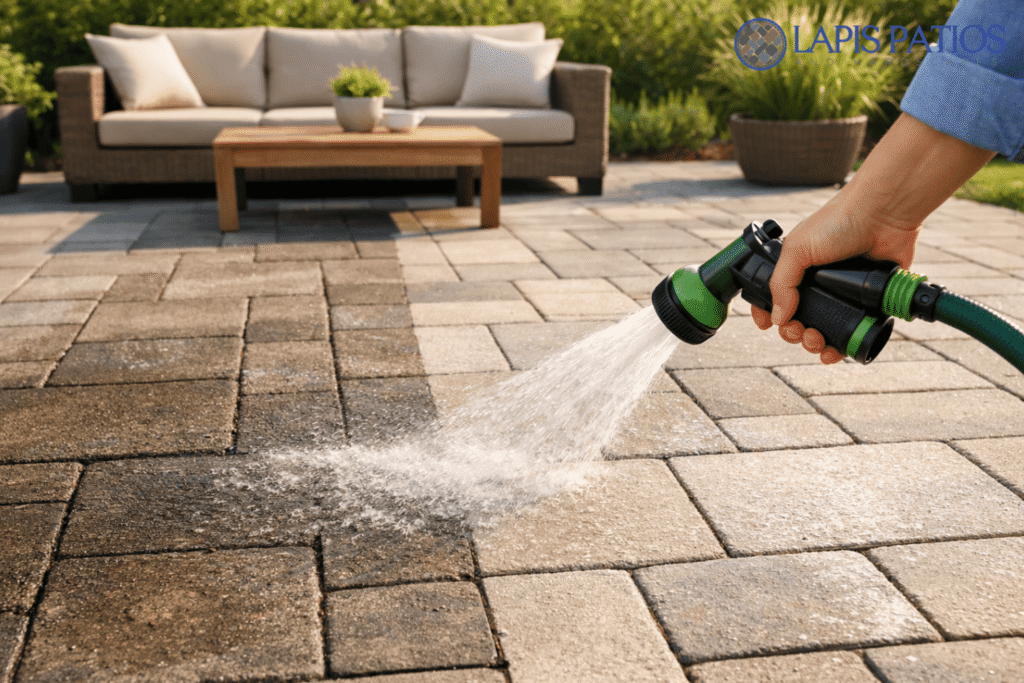
Next, give the whole surface a good rinse with a garden hose. This wets the pavers and softens stuck-on grime. For a commercial patio in Charlotte, which can be over 300 square feet, this step is important. It helps control costs and makes the actual cleaning faster.
Charlotte’s humidity is often above 70% in summer, which helps moss and algae grow. Pre-rinsing tackles this early. It also prevents about 30% of the sand in the joints from being washed away later during pressure washing. Following these simple steps sets you up for a successful clean.
What Cleaning Solutions Are Safe for Different Paver Types?
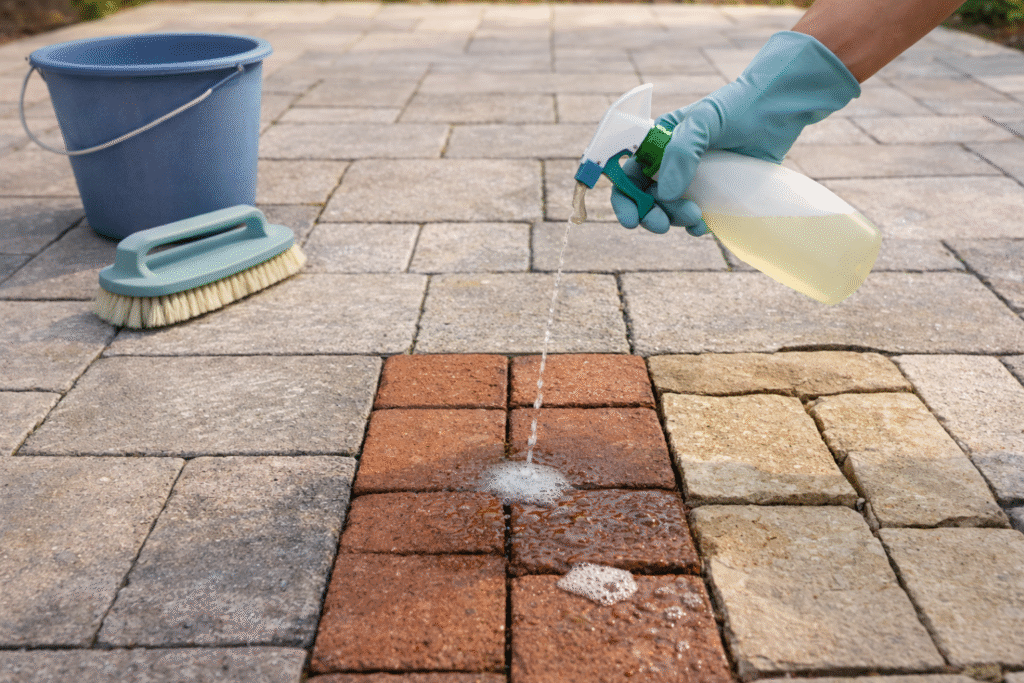
You need to match the cleaner to your paver type. For basic cleaning, warm water with a little dish soap is safe for almost everything. To kill algae, a mix of one part bleach to five parts water works well.
Do not use strong acid cleaners on natural stone. Muriatic acid, for example, will permanently etch limestone or marble. For brick and concrete pavers, a basic pH-neutral cleaner works best to protect the surface and color. As emphasized by Tom’s Guide,
“Opting for an eco-friendly cleaning agent is crucial for protecting waterways and wildlife, ensuring no harsh chemicals are being washed away …” – Tom’s Guide
Here’s what to use on common Charlotte pavers:
| Paver Type | Acid Safe? | Recommended Cleaner |
| Concrete | Limited | pH neutral cleaner |
| Brick | Limited | Mild detergent |
| Limestone | No | Soap-based cleaner |
| Granite | Usually | Light-duty concrete cleaner |
| Porcelain | Not needed | Household cleaner |
For oil or rust, use a cleaner made for that specific outdoor stain. Always test it in an unseen area first.
What Is the Correct Way to Scrub Patio Pavers?
Credits: Hardscape Mentor
Let your cleaner sit for 10 to 30 minutes to loosen the dirt.
Then, scrub with a stiff brush that has plastic bristles. Avoid wire brushes; they scratch the paver surface. Work in a circular motion, focusing on the textured tops of the stones and the sand-filled joints between them.
In Charlotte, pollen gets pressed into the surface every spring. This kind of embedded dirt needs this scrubbing step to come out.
A common mistake is scrubbing too hard directly in the joints, which can wash out the stabilizing sand too early. Apply steady, even pressure instead of using a lot of force. This protects the paver color and keeps the joints stable.
Should You Use a Pressure Washer on Pavers?
Yes, but use it carefully. Set the machine below 1500 PSI. Always attach a wide fan-tip nozzle and keep the spray wand at least a foot away from the pavers.
For a large commercial patio, this can cut your cleaning time in half. The biggest risk is blowing out the sand that locks the pavers together. Use extra caution around features like built-in cooking areas, where fixtures tied to outdoor kitchen lighting may be installed near the surface and require gentler cleaning.
If you aim the stream directly into the joints, you’ll create a mess and uneven lines. Many professional videos and guides online warn against this. As noted by Homes and Gardens,
“Too much pressure washing can wear away the patio and leave it looking tired and worn.” – Homes and Gardens
The benefits are clear: it removes algae, mold, and mildew quickly. The risks are just as clear: it can wash away joint sand, etch the paver surface, and mean you have to add new sand more often.
For a small patio, scrubbing by hand might be enough. For a large space, like an outdoor dining area at a Charlotte restaurant, a pressure washer set up correctly is a practical choice. The key is to be consistent and gentle, not powerful.
How Do You Refill Joint Sand After Cleaning?
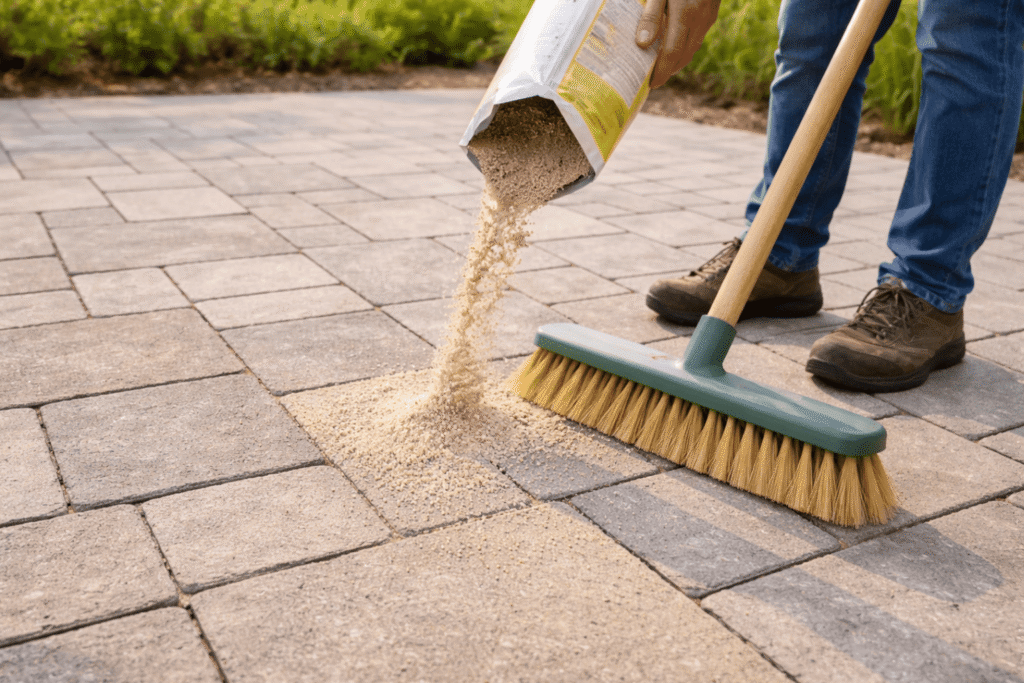
Let the patio dry completely for a day or two after cleaning. Then, it’s a simple four-step job:
- Dump a bag of new jointing sand onto the dry patio.
- Sweep the sand back and forth until it fills every gap between the pavers.
- Press the sand down firmly. You can use the flat side of a rubber landscaping rake or rent a small plate compactor.
- If you’re using polymeric sand, give the whole area a light spray with a garden hose. This activates the glue in the sand. Be careful not to overwater it.
Charlotte gets a lot of rain, over 40 inches most years, which gradually erodes this sand. Adding more once a year keeps the pavers from becoming loose or uneven.
For a commercial patio with constant foot traffic, like outside a restaurant, plan on topping up the sand every 12 to 24 months. This regular task is the best way to keep weeds out and avoid the higher cost of resetting wobbly pavers later on.
How Often Should You Seal Patio Pavers?
You should seal your patio pavers every 2 to 3 years. This protects them from stains and Charlotte’s weather.
Sealing makes a big difference. It can stop up to 80% of oil stains from soaking in. It also slows down the growth of moss and algae, which is helpful in our humid climate.
You have two basic choices for sealers:
- Penetrating sealers soak in to protect without changing the look.
- Film-forming sealers coat the top to deepen colors and add a subtle shine.
Only seal after a thorough cleaning, once the pavers are bone dry. After it dries, sprinkle a little water on the surface. If the water beads up, your seal is working.
Sealing helps control moisture, and the EPA notes that less moisture means less mold and mildew outside. Many professional services will combine cleaning, re-sanding, and sealing into one visit.
What Maintenance Routine Keeps Patio Pavers Performing in Charlotte?
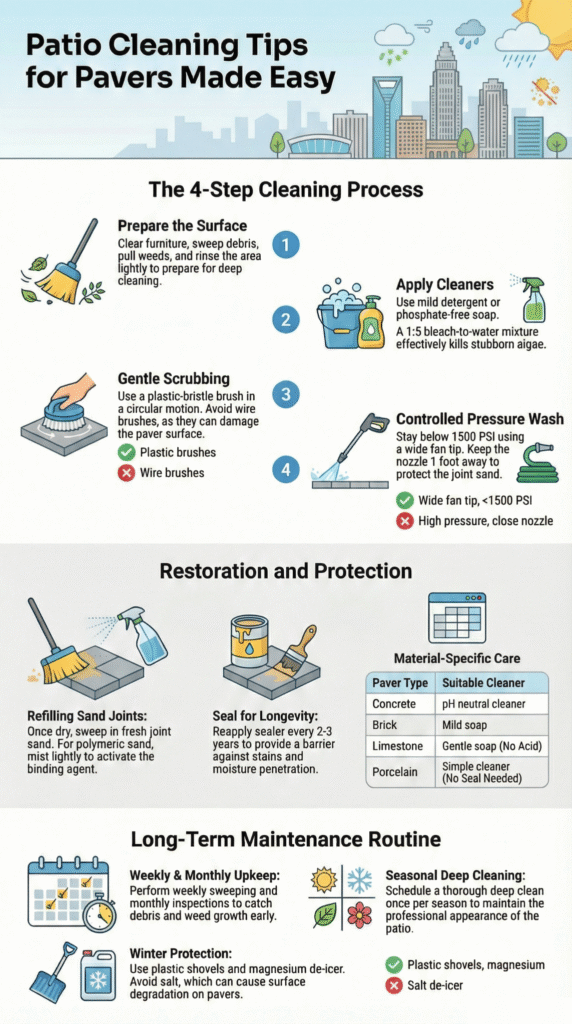
A simple, regular routine keeps your commercial patio in good shape for years. Charlotte’s spring pollen and winter ice require specific attention, especially for properties that combine pavers with gravel patios or other mixed hardscape surfaces that collect debris differently.
Weekly Tasks:
- Sweep the patio with a broom or use a leaf blower.
- Rinse off any spills or debris after events.
Monthly Tasks:
- Check that drainage channels are clear.
- Inspect the sand in the joints between pavers.
Seasonal Tasks:
- Spring: Schedule a deep clean after pollen season.
- Fall: Do another cleaning before winter.
- Winter: Use a plastic shovel for snow. If you need ice melt, choose a magnesium-based product instead of rock salt, which can damage concrete.
For stains like oil or grease, clean them up right away. Avoid using metal tools or snow blower blades on the surface, as they can cause scratches.
Following this routine can help your pavers last over 20 years. This care isn’t just about looks; it protects the value of your property.
FAQ
How do I clean patio pavers without damaging the surface?
Start by rinsing the patio pavers with a garden hose to remove loose dirt and debris from the paver surface. Mix a mild cleaning solution using a pH-neutral cleaner or a small amount of dish soap and water.
Scrub with a stiff brush or plastic bristle brush. Avoid using muriatic acid or harsh household cleaners. If using a pressure washer or power washer, choose a wide pressure nozzle to protect concrete pavers and Brick pavers.
What is the best way to remove oil and rust stains?
To remove oil stains, apply a Deep Degreaser or a quality paver cleaner designed for exterior hardscape cleaning. Let the product sit as directed, then scrub gently and rinse with a garden hose.
For rust stains, use a masonry rust remover or a rust remover safe for natural stone pavers. Proper stain removal helps keep backyard pavers clean and well-maintained.
How can I stop weeds and mold between paver joints?
Begin weed removal by pulling weeds with a weed puller or applying a safe weed killer. Remove damaged joint sand with a plastic shovel if necessary. Refill the paver joints with fresh jointing sand or Polymeric Sand to secure the surface. Use a leaf blower to clear debris. Regular Paver Maintenance reduces mold and mildew, moss and algae growth.
Should I seal my paver patio after cleaning?
Sealing your paver patio helps protect interlocking pavers and PERMEABLE PAVERS from stains and weather damage. After your cleaning routine, allow the surface to dry completely.
Apply penetrating sealers for natural stone pavers or a film-forming sealer for concrete pavers. A quality concrete sealer improves stain resistance and helps prevent salt stains. This step supports seasonal paver maintenance.
How do I handle snow, ice, and seasonal care?
During frost and ice, avoid metal shovels that can damage the paver surface. Use a plastic shovel or a snow blower with a rubber blade. Select magnesium-based de-icers instead of harsh de-icing products.
During Spring Cleaning, rinse with a garden hose and inspect drainage channels. Move outdoor furniture and use furniture pads to protect your outdoor space year-round.
Commercial Patio Cleaning Tips for Pavers in Charlotte: Long-Term Protection Plan
Patio cleaning tips for pavers in Charlotte require controlled preparation, mild cleaning solutions, calibrated pressure washing, annual joint sand inspection, and sealing every few years.
Commercial patios are high-visibility assets for restaurants, office campuses, and retail centers. Clean surfaces support safety, improve curb appeal, and protect long-term property value.
Humidity, pollen, and storm runoff in Charlotte accelerate surface staining and joint erosion. A structured maintenance plan reduces repair costs and extends durability. Protect your asset with expert patio cleaning tips for pavers designed for commercial properties and schedule a professional maintenance assessment today.
References
- https://www.tomsguide.com/home/paving-expert-reveals-how-to-clean-your-patio-and-what-mistakes-to-avoi
- https://www.homesandgardens.com/gardens/patio-cleaning-mistakes-to-avoid