
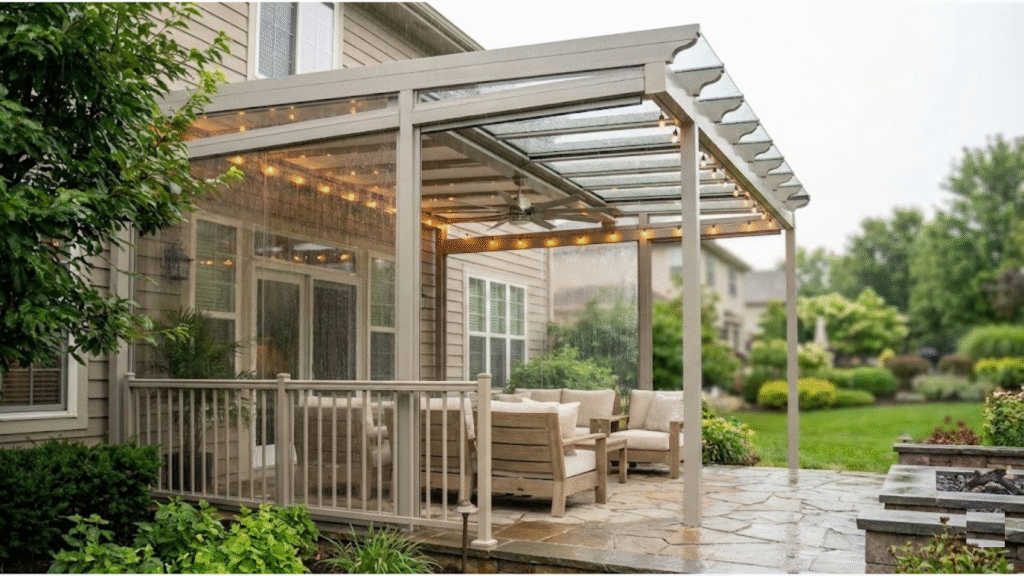
Discover covered patio ideas for rain that keep your Charlotte space dry, bright, and inviting, even during summer storms
A covered patio for rain means you can stay outside, even when the sky opens up.
It’s not about retreating indoors, it’s about turning storms into a calm soundtrack while you stay dry and comfortable.
In Charlotte, where summer showers roll in fast and hard, the right cover keeps your patio from becoming a wet, forgotten corner and turns it into a real outdoor room. [1]
The key is simple: strong protection overhead, open air all around.
If you want that balance of shelter and sky, keep reading for covered patio ideas that actually work here.
Key Takeaways
- A solid or adjustable roof paired with smart drainage is the foundation of reliable rain protection.
- Choosing the right materials, like aluminum or polycarbonate, ensures your cover withstands Charlotte’s weather with minimal upkeep.
- Adding side protection, from simple planters to zip screens, stops wind-blown rain from spoiling your comfort.
Choosing the Right Roof for Rain Protection
The roof is the most critical decision.
It defines how dry you’ll stay and how the space will feel.
A solid roof offers the most security, creating a true outdoor room, similar to choosing roof patio solutions that focus on dependable weather defense.
You can install light fixtures or a fan without worry, and the sound of rain on a metal roof can be quite soothing.
It’s a permanent solution that adds significant value.
Louvered roofs provide the best of both worlds, and homeowners exploring patio cover options often like how the slats open for sun or close to form a watertight seal against rain.
Higher-end louvered systems typically include built-in gutters that channel rainwater discreetly through the posts built right into the frame, so water is channeled neatly away through the posts.
They’re a great addition for those who want control.
Clear polycarbonate roofs are a fantastic option if your priority is natural light.
They keep the patio dry while maintaining a bright, airy atmosphere.
Modern versions come with excellent seals and hidden gutters, so you get the function of a solid roof without the enclosed feeling.
It’s like having a giant, protective skylight over your outdoor furniture.
- Solid Roofs: Best for maximum, permanent protection.
- Louvered Roofs: Ideal for flexibility between sun and rain.
- Clear Roofs: Perfect for maintaining a bright, open living space.
Selecting Materials for Rainy Climates
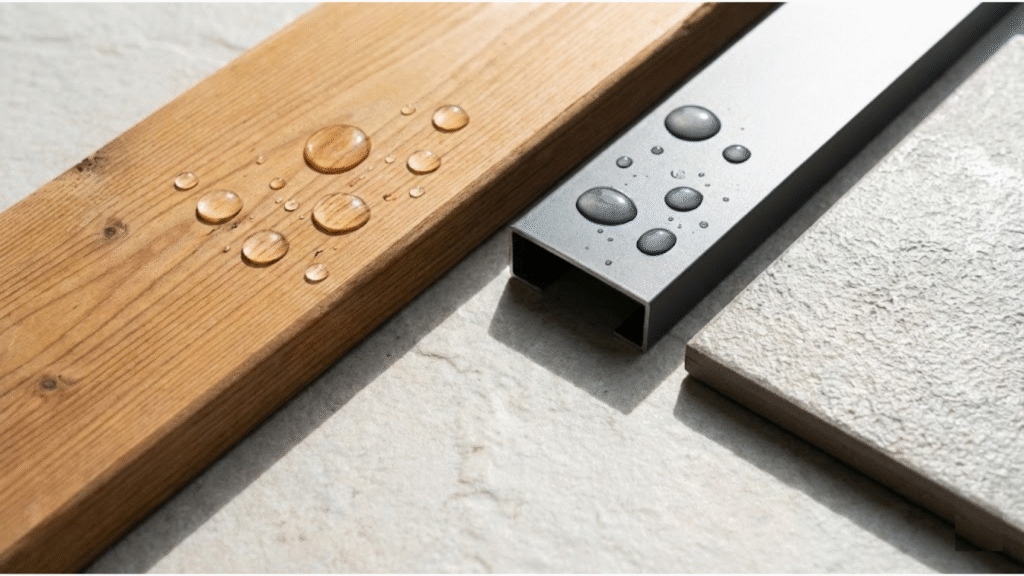
Your material choice directly impacts longevity and maintenance.
Aluminum frames are a top pick for Charlotte, especially for homeowners comparing best materials for long-lasting patio covers. They’re incredibly strong, won’t rust or rot, and need almost no upkeep., though some light surface oxidation may develop over many years.
An aluminum frame with a solid roof panel is a workhorse combination that will look good for years, shrugging off heavy rain and humidity.
Polycarbonate roof panels are another strong contender.
They’re lightweight yet tough enough to handle hail, and they come in clear or tinted options to manage UV rays.
This makes them a versatile choice for covering your patio.
You can achieve that desired fresh air feeling without compromising on durability.
Wood frames offer a classic, warm look that many homeowners love.
The catch is that exposed wood requires commitment.
It needs regular sealing or painting to withstand the moisture.
A common and effective approach is to use a wood frame for its aesthetic appeal but top it with a metal or polycarbonate roof for reliable water protection.
This hybrid method gives you the beauty of wood without the constant worry.
Water Management Strategies for Covered Patios

Credits: Photo by VectorMineGreen on iStocks
A roof is only part of the solution.
Without proper water management, you’ll still end up with a wet patio. [2]
The slope of the roof is paramount.
It needs enough pitch to send water rushing toward the gutters, not dripping lazily over the edge.
A good overhang is also key, extending past your seating area to prevent splash-back from hitting your patio furniture.
What about the sides?
Wind-blown rain can easily soak an otherwise protected space.
Glass or polycarbonate side panels can enclose one or two sides, creating a sunroom effect that blocks horizontal rain while preserving your view.
For a more flexible and open solution, zip screens or roll-down shades can be lowered just during a storm.
Don’t forget the floor.
The patio surface should be graded slightly away from your house.
Using permeable pavers or incorporating a gravel border can help water drain away quickly, preventing puddles from forming under your feet.
A small trench drain at the edge of the patio can make a huge difference, discreetly carrying water away and keeping your outdoor living space truly dry.
- Ensure proper roof pitch and overhangs.
- Consider side panels or screens for wind-driven rain.
- Grade the patio surface and use drainage-friendly materials.
Integrating a retractable awning can offer a softer, more temporary layer of protection.
When extended, a high-quality waterproof awning with a proper pitch will shed water effectively, although lightweight budget models may struggle during heavy or wind-driven rain.
For smaller patios, this might be all you need.
It’s a less permanent commitment than a full cover, but still creates a comfortable, dry zone for your outdoor fabric furnishings.
Design Tips to Keep a Covered Patio Feeling Open, Even During Heavy Rain
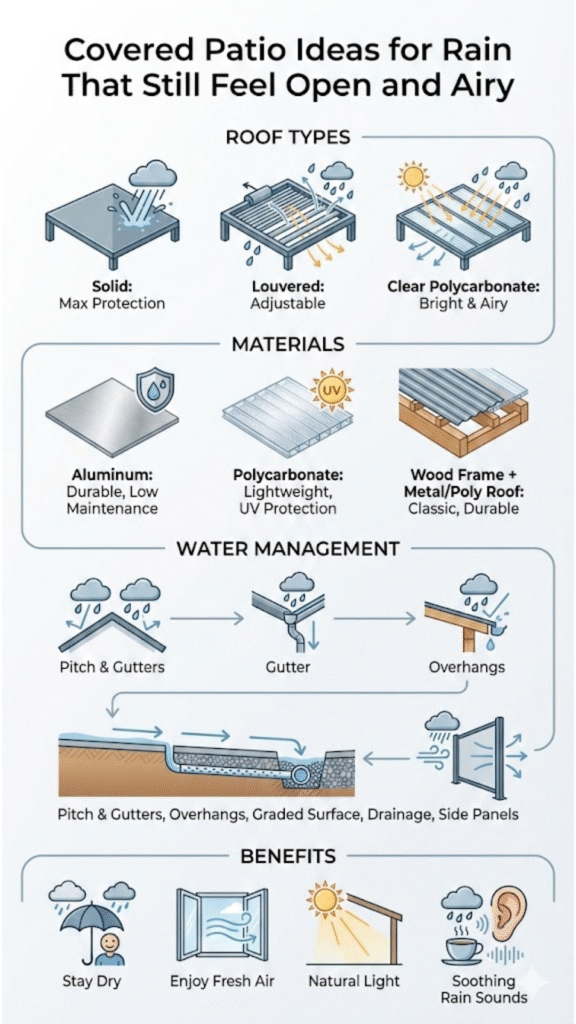
A covered patio should feel like an extension of your home, not a dark shelter you retreat into when the weather turns.
To maintain that open, airy feeling during heavy rain, start with visual lightness.
Choose bright or neutral roof and frame colors, white, light gray, or sand tones reflect more natural light and help keep the space bright even under stormy skies.
If privacy and shade aren’t your top concerns, consider clear or lightly tinted polycarbonate roof panels.
They protect against rain while allowing daylight to flow in, preventing the patio from feeling enclosed.
Your furniture layout also impacts how spacious the patio feels.
Opt for slim, minimalist pieces with lifted legs instead of bulky, heavy silhouettes.
This keeps sightlines open and allows light to circulate more freely.
Add taller planters or vertical greenery in strategic corners to create height without visually crowding the space.
If you plan to add weather protection on the sides, such as zip screens, roll-down shades, or glass panels, select models that retract easily.
This allows the space to “breathe” again once the storm passes.
Together, these design choices ensure your patio feels bright, open, and inviting even during Charlotte’s sudden downpours.
FAQ
1. How can I cover your patio for rain while still enjoying fresh air?
You can cover your patio using designs that protect from rain while allowing fresh air to circulate, such as solid roof structures, clear covers, or roof panels that let natural light enter.
These cover ideas keep the outdoor space usable during bad weather and maintain the open feeling of your living space instead of creating a closed-in environment.
2. What materials work best for a covered patio that feels bright and open?
Many modern patio covers use polycarbonate roof panels, clear covers, or an aluminum frame to protect from rain without blocking natural light.
These materials help a covered patio stay bright and comfortable.
They also shield outdoor fabric and patio furniture, making the outdoor space pleasant and practical for everyday use in different weather conditions.
3. Are solid roof styles a good choice for outdoor living during storms?
A solid roof is a practical choice if you need reliable rain protection.
It keeps your outdoor living space dry during storms and allows you to install light fixtures or ceiling fans securely.
This type of patio cover provides dependable durability and supports outdoor living by making the space usable in poor weather while still fitting well with other patio cover ideas.
4. What are some patio cover ideas that improve outdoor living space?
Patio cover ideas include options like solid roof structures, aluminum frame covers, roof panels, and clear covers.
These choices can expand your outdoor living space and keep natural light flowing in while protecting the area from rain.
They make outdoor living enjoyable by keeping the space functional in different seasons without losing the open-air experience.
5. Can I get a free quote when planning patio covers for my home?
Homeowners can often request a free quote when planning patio covers or deciding how to cover your patio.
A detailed quote allows you to compare design options such as solid roof plans, clear covers, aluminum frame systems, or other cover ideas.
It also helps you understand how much patio furniture, outdoor fabric, and living space you can protect within your project budget.
Bringing It All Together: Build a Patio That Loves the Rain
The best covered patio ideas for rain combine smart structure with personal comfort.
It starts with a reliable roof overhead, whether solid, adjustable, or clear.
Then comes choosing materials that can withstand weather without demanding constant upkeep.
Finally, you outsmart water with good drainage and thoughtful side protection.
The result is an outdoor living space you can enjoy almost year-round.
Think of it as creating a shelter that embraces the outdoors instead of closing it off.
You get fresh air, the soothing sound of rain, and a patio that stays completely usable even when the weather turns.
It transforms your backyard into a more welcoming and valuable extension of your home.
If you’re ready to stop canceling plans because of the forecast, take the next step and explore expert covered patio ideas for rain to start your rain-ready outdoor retreat today.
References
- https://en.wikipedia.org/wiki/Charlotte%2C_North_Carolina
- https://pubs.usgs.gov/sir/2006/5017/pdf/report.pdf