
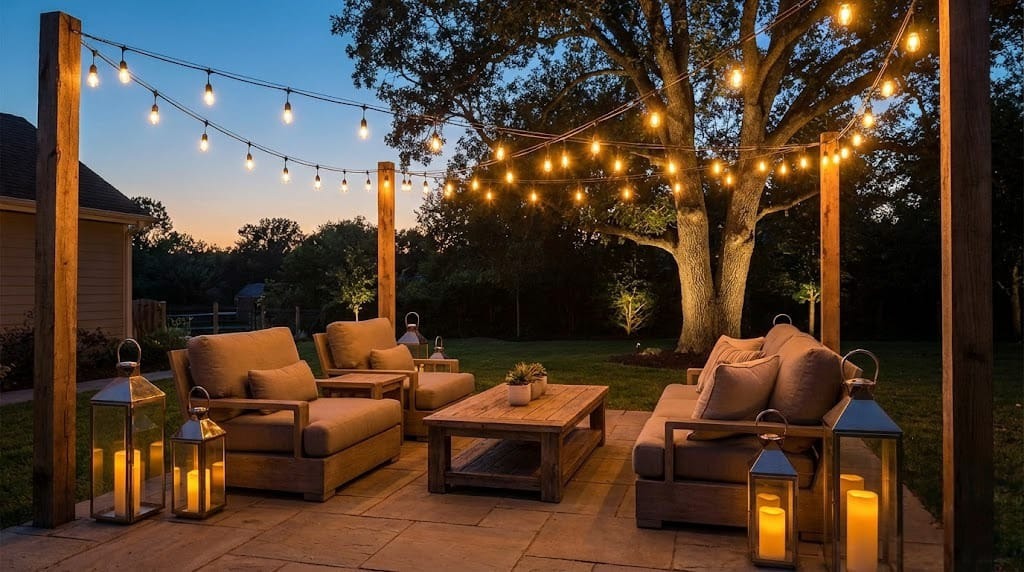
Discover patio lighting for outdoor spaces that adds warmth, safety, and style. Learn to layer lights for cozy nights you’ll enjoy all season.
Your Charlotte patio should be an extension of your home, a place to unwind after a long day or host friends on a balmy evening.
But when the sun goes down, a dark patio becomes useless, even a little dangerous.
The solution isn’t a single blinding floodlight.
It’s about creating layers of light, much like you do inside your home.
This approach combines safety, comfort, and style, transforming your outdoor space into a true living area.
You can achieve this with a thoughtful mix of fixtures and a focus on warm, welcoming light.
Keep reading to see how a simple lighting plan can make your patio the favorite room in your house, even after dark.
Key Takeaways
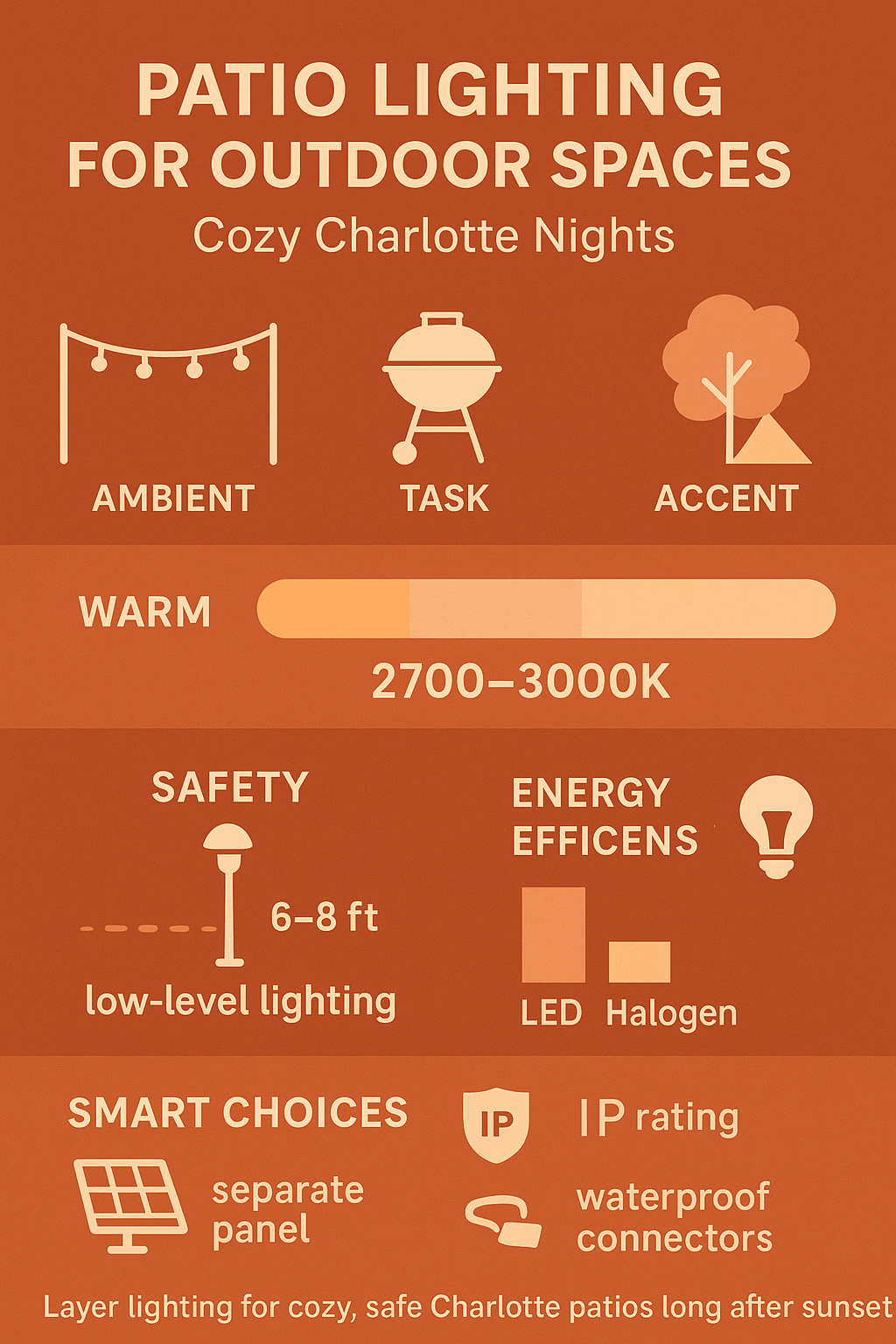
- Layer three types of light: ambient for mood, task for function, and accent for drama.
- Choose warm-colored LEDs for efficiency and a comfortable, inviting glow.
- Focus on illuminating surfaces like steps and paths to ensure safety without glare.
The Right Light for a Southern Night
Charlotte evenings are meant to be enjoyed.
The right patio lighting makes that possible.
It’s not about turning night into day.
It’s about creating a gentle glow that makes the space feel secure and inviting.
You want to see the step down to the lawn, not feel like you’re standing in a parking lot.
Do you grill?
You need task lighting over the cooking area, especially when paired with thoughtful outdoor lighting that supports dining, conversations, and movement after sunset.
Have a fire pit for conversations?
Ambient light from string lights overhead sets the perfect mood.
A layered plan addresses each activity separately.
This avoids the common pitfall of one harsh, overhead light that flattens the entire space and creates annoying shadows.
Good outdoor lighting is subtle.
It should feel natural, almost as if it’s just part of the evening.
The goal is to highlight the beauty of your patio and garden, not the light fixtures themselves.
- Safety First: Path and step lights prevent trips and falls.
- Mood Matters: Warm white light (2700-3000K) feels cozy and relaxing.
- Function Rules: Brighter light only where you need it, like over a dining table.
Solving Common Patio Lighting Problems
Credits: Architecture Inspiration X
Many homeowners get patio lighting wrong.
The biggest mistake is using light that’s too bright or too cool.
A bright, blue-white light might seem efficient, but it kills the ambiance.
It makes your patio feel sterile and can even disturb your neighbors.
You’ve probably seen houses with a single, glaring fixture. It’s not welcoming.
Another issue is glare.
When a light source is directly visible, it’s uncomfortable for the eyes.
The fix is simple.
Use fixtures with shades or aim lights downward onto surfaces like the floor or a tabletop.
You’re trying to illuminate the things you need to see, not shine light into people’s faces.
This is why path lights are so low to the ground and why step lights are recessed.
Uneven light is a safety hazard.
Dark patches between pools of light make it hard to navigate.
The solution is consistency.
Space path lights evenly so one light blends into the next.
Combine overhead ambient light with these lower safety lights to fill in shadows.
This creates a seamless, well-lit environment where you can move around with confidence.
Wasted energy is another concern.
Compared with LED alternatives that save up to 60–80% on power consumption, older halogen or incandescent bulbs run far hotter and demand more electricity, increasing long-term costs and environmental impact. [1]
Modern LED lights solve this, they use 60–80% less energy than traditional bulbs while offering a much longer lifespan.
Premium LED fixtures often run for 25,000–50,000 hours (10–20 years at typical usage), cutting replacements and energy bills dramatically. [2]
They’re a smarter choice for your wallet and the environment.
You can leave them on for hours without worry.
A Guide to Patio Lighting Fixtures
The tools for the job are varied, each with a specific purpose.
Understanding them helps you build your plan.
Ambient Lighting is your foundation.
It provides the general, overall glow.
String lights are the classic choice for this, creating a festive, canopy-like effect over a seating area.
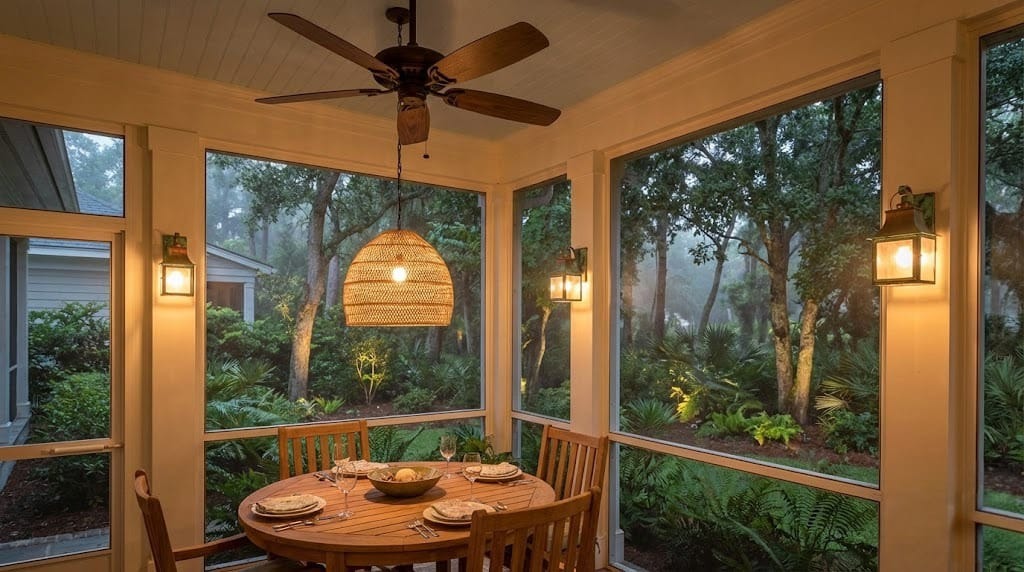
Wall sconces mounted on the side of your house or on a pergola post offer a more permanent solution, casting a soft, downward light.
For covered patios, a pendant or ceiling light over a dining table works beautifully.
It defines the space and provides both ambient and task lighting for meals.
These fixtures are the workhorses that make the patio usable after sunset.
Accent Lighting is for drama.
It’s what makes your patio look professionally designed.
Small spotlights or uplights placed at the base of a beautiful tree or a textured wall create depth and interest.
They draw the eye to specific features, making the space feel larger and more dynamic at night, especially when paired with outdoor sculptures as focal points that come alive after dark.
Functional and Safety Lighting is non-negotiable.
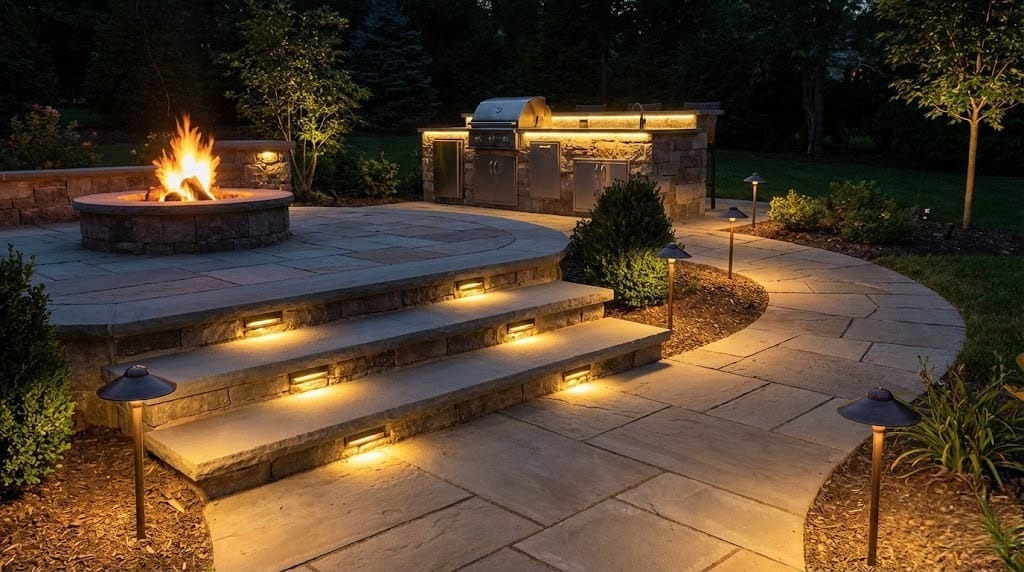
Path lights are essential for guiding guests along a walkway.
Step lights, built into stair risers, are crucial for preventing falls.
Recessed lights in deck posts or pavers subtly define the edges of your patio.
These fixtures are often low-voltage, making them safer and easier to install.
Crafting Your Charlotte Lighting Plan
Start with a sketch of your patio.
Mark where people walk, where they sit, and what you want to highlight.
Your primary goal is safety. Identify all steps, pathways, and changes in level.
These areas need dedicated, low-level lighting.
Path lights and step lights are your best friends here.
Next, consider ambiance.
Where is the main seating area?
This is where you’ll want your ambient light source, like string lights or a wall sconce.
The light here should be warm and diffuse.
Finally, think about accents.
Is there a beautiful crepe myrtle or a garden bed you’re proud of?
A well-placed spotlight can make it a nighttime focal point.
Remember to control the light.
Dimmers are invaluable.
They allow you to turn the brightness up for a lively gathering and down for a quiet evening.
Motion sensors are great for security lights near doors, but probably not for your main seating area where a sudden bright light would be jarring.
Smart Choices for Efficiency and Longevity
LED technology has revolutionized outdoor lighting.
The benefits are clear.
LEDs consume far less energy than traditional bulbs and their long lifespan means you won’t be constantly replacing them.
For a Charlotte patio that sees use from spring through fall, this reliability is key.
For areas where wiring is difficult, solar-powered lights have improved greatly.
They work well for path lighting, provided the solar panel gets plenty of direct sun during the day.
Look for models with a separate, larger panel that can be placed in a sunnier spot than the light itself.
Weather resistance is critical.
Our humidity and summer storms demand fixtures rated for wet locations.
Look for a high IP (Ingress Protection) rating, which indicates resistance to dust and moisture.
All connections must be waterproofed.
If you’re not comfortable with electrical work, hiring a professional for the installation is a wise investment, many Charlotte homeowners even combine lighting upgrades with patio installation to complete the space in one project.
FAQ
How many path lights do I need for my outdoor space?
Most homeowners place a path light every 6–8 feet, depending on walkway width and brightness.
Using low voltage landscape lights or an LED pathway setup helps save energy and improve visibility.
For larger outdoor spaces, combining pathway lighting with step lights ensures clear movement and reduces tripping risks.
Are LED lights better than traditional bulbs for patio lighting?
LED lights are often better than traditional bulbs because they offer a longer lifespan and greater energy efficiency.
They stay cool, handle outdoor use well, and fit most lighting fixtures.
For patio lighting or garden lighting, LED lighting produces bright output while using less power, which works well for long-term outdoor lighting systems.
What color temperature works best for outdoor lighting at night?
A warm color temperature around 2700K–3000K creates a cozy glow for outdoor living areas.
Cooler white light suits tasks like cooking under flood lights or highlighting focal points.
Many lighting options allow you to choose tone, especially when using LED landscape or low voltage landscape lighting.
Warm light is best for relaxing settings.
Can I combine landscape lights and garden lights in one outdoor space?
You can combine landscape lights and garden lights to create depth and highlight features.
Pathway lights guide movement, while step lights add safety on stairs.
A landscape light can draw attention to architectural features or plants.
Outdoor garden lighting also enhances focal points.
Low voltage landscape lights with waterproof connectors provide safe installation.
What is the best lighting solution for rainy or humid climates?
Choose outdoor lighting rated specifically for wet locations when dealing with rain or humidity.
Stainless steel light fixtures resist rust and maintain appearance over time.
Low voltage landscape lighting and LED lights handle moisture well and offer a longer lifespan.
Waterproof connectors protect cables in landscape lighting systems and outdoor landscaping setups.
Light Up Your Charlotte Evenings the Right Way
Outdoor lighting isn’t just functional, it brings your patio to life, turning it into a destination for late dinners, quiet conversations, or peaceful solo nights under the stars.
When you layer lighting thoughtfully, ambient for atmosphere, task for practicality, and accent for personality, you create an outdoor space that feels warm, usable, and undeniably inviting.
With warm LEDs, weather-ready fixtures, and a layout designed around how you live, your patio can become the coziest spot in your Charlotte home long after the sun goes down.
Ready to elevate your space with beautiful, functional patio lighting in Charlotte?
Take the first step, contact Lapis Patios today and start planning your dream outdoor retreat.
References
- https://www.malory-lighting.com/blogs/news/led-vs-traditional-outdoor-lighting-which-is-best-for-energy-efficiency-and-long-lasting-landscape-illumination
- https://exteriorhouselighting.com/led-vs-traditional-lights/