
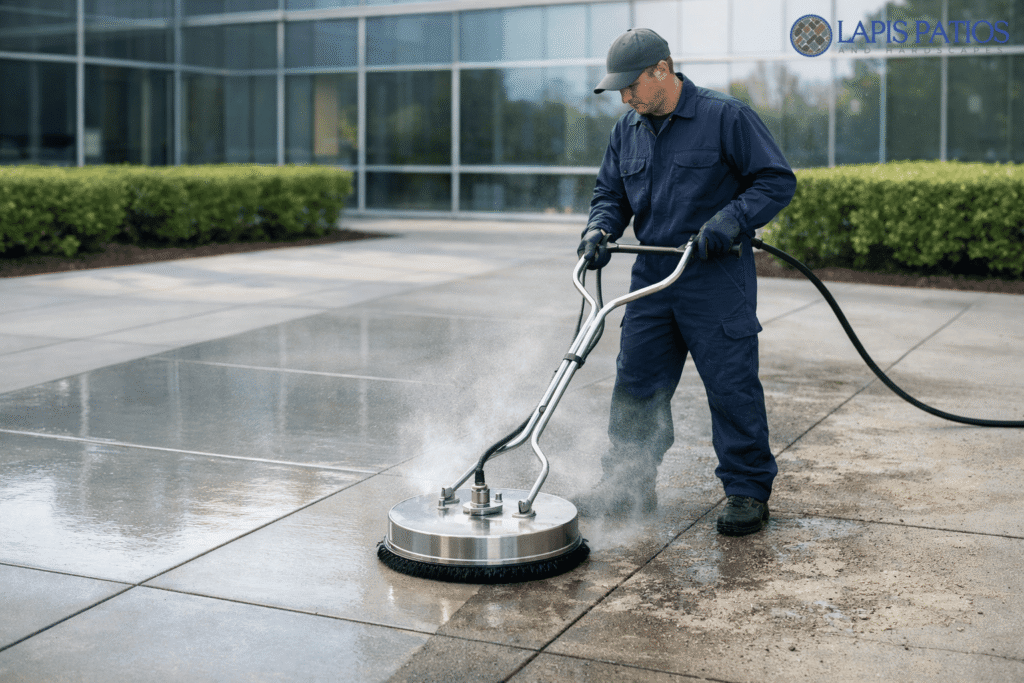
Smart patio pressure washing tips for Charlotte, NC businesses that want clean, durable, code-compliant outdoor spaces.
A commercial patio pressure washing job can fail in several expensive ways. Using too much pressure can pit the concrete or dislodge the joint sand between pavers. Poor technique can harm landscaping and violate local HOA standards.
For property managers and developers in Charlotte, this work is about protecting a capital asset and maintaining compliance, not just cleaning. Lapis Patios executes this maintenance for large-scale sites, using methods that prioritize surface integrity and code awareness over simple power washing.
Ready to see how a professional approach prevents these common errors? Keep reading.
Critical Patio Pressure Washing Guidelines for Commercial Properties
- Set your pressure washer correctly for concrete, brick, or stone.
- A surface cleaner and good technique work better than max power.
- Control the mess, protect your landscaping, and seal the joints to follow rules and make it last.
What Is the Safest Way to Pressure Wash a Patio?
The safest method uses the right amount of pressure, not the most. You need to match your machine’s PSI to your patio’s material. For most concrete or paver surfaces, that’s between 1,300 and 3,000 PSI. Always hold the spray tip at least a foot away from the surface and test a small, hidden area first. As noted by TheBlueHose pressure washing guide,
“For softer surfaces like wood, a lower PSI (around 1,500-2,000) is perfect. For concrete or brick, bump it up to 2500 to 3000 PSI. Make sure that you choose your washer wisely for the best results without damaging your surfaces.” – TheBlueHose
Professional crews focus more on water flow, measured in gallons per minute, than on extreme pressure. A higher flow rate rinses away dirt and cleans more effectively. Relying on too much PSI alone will quickly wear down concrete and wash the stabilizing sand right out from between your pavers.
For a commercial property, consistency is key. Using a surface cleaner attachment and making overlapping passes prevents streaks and avoids damage. Property managers should note the pressure settings and methods used for their maintenance records, which helps with warranties and HOA compliance.
A basic safety checklist:
- Check your material and set the PSI accordingly.
- Start with a wider fan nozzle (like a 25 or 40-degree tip).
- Use slow, overlapping passes.
- Test your setup in a corner first.
How Should You Prepare a Patio Before Pressure Washing?
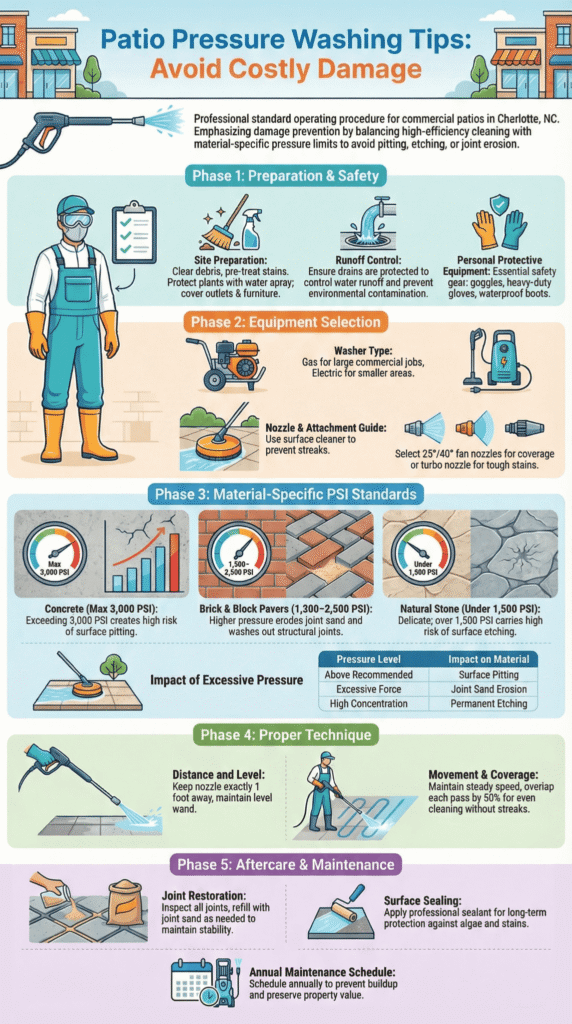
If you skip preparation, you’re setting the job up to fail. Proper prep prevents damage to the patio and the property around it. The steps are simple: clear the area, pre-treat stains, and protect everything you aren’t cleaning.
Following proven patio cleaning tips for pavers starts with removing dry debris before introducing water. Any organic stains, like algae or mildew, should be treated with a dedicated cleaner before you turn on the pressure washer. In our climate, algae can return in less than a year if it isn’t treated properly.
Using a cleaner allows you to use much lower, safer water pressure to get the stain off. This aligns with guidance from Pinellas County Government’s power washing best practices, which recommends:
“Use dry cleanup methods-mops, brooms, rags, or wire brushes to clean pavement, buildings, and equipment as much as possible before pressure washing. Then use vacuums or other machines to remove and collect loose debris before applying water.” – Pinellas County Government’s
Protection is the other critical half. You must:
- Soak any nearby grass and plants with a garden hose.
- Cover electrical outlets, lights, and HVAC units.
- Remove or cover patio furniture, grills, and signage.
- Make sure drainage grates are clear but protected from debris.
For a commercial site, controlling the runoff is a major part of the job. Wastewater containing cleaner and grime can’t be allowed to flow into storm drains or sewer lines. At Lapis Patios, our preparation process for sites across Charlotte is designed to meet these local codes and protect the entire property.
What PSI and Equipment Should You Actually Use?
The right equipment is more important than the highest pressure. You need a machine with enough power for the job, but the flow rate, how many gallons of water it pumps per minute, is what gets a large patio truly clean. For commercial properties, a gas-powered unit with strong water flow is standard.
The pressure (PSI) you use must match your patio material. Too much pressure damages the surface.
| Material | Safe PSI Range | Main Risk |
| Concrete | Up to 3,000 PSI | Can pit or etch the surface |
| Brick Pavers | 1,500–2,500 PSI | Erodes the sand between joints |
| Block Paving | 1,300–2,500 PSI | Washes out the joint sand |
| Natural Stone Pavers | Under 1,500 PSI | Can stain or permanently etch |
Professional crews use specific attachments to work efficiently and avoid damage:
- A surface cleaner attachment. This round tool prevents streaking.
- The right nozzles. A wide fan tip (25 or 40 degrees) is for general cleaning. A rotating turbo nozzle is only for tough, small spots.
- Durable hoses and connectors that won’t fail on a big job.
For large apartment complexes or retail plazas in Charlotte, a professional-grade hot water system can remove grease and oil without needing dangerous pressure levels.
What Technique Prevents Tiger Stripes and Uneven Cleaning?
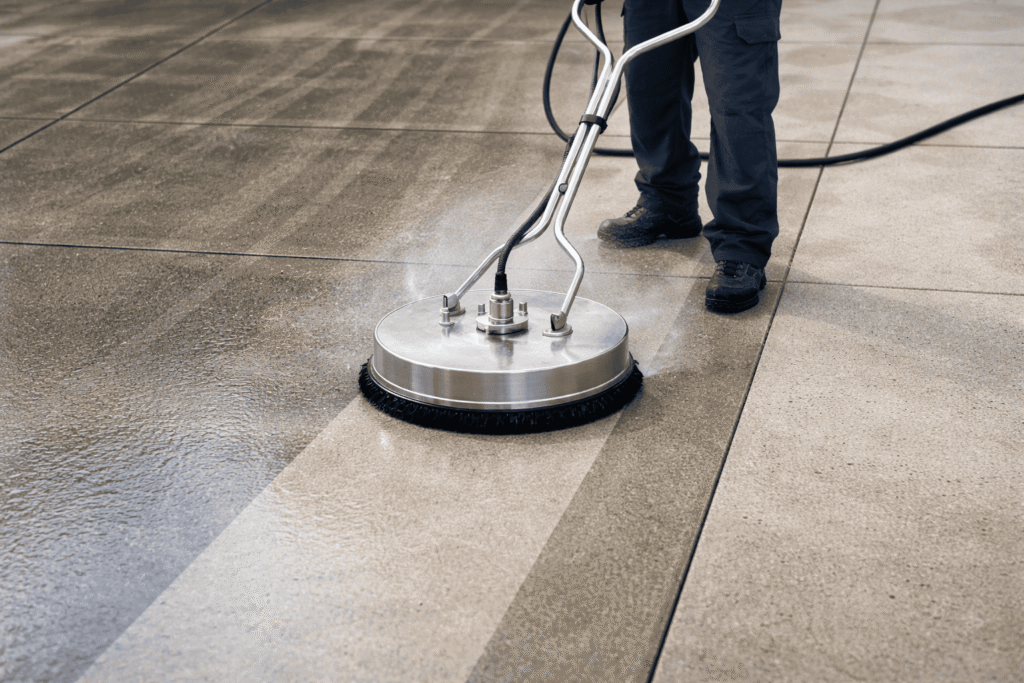
The main cause of ugly stripes and uneven patches is inconsistent movement. If you speed up, slow down, or stop, it shows. To prevent this, you need a steady hand and the right tool.
Using just a wand almost guarantees streaks. A surface cleaner attachment is the best defense. It keeps the spray at a fixed distance and spreads the water evenly.
Here’s the technique that works:
- Keep the wand or surface cleaner level.
- Maintain a steady walking speed.
- Overlap each pass by about half.
- Never stop moving while the trigger is engaged.
Shaded areas can be tricky. Dirty water dries more slowly there, which can leave behind residue. You may need to adjust your pace or make a second pass in those spots.
For a property manager, a streaky, uneven patio clean sends a clear message: poor upkeep. It tells tenants and visitors that the property isn’t cared for. A uniform, professional clean shows the opposite. Our crews at Lapis Patios are trained to deliver that consistent, high-standard result on every commercial job.
When Does Pressure Washing Cause Concrete or Joint Damage?
Concrete and paver joints get damaged when you use too much pressure, too often. It’s not a single mistake, but a process of wear. Repeated high-pressure cleaning, especially above 3,000 PSI, slowly erodes the surface.
This is why property managers must understand how to maintain a concrete patio properly, rather than relying on aggressive cleaning cycles. It can pit concrete and wash away the sand that locks pavers together.
Once that joint sand is gone, the pavers become loose. Weeds can grow through, and the whole section can sink or become uneven. This is a major repair. For a property manager, fixing this on a large patio is a significant capital expense that could have been avoided.
The main risks are:
- Etching: Leaving permanent marks on the surface from holding the nozzle too close.
- Joint Failure: Blasting out the polymeric or regular sand between pavers.
- Accelerated Aging: Making an older slab look worn out before its time.
Before we clean a commercial paver patio, our crews at Lapis Patios always check the condition of the joints. If they’re already flaky or loose, we adjust our plan to prevent making it worse.
Should You Use Chemicals or Just Water?
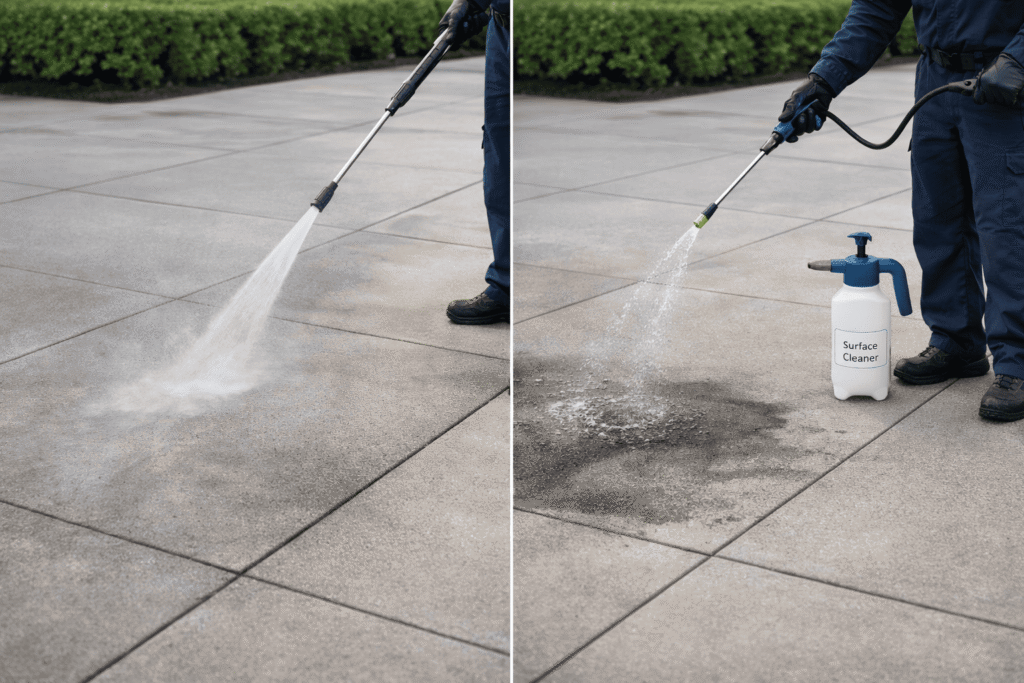
You should almost always use a cleaning solution. Water alone often isn’t enough, which forces you to turn up the pressure to get stains off. Using the right cleaner lets you use much lower, safer water pressure.
Different stains need different solutions. Bleach mixtures work on algae and mildew. There are specific products for oil, grease, or rust. You spray it on, let it sit for a few minutes, and then rinse. This method is far gentler on the surface.
However, you must handle chemicals correctly. Runoff containing cleaners can harm local waterways and kill plants if it isn’t managed. For a commercial site, letting this happen can lead to code violations and fines.
Here’s the safe way to do it:
- Apply cleaner to one small section at a time.
- Let it work for 5 to 10 minutes.
- Rinse the patio thoroughly.
- Immediately rinse off any nearby grass or shrubs.
If you don’t rinse landscaping quickly, you can see damage in a day or two. For an HOA property, dead plants mean immediate complaints and more costs to replace them. Our teams are trained to use effective chemicals while strictly controlling the runoff, protecting both your property and the local environment.
What Safety Precautions Matter Most?
Pressure washer injuries send thousands of people to the emergency room every year. The water stream is powerful enough to cut skin or cause serious eye damage. Basic gear is non-negotiable: you need safety glasses, sturdy gloves, long pants, and boots with good grip.
Never point the nozzle at a person, a pet, or a window. The force can cause immediate injury or break glass.
Electricity is another major hazard. Water conducts it. You must avoid spraying near outdoor outlets, lights, or HVAC units. On a commercial site, a formal safety plan that follows OSHA rules is standard practice to protect both workers and tenants.
How Do You Maintain a Patio After Pressure Washing?
Credits: Tidybricks patio restore
The job isn’t done when you turn off the machine. Proper follow-up keeps the patio in good shape for much longer.
First, let the surface dry completely. Then, you need to check your work. Look for any spots you missed and see if the cleaning washed sand out from between the pavers. If it did, you must sweep new sand into those joints and compact it. This step is crucial; it keeps the pavers from shifting.
For many surfaces, the final step is applying a sealant. A good sealer protects against stains and slows down the return of algae and mildew. In our humid climate, algae can start coming back in less than a year. A sealant buys you time.
For property managers, this isn’t a one-time task. It’s a cycle. A documented annual patio maintenance schedule protects your investment, maintains curb appeal for tenants, and helps you stay ahead of bigger repairs. Lapis Patios builds these post-cleaning steps into every service plan for our commercial clients in Charlotte.
FAQ
What pressure settings are safest for different patio surface materials?
You should choose pressure settings based on the surface material, such as Natural Stone Pavers or Brick Pavers. Start with low water pressure and a fan nozzle, then increase gradually if needed. Check the pressure washer PSI ratings and Effective Working Pressure in your manual.
Test a small hidden area first to avoid damaging joint sand, Polymeric sand, or existing concrete sealer.
Which pressure washer nozzle works best for stubborn patio stains?
You should match the pressure washer nozzle to the stain type using a pressure washer nozzle sizing chart. A fan-tip nozzle is suitable for general cleaning, while a turbo nozzle removes deep stains.
Check pressure washer nozzle colors, stamping, and spray patterns before use. Use quick-connect couplers to change nozzles safely and maintain a controlled pressure stream during cleaning.
Are electric pressure washers or gas-powered washers better for large patios?
Electric pressure washers are suitable for small outdoor areas because they are quieter and easier to handle. Gas-powered washers provide higher cleaning power for large outdoor living spaces.
Consider pressure washer engines, pump strength, and hose length before choosing. A detergent reservoir or chemical injector helps apply cleaning solutions evenly across wide patio surfaces for consistent results.
How can I pressure wash safely around plants, drains, and outdoor areas?
You should rinse nearby plants with a garden hose before and after cleaning to protect them. Follow pressure washing safety tips, wear eye protection, and keep a steady grip on the pressure washer gun. Maintain distance from drains and avoid spraying directly into sewer lines. Keep children and pets away from the work area until the patio is dry.
What should I do after pressure washing to protect pavers and joint sand?
You should allow the patio to dry completely before replacing joint sand or Polymeric sand between pavers. Inspect Natural Stone Pavers or Brick Pavers for damage caused by water pressure.
Apply a concrete sealer to protect against moisture and stains. Clean and store pressure washer accessories, hoses, wands, and pumps properly to maintain performance for future use.
Protecting Your Investment With Professional Patio Pressure Washing
A clean commercial patio needs the right approach. The goal is to make it look new without damaging the surface or breaking any rules. For property managers in Charlotte, this means using controlled pressure, the correct tools, and methods that follow HOA and local codes.
Applying proven patio pressure washing tips helps protect surfaces, control runoff, and keep large properties compliant.
The wrong pressure setting can cause costly damage and repairs. This isn’t a DIY task at scale; it requires commercial equipment and experienced crews. Lapis Patios supports apartment, retail, and mixed-use sites with reliable results.
Need a tailored plan? Request professional patio pressure washing tips and guidance here.
References
- https://thebluehose.com/blogs/news/top-10-pressure-washing-tips
- https://pinellas.gov/wp-content/uploads/2023/07/Brochure_Power_Washing.pdf