
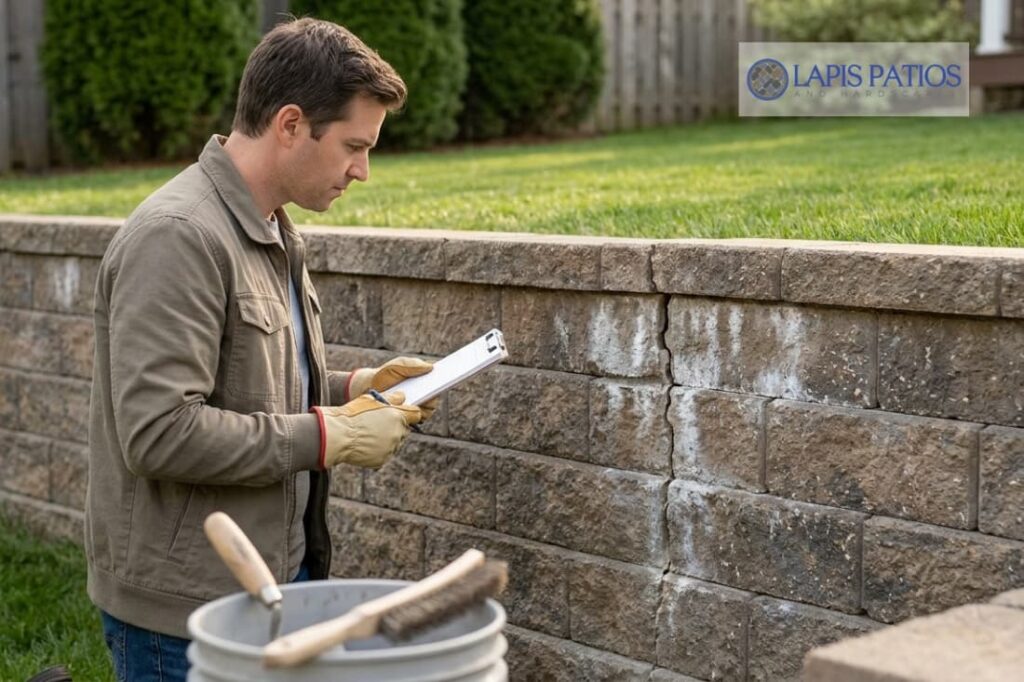
Learn retaining wall repair tips for homeowners to spot cracks, prevent water damage, and protect patios from shifting soil and wall failure.
Retaining wall repairs start with finding the cause of the damage. Poor drainage, soil movement, and foundation problems can lead to repeat failures if the underlying issue remains.
In Charlotte, NC, commercial sites, HOAs, and residential properties often need repairs that account for grading, paving, drainage, and local building codes. Lapis Patios supports coordinated outdoor construction for projects across Charlotte and nearby areas.
Read on to learn the warning signs, repair options, costs, and when to bring in a qualified contractor.
Quick Guide: Three Things To Know About Retaining Wall Repairs
The right repair depends on the wall’s height, materials, drainage, soil conditions, and nearby loads.
- Drainage Problems: Check accessible outlets and surface runoff.
- Cracks Or Leaning: Arrange an assessment to identify the cause.
- Severe Movement: Keep people clear and seek urgent professional help.
How Can You Tell If a Retaining Wall Needs Repair?
A leaning wall, growing cracks, poor drainage, or soil loss can signal that a retaining wall needs a professional inspection.
Check the wall from a safe distance and take photos of any changes. After heavy rain, look for standing water behind the wall, water flowing from the wrong places, or soil washing away nearby.
| Warning sign | What It May Mean |
| Bulging or leaning | Wall movement or pressure buildup |
| Widening cracks | Ongoing movement or material damage |
| Separated or uneven blocks | Joint movement or foundation issues |
| Standing water | Poor drainage or a blocked outlet |
| Sinking soil nearby | Erosion, soil washout, or ground settlement |
| Water leaking from unexpected areas | Drainage problems or pressure behind the wall |
For small cracks, mark the ends and take photos to track changes. The supplied research mentions monitoring for 30 to 60 days when suitable, but that period isn’t right for every wall. Don’t wait if cracks grow quickly, the wall shifts, or soil starts to wash away.
On commercial sites, wall damage can affect walkways, parking areas, nearby buildings, and access routes. Property managers should document the problem and restrict access if the wall may pose a safety risk.
Significant movement needs a professional assessment, not a surface patch. The Federal Highway Administration (FHWA) publishes technical guidance on retaining structures and soil design. This can help inform engineering decisions, but each site needs its own review. A garden wall has different demands from a wall that supports a building or vehicle area.
Why Should You Fix Drainage Before Patching a Retaining Wall?
Water trapped behind a retaining wall adds pressure that can lead to cracks, movement, soil erosion, or even wall failure.
As highlighted by Journal of Geotechnical and Geoenvironmental Engineering
“The investigation revealed among other things that the inappropriate design and the low-quality backfill were mainly responsible for the wall failure, although the primary triggering factor was the rainfall infiltration.” – Journal of Geotechnical and Geoenvironmental Engineering
Soil already puts pressure on the wall. When water builds up behind it, that pressure can rise and put extra strain on the structure. Water can also carry small soil particles toward drain outlets, which may lead to soil loss or sinking ground over time.
Before choosing a repair, check for common sources of water:
- Blocked weep holes or drain outlets.
- Roof downspouts that release water near the wall.
- Patio paving that sends runoff toward the wall.
- Low spots where rainwater collects.
- Ongoing seepage, muddy soil, or erosion near the base.
Adding a drain pipe alone may not solve the problem. Its location, filter material, outlet height, and connection to the site drainage system must suit the soil and wall design.
For commercial sites and HOA-managed properties, teams must also check where redirected water will go. Sending runoff toward a neighboring property, public walkway, or building foundation can create new problems.
Lapis Patios supports coordinated patio grading and drainage planning across Charlotte, NC, and nearby areas. By reviewing paving levels, water flow, and nearby retaining walls together, project teams can address drainage as part of the wider site plan. If a wall is already moving, drainage work should be part of a professional repair plan, not a replacement for a structural assessment.
Which Retaining Wall Repairs Can Homeowners Handle Themselves?
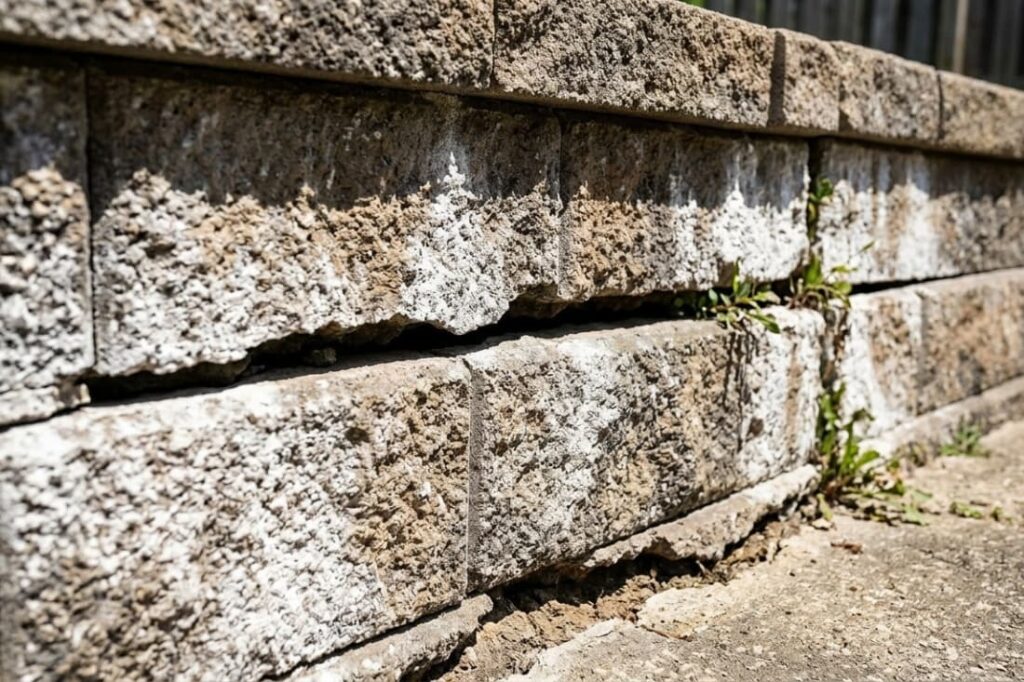
Homeowners can handle basic upkeep when a retaining wall is stable and the work won’t disturb the soil or structure that supports it.
The key difference is between routine care and work that changes how the wall holds back soil. Clearing loose debris from an easy-to-reach drain may be safe. Digging behind the wall or moving heavy blocks is a different matter.
Before attempting a DIY retaining wall project, homeowners should consider the wall’s stability, drainage needs, and the risks of disturbing the soil.
| Issue | Appropriate next step |
| Debris in an accessible drain outlet | Clear loose debris if it’s safe to reach |
| Runoff flowing toward the wall | Have grading or downspout problems assessed and corrected |
| Plants growing between joints | Remove carefully without disturbing the wall or its roots |
| Loose or shifted blocks | Get a professional assessment before moving them |
| Cracks, bulging, or leaning | Arrange a structural inspection before repairs |
Don’t dig behind the wall, lift heavy blocks, or try to pull a leaning wall upright without qualified help. These actions can weaken the soil support and cause sudden movement.
For commercial properties and HOA-managed sites, even small repairs may need safety plans, contractor coordination, HOA approval, or checks against local building codes. Extra care is needed when a wall supports a driveway, patio, building, or occupied area. If it fails, people and nearby property could be at risk.
How Can You Improve Drainage Around a Retaining Wall?
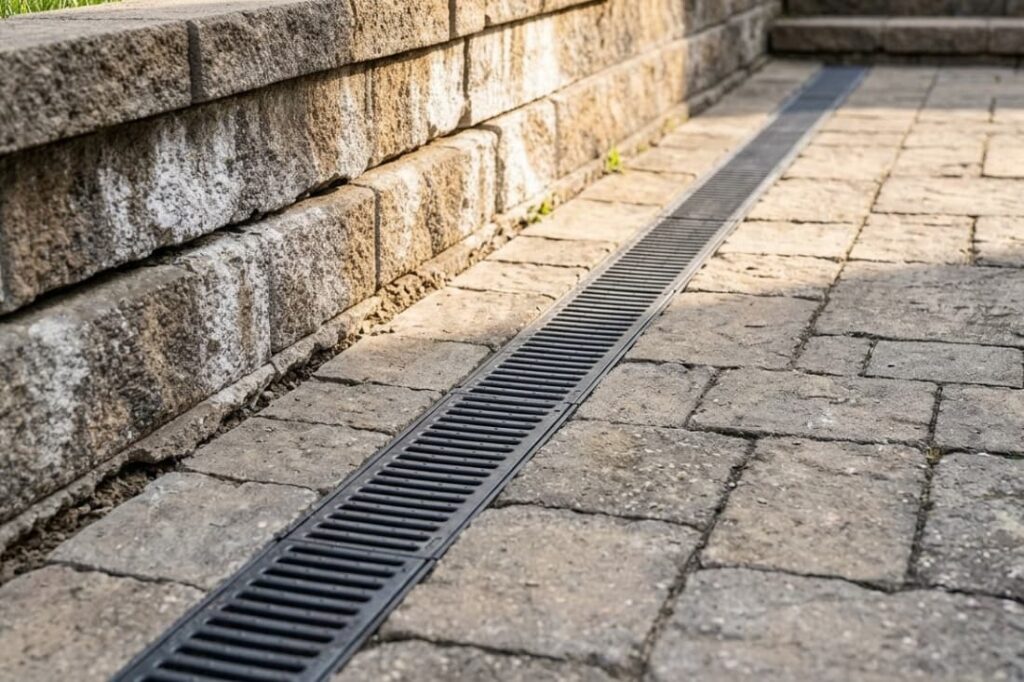
Good drainage directs water away from a retaining wall and helps reduce pressure behind it.
Data from National Cooperative Highway Research Program (NCHRP) demonstrates
“As the percentage of fines of the reinforced fill increases, its permeability decreases. With as little as 7% passing the No. 200 Sieve, the permeability can decrease by a factor of 100 to 400. Therefore, for reinforced fill with fines in the upper range of the current AASHTO criteria, the guidelines presented later in Chapter 2 of this report should be implemented in design of MSE walls where these materials are used.” – National Cooperative Highway Research Program (NCHRP)
Before recommending repairs, a qualified contractor checks surface runoff, groundwater, soil type, wall design, and available drain outlets.
A professional drainage review includes these steps:
- Trace water sources. Check downspouts, paved areas, and nearby slopes.
- Inspect drains. Look for blockages or damage in weep holes, pipes, and drain tile.
- Check the ground slope. See whether the patio directs water toward the wall.
- Review drainage options. Assess whether a French drain, drainage gravel, or filter fabric suits the site.
- Confirm the outlet. Make sure discharged water won’t cause flooding or erosion nearby.
Drainage systems may use perforated pipe, clean gravel, filter fabric, and a suitable outlet. The supplied research lists 4-inch pipe and ¾-inch washed stone as common options. But the right materials and sizes depend on site conditions and the project design.
Protect the wall’s foundation. Digging too close to the base or removing supporting soil can make the problem worse. Commercial projects may also need stormwater reviews, utility checks, erosion controls, and inspections before backfilling.
The Federal Highway Administration provides guidance on soil behavior and retaining structures. If a wall shows signs of movement, a qualified engineer should assess its condition.
For commercial sites, HOAs, and large outdoor projects in Charlotte, NC, and nearby areas, Lapis Patios can coordinate grading, paving, and drainage work as part of a wider site plan.
When Does a Leaning Retaining Wall Need Professional Repair?
Credits: Bill Burkhart
A leaning retaining wall may be unstable, especially if it also has bulges, widening cracks, loose blocks, or soil loss.
The supplied research mentions a horizontal shift equal to one-sixth of the wall’s height as a possible warning sign. But this isn’t a universal engineering rule. Even smaller shifts can be serious, depending on the wall, soil, foundation, and nearby loads.
Arrange a professional inspection if:
- The wall leans or bulges.
- Cracks grow or joints separate.
- Soil washes out from behind or below the wall.
- The wall supports a driveway, deck, building, or busy patio.
- Water keeps collecting behind it.
- Movement follows heavy rain, excavation, or nearby construction.
Don’t try to pull a leaning wall back into place. Bottle jacks, winches, and improvised anchors can cause sudden movement and hide deeper problems with the foundation or reinforcement.
A qualified contractor can work with a structural or geotechnical engineer to assess soil conditions, nearby loads, backfill, reinforcement, and foundation stability. Taller walls or walls carrying heavy loads may need engineering plans and permits.
For projects in Charlotte, NC, and nearby areas, the team should check local building rules before work begins. The North Carolina Office of State Fire Marshal provides official state code resources, while local authorities confirm which rules and permits apply to each project.
For commercial sites and HOA-managed properties, early assessment also helps teams plan safe access, coordinate contractors, and reduce risks to nearby buildings and public areas.
How Much Does Retaining Wall Repair Cost?
The retaining wall cost depends on the wall’s size, materials, site access, drainage needs, and how much damage has occurred.
The figures below come from the supplied research. They’re rough estimates, not verified current prices for Charlotte, NC. Actual quotes will vary by site and project. When comparing estimates, ask contractors to explain the cost per square foot for the proposed retaining wall installation.
| Repair Type | Estimated Cost |
| Clearing accessible drain outlets | 15–50 |
| Professional drainage repair | 200–800 |
| French drain and backfill for a 20–30 ft wall | 1,500–6,000 |
| Full wall rebuild | 4,000–12,000 |
Commercial sites, HOA properties, and large patio projects may cost more. Work may involve heavy equipment, pedestrian controls, engineering, permits, demolition, waste removal, and repairs to nearby paving.
When reviewing contractor quotes, ask for a clear breakdown of:
- Site assessment and engineering, if needed.
- Excavation and soil removal.
- Drainage pipes, gravel, and outlet connections.
- Wall materials, reinforcement, and foundation work.
- Backfill and soil compaction.
- Repairs to paving and landscaping.
Compare the work included, not only the price. A cheap patch may leave drainage or foundation problems unresolved, leading to more costs later.
For property managers and HOAs, a written scope also helps coordinate contractors, track approvals, and limit disruption to residents and customers. Lapis Patios can coordinate related grading, paving, and drainage work for projects in Charlotte and nearby areas.
How Can Patio Drainage and Retaining Walls Work Together?
A patio and retaining wall should work as one system. Grading, drainage, paving, and soil support all need to fit together.
Poor paving slopes can send rainwater toward a wall. Blocked drains can lead to standing water, erosion, and sinking soil. Repairing the wall’s surface won’t solve the problem if water keeps flowing into the same area.
A coordinated patio project may include:
- Removing damaged paving or unsuitable landscaping.
- Correcting slopes and drainage paths.
- Installing suitable drainage components.
- Resetting pavers at the right levels.
- Checking where runoff leaves the property.
- Protecting nearby structures and walkways during work.
Lapis Patios supports this type of coordinated work through patio paving, grading, and drainage planning. Project information provided for Charlotte Premium Outlets describes changes to paver slopes to work with existing commercial drainage. These details should be confirmed before being published as a formal case study.
For developers and property managers, early coordination matters. Drainage changes can affect paving levels, access routes, landscaping, and neighboring properties. Planning these details before construction can help avoid costly corrections later.
Should You Repair or Rebuild a Retaining Wall?
Repair is often the better option when the wall remains stable. But major movement or foundation failure may call for a full rebuild.
A professional inspection can help show whether the damage is limited to one area or linked to deeper issues with drainage, soil pressure, or the wall’s strength.
| Site Condition | Likely Next Step |
| Small surface defect with no movement | Identify the cause and repair the damaged area |
| Blocked drain and stable wall | Correct the drainage problem |
| Repeated cracks or shifted blocks | Arrange a professional assessment |
| Severe leaning or foundation failure | Review options for rebuilding |
| Nearby excavation or added loads | Reassess soil conditions and wall design |
Rebuilding may involve excavation, new drainage, suitable backfill, foundation work, and reinforcement. Depending on the site, the design may need geogrid or an engineered retaining system to handle soil pressure and nearby loads.
The cheapest repair isn’t always the least costly over time. Repeated patching can add up if the main cause remains.
For commercial sites and HOA properties, rebuild plans should also cover work stages, site access, safety, permits, material delivery, and repairs to nearby outdoor areas. Lapis Patios can coordinate related patio, grading, and drainage work for projects in Charlotte, NC, and nearby areas.
How Can Homeowners Prevent Future Retaining Wall Damage?
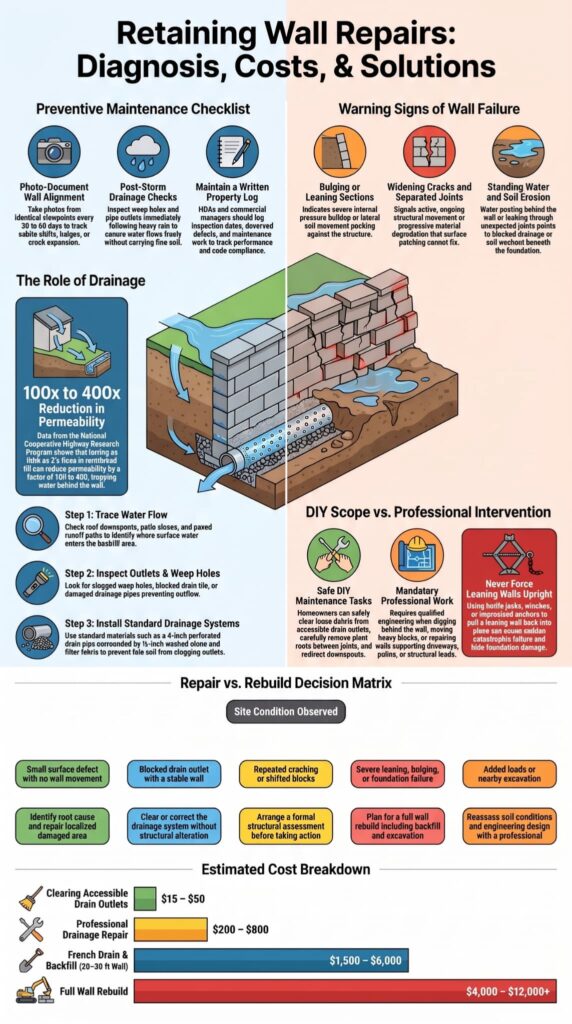
Regular checks and good drainage can help catch retaining wall problems before repairs become more costly.
After heavy rain, look for new cracks, shifted blocks, standing water, sinking soil, or signs of erosion. Keep accessible drain outlets clear, and make sure downspouts and patio runoff direct water away from the wall.
A practical maintenance plan includes:
- Taking photos from the same viewpoints.
- Recording changes in cracks and wall alignment.
- Checking drain outlets after major storms.
- Keeping surface water away without disturbing wall support.
- Reviewing nearby construction or changes in ground level.
For HOAs and commercial property managers, scheduled inspections and written records help track problems and plan repairs. Larger sites can use a maintenance log to record defects, inspection dates, drainage issues, and follow-up work.
Before changing patio levels or adding heavy structures near a wall, ask a qualified professional to review the effects on soil pressure and drainage. Routine care helps, but it can’t restore a wall that has already lost stability.
FAQ
What Causes a Retaining Wall to Lean or Bulge?
A leaning retaining wall often indicates excessive soil pressure, poor drainage, or movement beneath the foundation. Hydrostatic pressure builds up when water collects behind the wall and pushes against its structure.
Heavy loads near the top can also increase pressure. Look for widening cracks, bulging sections, and displaced blocks. If the wall leans or shifts, arrange a professional assessment before starting repairs.
How Can I Improve Drainage Behind a Retaining Wall?
Proper drainage systems reduce water pressure and help prevent damage to a retaining wall. Depending on the wall’s design, drainage improvements may include weep holes, a drain pipe, gravel backfill, and Filter Fabric to prevent soil from clogging the drainage system.
Direct the drain outlet away from the wall’s foundation. Inspect drainage openings after heavy rain and remove debris that could block water flow.
Can I Repair Retaining Wall Cracks Without Rebuilding the Wall?
You may be able to repair small, stable cracks with suitable concrete repair materials or epoxy injections, depending on the wall’s construction and the cause of the damage.
However, cracks caused by soil movement, foundation settlement, or structural failure require more than surface patching.
Photograph the cracks and use crack monitors to track changes. Contact a professional contractor if cracks widen, blocks shift, or the wall begins to lean.
How Can I Prevent Soil Erosion Behind a Retaining Wall?
Prevent soil erosion by directing water runoff away from the wall and stabilizing exposed soil with suitable ground cover. Proper grading, functioning Drainage systems, and appropriate Geogrid Reinforcement can help stabilize vulnerable slopes.
Avoid digging near the wall’s base because removing supporting soil can weaken its foundation. If you notice soil washout, exposed foundations, or channels forming after rainfall, correct the drainage problem before repairing the affected landscape.
When Should I Hire a Professional to Repair a Retaining Wall?
Hire a professional contractor when a retaining wall leans, bulges, develops large cracks, or shows signs of foundation movement. These conditions may indicate excessive soil forces, inadequate backfill compaction, or a failing base foundation.
A contractor can inspect the wall, drainage system, and supporting soil before recommending repairs. Check local building codes and permit requirements before starting major structural repairs or rebuilding the wall.
Protect Your Property With Timely Retaining Wall Repairs
Retaining wall damage can affect site safety, drainage, and nearby structures. Early professional assessment helps developers, construction companies, and property managers address the cause before problems worsen. Leaning walls, widening cracks, and soil movement may require repairs that meet local building codes and HOA requirements.
Lapis Patios provides outdoor construction services in Charlotte, NC, and surrounding areas. By addressing retaining walls, drainage, and patio construction together, you can help reduce repeat repairs. Contact Lapis Patios for retaining wall repair to discuss your project’s needs.
References
- https://ascelibrary.org/doi/abs/10.1061/%28ASCE%291090-0241%282006%29132%3A12%281538%29
- https://onlinepubs.trb.org/onlinepubs/nchrp/docs/NCHRP24-22_FR.pdf