
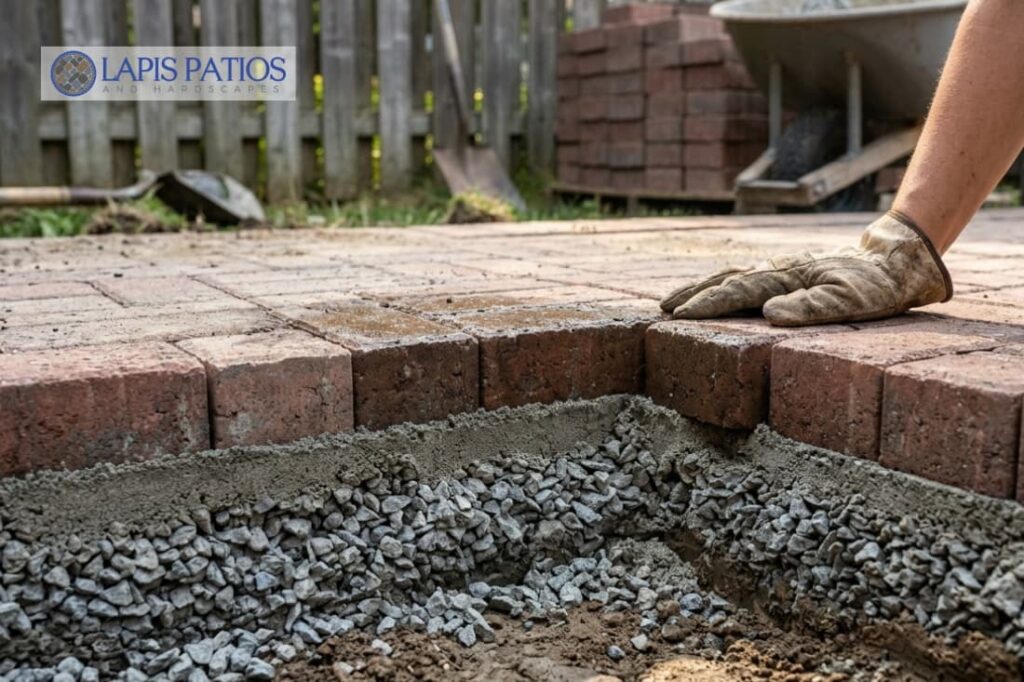
Discover the key steps for installing interlocking pavers for patio to create a durable, attractive outdoor living space.
Installing interlocking pavers starts with a strong base, proper drainage, and careful compaction. The pavers are only one part of the system. If the foundation is not built correctly, the patio can settle, shift, or develop uneven areas over time.
For commercial properties, HOA communities, and homes in Charlotte, NC, professional installation helps create a patio that is built to last and meets local requirements. Lapis Patios plans every project around site conditions, drainage, and long-term performance.
Keep reading to learn how interlocking pavers are installed the right way.
Patio Installation Essentials at a Glance
- A strong, compacted base helps prevent settling and movement.
- Good drainage and secure edge restraints keep the patio stable.
- Professional installation supports long-term durability, code compliance, and reliable performance for commercial and residential projects.
What Makes an Interlocking Paver Patio Last?
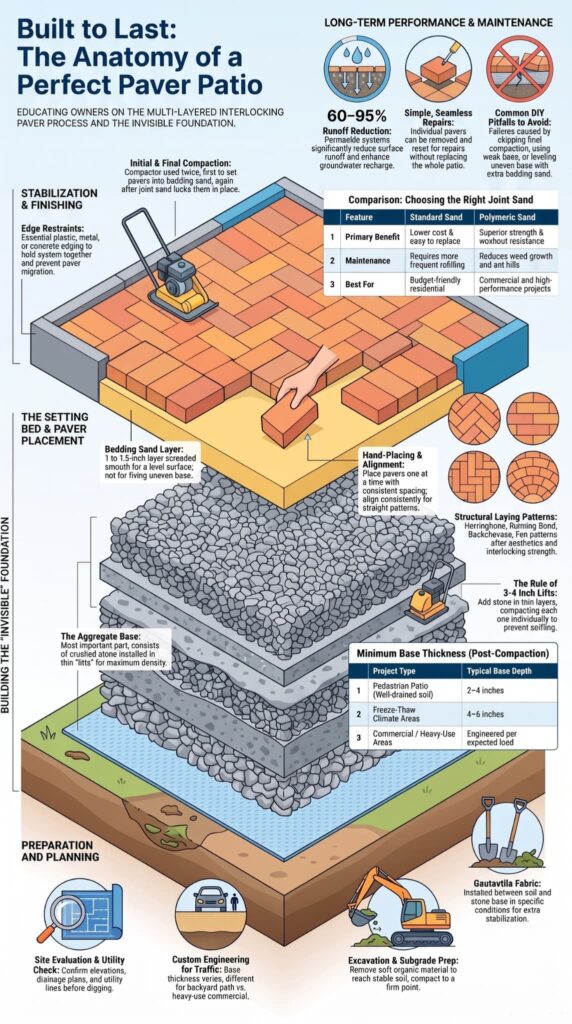
A long-lasting patio depends on more than the pavers you see. Every layer below the surface works together to create a strong, stable foundation.
Unlike poured concrete, interlocking pavers form a flexible surface. The pavers lock together and spread weight across a compacted stone base. This helps the patio handle small ground movement without cracking.
The base is the most important part of the project. A properly compacted base, good drainage, joint sand, and strong edge restraints all help the patio stay level and stable for years.
Professional installation also makes future repairs easier. If a utility line needs work or part of the patio settles, individual pavers can often be removed and reset without replacing the entire surface.
A quality interlocking paver patio includes:
- A compacted stone base
- Proper drainage
- Strong edge restraints
- Tight paver joints
- Long-term durability
Before construction begins, Lapis Patios evaluates grading, drainage, traffic, local building codes, and HOA requirements.
This planning helps commercial properties, property managers, developers, and homeowners across Charlotte, NC build patios designed for long-term performance, especially when coordinated with retaining wall construction on sloped sites.
How Should You Plan and Prepare the Site?
Good planning helps prevent drainage problems, settling, and expensive repairs. Before excavation begins, contractors evaluate the site, drainage, and finished elevations to make sure the patio performs well for years.
Every patio has different requirements. A backyard patio does not need the same foundation as a patio next to a driveway or a busy commercial entrance. Lapis Patios plans each project around grading, drainage, local building codes, HOA requirements, and site conditions across Charlotte, NC and surrounding areas.
The amount of excavation and base material depends on the project.
As noted by Interlocking Concrete Pavement Institute
“Sidewalks, patios and pedestrian areas should have a minimum base thickness (after compaction) of 4 in. (100 mm) over well-drained soils.” – Interlocking Concrete Pavement Institute
| Project Type | Typical Base |
| Pedestrian patio | 2–4 inches of compacted aggregate* |
| Freeze-thaw areas | 4–6 inches of compacted aggregate* |
| Commercial or heavy-use areas | Engineered base for expected loads |
*Actual depth depends on soil conditions and project requirements.
Review The Details Before Digging
Professional contractors confirm:
- Finished elevations
- Drainage plan
- Excavation depth
- Paver thickness
- Utility locations
- Site access
For commercial projects, this planning also helps protect pedestrian access, reduce disruptions, and keep construction on schedule.
How Do You Build a Base That Won’t Settle?
A strong patio starts with a solid base. The pavers on top cannot stay level if the base below them is weak, and the same retaining wall construction techniques used to stabilize surrounding grades also help protect long-term patio performance. Good base preparation helps prevent settling, shifting, and uneven surfaces.
After excavation, contractors remove grass, topsoil, and other soft materials. They then install crushed stone or another approved aggregate in thin layers, compacting each layer before adding the next.
Compacting too much material at one time can leave the lower layers loose, increasing the risk of future settlement.
A professional installation typically includes:
- Excavate the area
- Remove soft or organic soil
- Compact the subgrade
- Install geotextile fabric when needed
- Add aggregate in 3–4 inch lifts
- Compact each lift
- Check the finished grade
Why Proper Compaction Matters
The moisture level of the aggregate also matters. Material that is too wet or too dry will not compact properly. For commercial projects, contractors may perform field testing to confirm the base meets project specifications.
Lapis Patios follows proven construction practices for commercial properties, HOA communities, and residential projects throughout Charlotte, NC, helping create patios that stay stable and perform well for years.
How Do You Install Bedding Sand and Lay the Pavers Correctly?
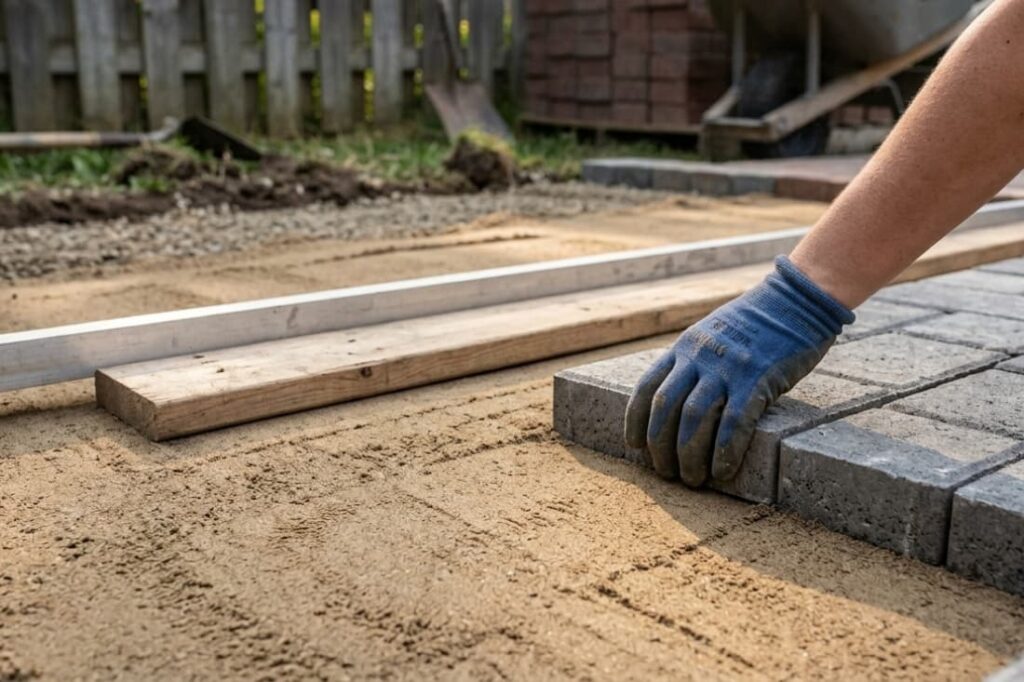
A patio stays strong when every paver is installed on a smooth, even bedding layer. This thin layer of bedding sand creates a level surface for the pavers. It is not meant to fix a base that is uneven.
After the base is compacted, contractors spread about 1 to 1,5 inches of bedding sand and screed it smooth. Once the sand is level, it should not be disturbed. Walking on it can create low spots that lead to uneven pavers.
Professional installers typically:
- Screed the bedding sand
- Place pavers one at a time
- Keep joint spacing consistent
- Check alignment often
- Add cut pavers where needed
Choose The Right Pattern
The laying pattern affects both the look and strength of the patio. Common options include:
- Herringbone
- Running bond
- Basketweave
- Fan pattern
- Circular pattern
Why Are Edge Restraints and Joint Sand So Important?
Credits: The Christian Hardscaper
Edge restraints and joint sand help keep a paver patio stable. Without them, pavers can shift over time from foot traffic, weather, and normal ground movement.
After the pavers are in place, contractors install edge restraints around the patio to hold everything together. Depending on the project, this may include plastic, metal, or concrete edging.
Next, a plate compactor is used to set the pavers into the bedding sand. Joint sand is then swept into every gap between the pavers before the surface is compacted again.
Choose The Right Joint Sand
| Standard Sand | Polymeric Sand |
| Lower cost | Better joint strength |
| Easier to replace | Helps reduce weeds |
| Needs more maintenance | Better washout resistance |
| Can erode over time | Helps discourage ants |
Many commercial projects use polymeric sand because it helps the joints stay in place and reduces maintenance.
For commercial properties, HOA communities, and residential projects throughout Charlotte, NC, Lapis Patios installs complete paver systems with proper edge restraints and joint stabilization to help patios stay level, durable, and attractive for years.
What Mistakes Do DIY Builders Make Most Often?
Most patio problems start below the surface, not with the pavers themselves. A weak base, poor drainage, or improper installation can lead to settling, shifting, and uneven pavers over time.
Common Installation Mistakes
Professional contractors work to avoid problems such as:
- Poor base compaction
- Bedding sand that is too thick
- Poor drainage slope
- Incorrect grading
- Missing edge restraints
- Weak laying patterns
- Skipping final compaction
- Using the wrong joint sand
Trying to fix a weak base with extra bedding sand is another common mistake. Bedding sand is only meant to level the pavers, not support the patio.
Commercial patios require careful planning from start to finish. Contractors must consider drainage, accessibility, local building codes, HOA requirements, and construction schedules before installation begins, particularly when the project also includes a dry stack retaining wall to manage elevation changes.
How Do You Finish and Maintain Your Patio?
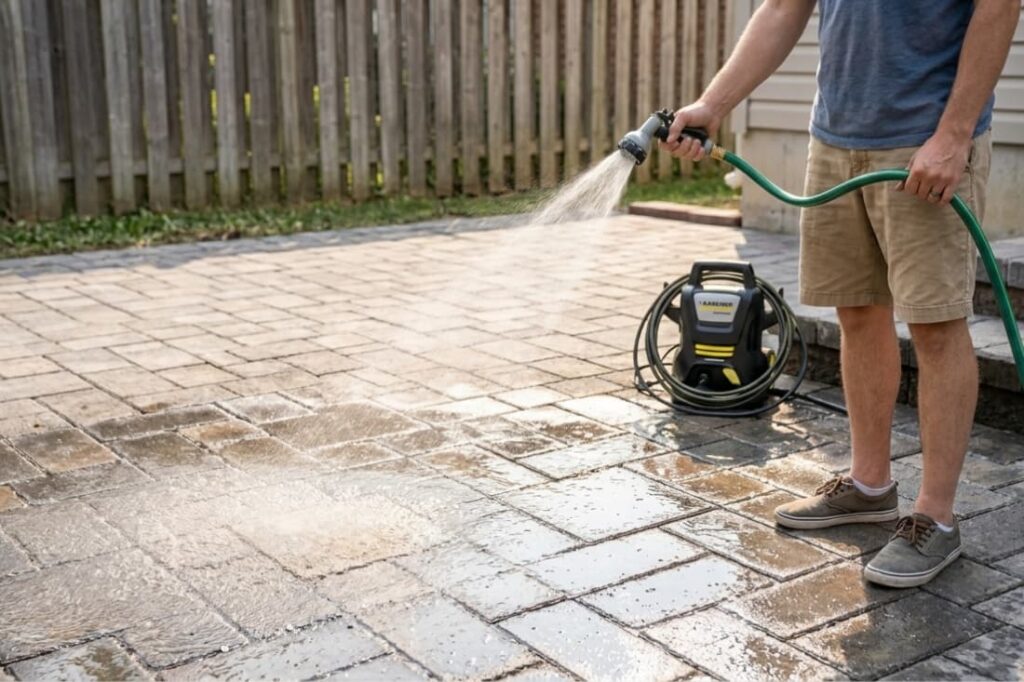
Regular maintenance helps keep a paver patio looking good and performing well. After installation, contractors inspect the patio to make sure the surface is level, the joints are secure, and water drains away from nearby buildings.
Research from ScienceDirect shows
“Permeable pavements can reduce surface runoff by 60–95% and peak flows by 30–70%, while enhancing groundwater recharge.” – ScienceDirect
Paver sealing is optional. Many manufacturers recommend waiting until the patio has gone through its initial weathering period before applying a sealer. This allows natural surface deposits to fade before sealing helps protect against stains and enhance color.
Routine Maintenance Includes:
- Cleaning the pavers
- Pressure washing when needed
- Adding joint sand as needed
- Checking edge restraints
- Replacing damaged pavers
- Inspecting drainage
One of the biggest benefits of interlocking pavers is that repairs are usually simple. If a section settles or needs utility work, contractors can lift the affected pavers, repair the base if needed, and reinstall the same pavers without replacing the entire patio.
FAQ
What base preparation is needed before installing patio pavers?
A durable paver patio starts with proper subgrade preparation, the correct excavation depth, and a stable paver base.
Installers typically use an aggregate base or crushed stone base that is compacted properly before adding bedding sand. Strong base compaction helps prevent settling, shifting, and uneven surfaces.
This foundation allows interlocking pavers, concrete pavers, brick pavers, and stone pavers to perform reliably over time.
How do interlocking pavers handle drainage issues?
Interlocking pavers can manage water effectively when the patio has proper slope and drainage. Grading for drainage, a slight fall away from the house, and a correctly built base help direct runoff away from the surface.
Permeable pavers can further improve drainage by allowing water to pass through joints. These features reduce standing water and help protect the hardscape patio from long-term damage.
What tools are needed for accurate paver installation?
Accurate paver installation requires tools that create a level and stable surface. A plate compactor or vibratory compactor is used for base compaction and securing the pavers.
A masonry saw, wet saw, angle grinder, and diamond blade help with paver cutting. Other essential tools include a hand tamper, screeding sand tools, and equipment for maintaining proper paver layout.
How can homeowners keep a paver patio looking new?
Regular paver maintenance helps extend the lifespan and appearance of a patio. Cleaning, pressure washing, re-sanding joints, and applying paver sealing can improve stain protection and colour enhancement.
Jointing sand or polymeric sand supports joint stabilisation while helping prevent weeds and ants. Fixing minor issues early also reduces the need for extensive paver replacement or settling repair.
Are interlocking pavers suitable for year-round outdoor use?
Yes, properly installed interlocking pavers can withstand seasonal weather changes and regular outdoor use. Selecting the right paver thickness, completing proper compaction, and including frost heave protection improve freeze–thaw durability.
Professional paver installation also ensures correct drainage, edge restraint, and foundation preparation. With routine maintenance, a paver patio can provide a long-lasting outdoor living space.
Build An Interlocking Paver Patio That Lasts
A strong paver patio starts with the right foundation. Good drainage, a compacted base, and proper installation help prevent problems like settling and uneven surfaces. For commercial properties, HOA communities, and homes in Charlotte, NC, professional installation helps create patios that are safe, durable, and built for daily use.
Lapis Patios installs paver patios for large projects and residential properties throughout the Charlotte area. Contact Lapis Patios to plan a patio that fits your site and lasts for years.
References
- https://fliphtml5.com/iiho/fffj/Tech_Spec_2_Construction_of_Interlocking_Concrete_Pavements/
- https://www.sciencedirect.com/science/article/pii/S2949823626001066