
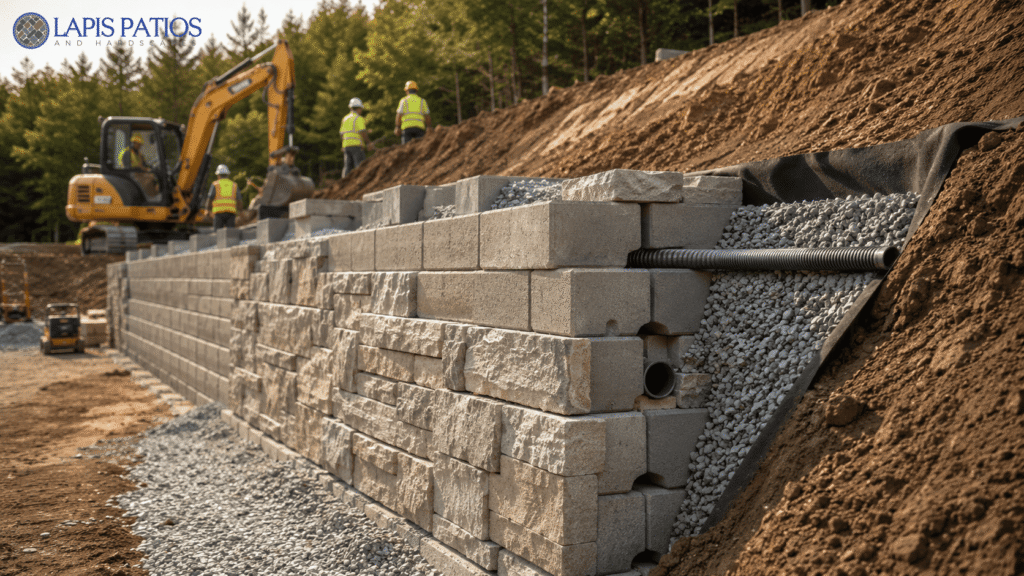
Explore materials for gravity retaining walls that improve strength, drainage, and long-term performance in real-world conditions.
Gravity walls last when the ground is right and water can move out. That is the short answer. In Charlotte, most stay under four feet unless an engineer signs off on more. Crews who build these every day know the pattern: problems start below the wall, not in the block.
A rushed base or no drainage will show up later, sometimes after the first heavy rain. The wall may look fine at handoff, then start to lean or crack. On commercial sites, that turns into repairs, tenant complaints, and failed inspections. Read on before you pick a material.
What Actually Drives Performance
- Drainage and base work matter more than the block
- Water buildup causes most failures
- Walls over four feet or near buildings must meet code and often need engineering
What Does A Gravity Retaining Wall Actually Depend On?
A gravity wall depends on weight, base width, soil strength, and drainage. Material helps, but it is not the main driver, especially when selecting proper retaining wall materials for long-term performance.
A stable wall keeps the load centered over its base. That reduces tipping and uneven settling. In the field, crews often size the base at about half to two-thirds of the wall height. It is a simple check that keeps the wall balanced.
On commercial work, three checks come up every time:
- Sliding at the base
- Tipping forward
- Soil failing under the wall
Permits and inspections usually require these.
Walls under four feet may skip full engineering, but that changes fast with added load. Parking areas, drive lanes, and nearby buildings all add pressure. Poor drainage or utility trenches can weaken the ground.
Key stability factors include:
- Soil strength under the wall
- Wall weight and how deep it sits
- Drainage behind the wall
- Loads from traffic or structures nearby
Miss one, and the wall is at risk.
What Are The Most Common Materials For Gravity Retaining Walls?
Credits: civilogy
Most gravity walls use natural stone, concrete blocks, brick systems, or poured concrete. Each handles load and water a bit differently.
Material choice affects how the wall deals with pressure and erosion. For structural use, concrete units need enough density to carry load over time.
As noted by Sustainability (MDPI)
“Gravity retaining walls refer to walls made of stone masonry or concrete that rely on their own weight to resist the lateral soil pressure. These walls are divided into mortar rubble, plain concrete, and reinforced concrete types according to their material composition.” – Sustainability (MDPI)
| Material | Strength | Best Use Case | Limitations |
| Natural Stone | High, very heavy | Visible, high-end areas | Slow install, more labor |
| Concrete Blocks (SRW) | Engineered | Commercial and HOA sites | Limited height without reinforcement |
| Brick / Masonry | Moderate | Low walls under 3 ft | Needs added support |
| Poured Concrete | Very high | Heavy loads, long walls | Higher cost, less flexibility |
Natural stone is common where appearance matters. It takes time to place and fit, but it holds up when done right.
Concrete block systems show up on most commercial sites. Crews can install them faster, and results stay consistent across large runs. With proper backfill and drainage, they perform well.
Poured concrete is used where loads are higher or space is tight. It handles longer spans but costs more.
Supporting materials include:
- Compacted stone base
- Drain pipe behind the wall
- Reinforcement when needed
The site should drive the choice, not just the look.
Materials People Think Work Vs What Actually Holds Up
Some materials get used because they are easy to buy, not because they last.
Timber and thin blocks are common on small jobs. They may look fine at first, but they do not hold up well over time.
On real sites, these walls often fail within a few years. Water gets in, soil shifts, and the face starts to move.
As highlighted by ISSMGE
“Broken-back gravity retaining walls are easily constructed by dry-stacking of segmental concrete blocks. The concrete blocks are secured through the interface frictional forces and shear keys among them.” – ISSMGE
Timber and railroad ties break down with moisture. They lose strength and cannot hold soil pressure for long. Most do not meet current code.
Thin concrete blocks from big-box stores often lack weight and proper interlock. Under load, they can bulge or collapse.
Proven systems include:
- Engineered segmental wall systems
- Gabion walls for areas with heavy water flow
- Reinforced soil systems for larger builds
Commercial projects use these because failure costs more than the build. It affects safety, schedules, and inspections.
In Charlotte and nearby areas, Lapis Patios builds retaining walls for commercial sites, HOAs, and large properties. Work follows proper grading, drainage, and local code so the wall holds up over time.
Why Drainage Matters More Than Material Strength
Most wall failures come back to water.
When water sits behind a wall, pressure builds. That force can push harder than the soil. Even a heavy wall can move if water has no way out, which is why proper gravel patio drainage strategies often apply to retaining wall systems as well.
Site reviews often show the same issue: little or no drainage.
Essential drainage components include:
- Gravel or clean stone backfill
- Perforated drain pipe
- Outlet points for water
A working system moves water away from the wall. That means a drain pipe, filter fabric, and a clear exit.
Wet soil also loses strength. It shifts more and supports less weight.
On commercial jobs in Charlotte, drainage is part of code and part of passing inspection.
Masonry Material Specs Most People Ignore
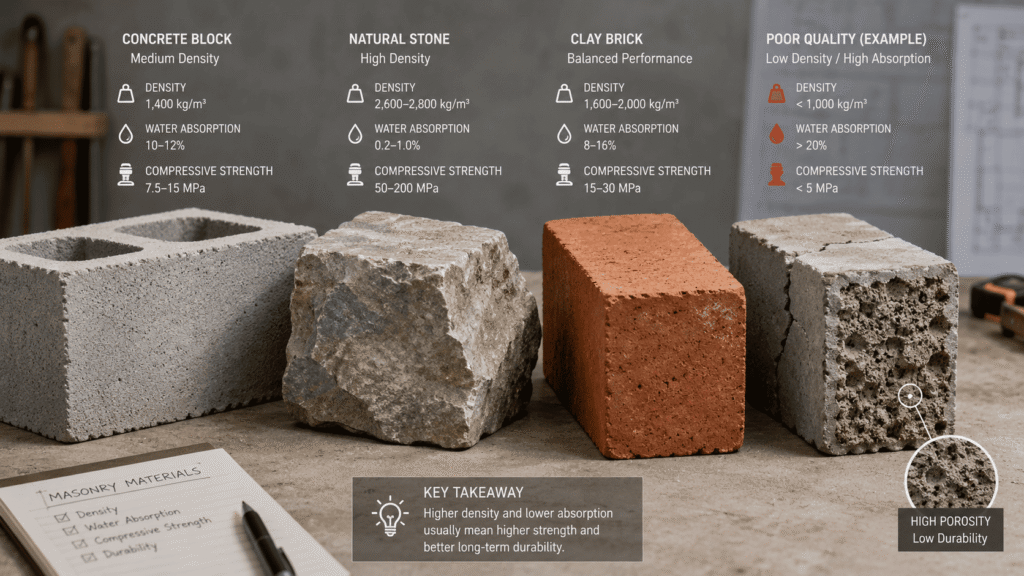
Small details often decide how long a wall lasts.
Concrete blocks need enough density to act as a gravity system. Lighter units reduce total weight and make movement more likely, especially when comparing different brick retaining wall options used in low-height builds.
Mortar matters as well. Stronger mixes handle stress better and hold joints in place.
Hollow blocks should be filled. That adds mass and improves resistance to sliding and tipping.
Key specifications include:
- Density at or above 125 lb per cubic foot
- Filled cores
- Backfill that matches the system
These are not cosmetic. A wall can look finished and still fail if these are skipped.
Lapis Patios builds masonry walls across Charlotte with these details in place. Projects meet code, pass inspection, and stay stable under real use.
When A Gravity Wall Stops Being “Just Gravity”
Some walls start simple but become more complex during construction.
Once a wall ties into a slab, foundation, or nearby structure, it no longer acts as a pure gravity wall. The load changes. New forces come into play.
These connections add bending and stress that a basic gravity wall does not handle on its own. At that point, design needs to account for more than just weight.
Standard checks still apply:
- Sliding
- Tipping
- Soil support under the base
But now, the design must also consider how the wall flexes and how forces move through connected structures.
In larger commercial builds, these setups can act more like cantilever or anchored walls. That requires engineering review and strict code compliance.
For developers and property managers in Charlotte, this is where mistakes get expensive. Lapis Patios handles these projects with proper planning, coordination, and build methods that meet local requirements and hold up over time.
Foundation And Soil: The Real Limiting Factors
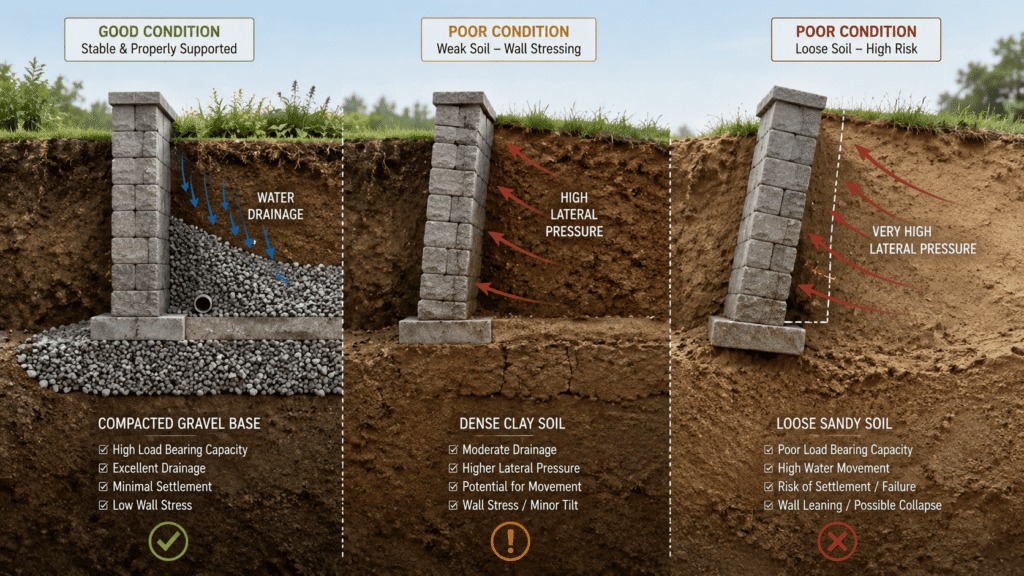
The ground under the wall often decides whether it holds or fails.
A heavy wall will not help if the soil below it is weak or soaked. Soft soil loses strength, and the wall can slide or sink. In many cases, the first sign of failure starts in the soil, not the wall itself.
Granular soils, like gravel, handle load better. They drain well and compact tightly. Clay soils do the opposite. They hold water, build pressure, and shift more over time.
Common failure modes include:
- Sliding at the base
- Tipping or rotation
- Soil giving way under the wall
The Federal Highway Administration points to soil prep and drainage as key factors in long-term wall performance. On commercial sites, this is not optional. It is part of doing the job right.
DIY Gravity Walls: What Works Vs What Fails
Some small walls can work without full engineering. Most problems start when steps get skipped.
Walls under four feet can perform well if the base is solid and drainage is in place. That means proper digging, compacted stone, and a way for water to escape.
Failures show up when corners are cut. Poor leveling, loose soil, or no drainage will catch up fast.
Successful installations include:
- A level trench with compacted stone base
- Proper depth below grade
- Built-in drainage behind the wall
On commercial and HOA projects, these details are standard. Lapis Patios handles this work with the right equipment, crews, and planning needed for larger builds in Charlotte and nearby areas.
When Should You Upgrade Materials Or Call A Professional?
Some projects move beyond basic gravity walls.
Walls over four feet often need engineering review. The same goes for walls near driveways, buildings, or heavy traffic areas.
Slopes, weak soil, and high water levels raise the risk. These conditions may call for reinforced systems instead of simple gravity walls.
Larger developments may need more advanced solutions, especially where space is tight or loads are high. Utility lines, drainage systems, and HOA rules also add layers of complexity.
Lapis Patios works on these types of projects across Charlotte, handling design coordination, permits, and builds that meet code from the start.
Choosing The Right Material For Your Gravity Retaining Wall
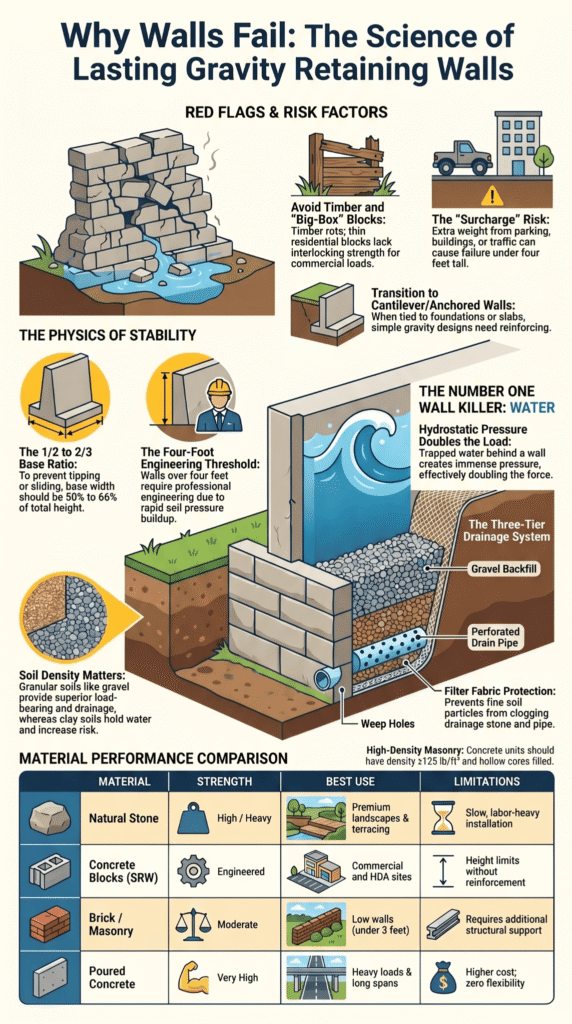
There is no single “best” material. The right choice depends on the site.
Height, soil, drainage, and load all play a role. Cost and appearance matter, but they should not drive the decision.
Natural stone works well for projects where appearance matters. It needs skilled installation and a solid base.
Concrete block systems are common on commercial jobs. They install faster and scale well across larger sites.
Reinforced concrete handles heavy loads and longer walls where standard systems fall short.
Recommended approach:
- Use natural stone where design matters
- Use segmental blocks for efficiency on large sites
- Use reinforced systems for high loads
For developers and property managers, material choice should follow site conditions and engineering input. Lapis Patios builds retaining walls across Charlotte that meet code, pass inspection, and hold up over time.
FAQ
What materials are best for a Gravity Retaining Wall?
A Gravity Retaining Wall uses heavy materials to resist soil pressure and keep the wall stable. Common materials include Natural Stone, concrete blocks, masonry blocks, and poured concrete.
Some projects also use a gabion wall filled with rocks. The blocks’ mass helps resist hydrostatic pressure. You should choose materials based on soil conditions, cost factors, and the desired appearance of your landscape structures.
How does a drainage system prevent retaining wall failure?
A proper drainage system reduces hydrostatic pressure behind a Retaining Wall and prevents water buildup. Builders install Weep Holes, a drainage pipe, or a perforated pipe to direct water away from the wall.
A Perforated Drain Pipe and a Drain Pipe Outlet allow water to exit safely. This process reduces soil erosion, lowers the pressure of the earth, and helps prevent failure modes caused by excess water.
When should reinforced concrete or geogrid reinforcement be used?
Reinforced concrete and Geogrid reinforcement should be used when soil pressure is high or when the wall supports a steep slope. Reinforced soil and geosynthetic reinforcement improve strength and increase global stability.
These systems help manage shear stresses and flexural stresses. A geotechnical engineer evaluates soil conditions, bearing capacity, and surcharge loads before selecting the correct reinforcing materials.
What factors affect stability checks for gravity walls?
Stability checks evaluate overturning moment, bearing capacity, and soil pressure to ensure wall safety. Engineers analyze soil conditions, surcharge loads, and frost line depth.
A base made with compacted aggregate and a Leveling Pad trench provides support. They also review embedment requirements and the pressure of the earth. These checks ensure that Gravity walls remain stable and meet building code requirements.
How do different retaining wall types compare for large projects?
Different retaining wall systems serve different purposes in large projects. A Gravity Retaining Wall relies on blocks’ mass for stability. A Cantilever wall and an Anchored Retaining Wall use reinforced concrete and anchors for added strength.
MSE walls, also called Mechanically stabilized earth systems, use geosynthetic material and structural backfill. Sheet pile retaining walls and a Piled Retaining Wall work well in limited spaces. A structural engineer compares soil conditions, cost factors, and design standards before making a final decision.
Choosing Materials That Hold Up Over Time
You deal with shifting soil, drainage pressure, and strict code requirements, and when those aren’t handled right, walls crack, lean, and fail faster than expected. It gets expensive fast.
Working with Lapis Patios gives you a clear path forward with engineered solutions built for Charlotte’s conditions and commercial demands. If your project needs lasting performance, start with the right team and schedule a consultation with Lapis Patios to get it done right the first time.
References
- https://www.mdpi.com/2071-1050/15/5/4405
- https://www.issmge.org/uploads/publications/59/60/28.00_Sadrekarimi.pdf