
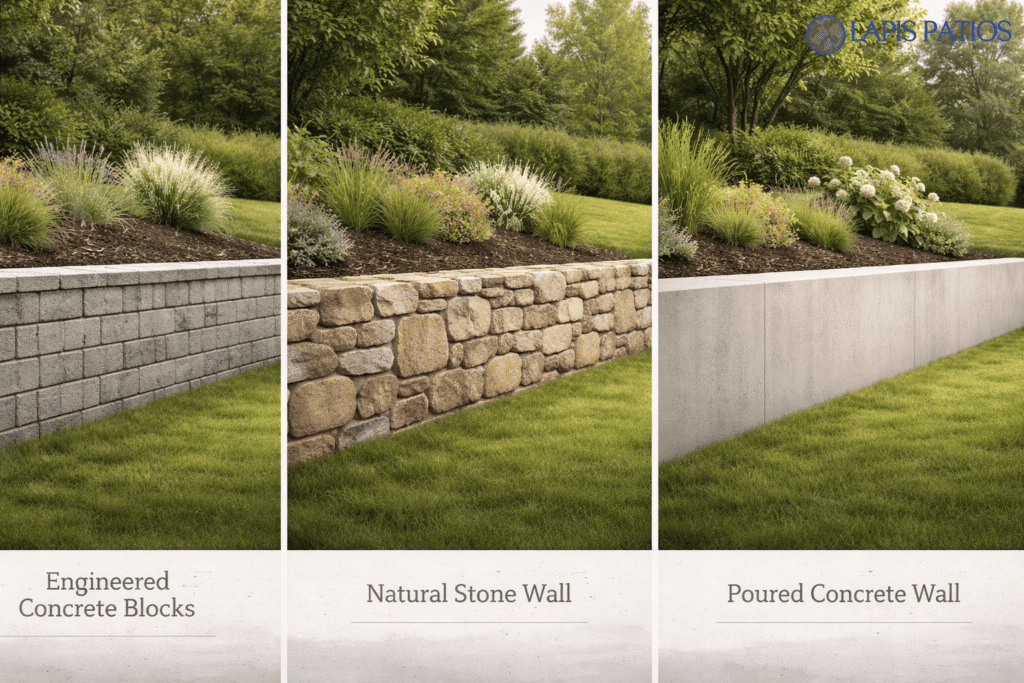
Retaining wall materials compared for durability, drainage, and code-compliant performance. Find the best option for long-lasting commercial builds.
The best retaining wall materials for commercial and patio-scale projects are engineered concrete block systems, natural stone, and reinforced concrete. These options hold up under pressure, manage water well, and meet strict code requirements.
In Charlotte, NC, contractors like Lapis Patios choose materials based on long-term performance, not appearance alone. Freeze-thaw cycles, soil conditions, and drainage all shape the decision. Developers and property managers also weigh liability, inspection standards, and lifecycle cost.
The wrong choice leads to repairs or failure. The right system lasts decades. Keep reading to see which materials perform best and why.
Material Selection Highlights
- Engineered block systems and reinforced concrete lead commercial projects due to consistent performance and 50+ year lifespan
- Drainage gravel and backfill design have a bigger impact on failure than the visible wall material
- HOA rules, permits, and engineering thresholds, often at 4 feet or higher, shape final material decisions
Best Materials For Retaining Walls (Commercial Focus)
The right retaining wall material has to do more than look good. It needs to handle soil pressure, manage water, and meet local building codes, especially when choosing the best materials for retaining walls that balance strength and long-term performance.
In commercial work, that usually leads to two top choices: segmental retaining wall systems and natural stone.
Segmental systems show up on most commercial sites for a reason. They are engineered, tested, and built to work with geogrid reinforcement. The National Concrete Masonry Association reports service lives that can exceed 50 years when installation is done correctly, especially with proper drainage and base preparation.
Concrete block systems are a practical choice for large developments. Retail centers, multifamily projects, and parking terraces all benefit from their modular design. Crews can scale quickly, and the finished walls tie in cleanly with steps, walkways, and seating areas.
As noted by the American Society of Home Inspectors (ASHI)
“A retaining wall can be built with just about anything that can support the retained material and anything that has a reasonable service life in a wet environment… Preservative-treated wood is the most commonly used material in many markets, especially for newer walls… Masonry (concrete blocks and brick) is also a commonly used material… Interlocking block walls are built using manufactured concrete blocks… [which] may be as tall as the manufacturer or an engineer will allow.” – American Society of Home Inspectors (ASHI)
Natural stone sits at the higher end. It costs more upfront, but it holds up. A well-built stone retaining wall can last 75 to 100 years, and it carries a level of finish that fits high-visibility areas.
In the Charlotte market, contractors like Lapis Patios often use a mix of block and stone systems. The goal is simple: meet engineering requirements while keeping the site consistent with surrounding architecture and HOA standards.
Common materials in commercial and high-end residential work include:
- Engineered concrete blocks for scalable builds
- Natural stone for long-term durability and appearance
- Reinforced poured concrete for high-load conditions
- Limited timber use, mostly for temporary or low-load situations
Material decisions are tied to grading plans, drainage design, and local approvals. In North Carolina, those factors shape the project as much as the material itself.
Most Durable Retaining Wall Materials
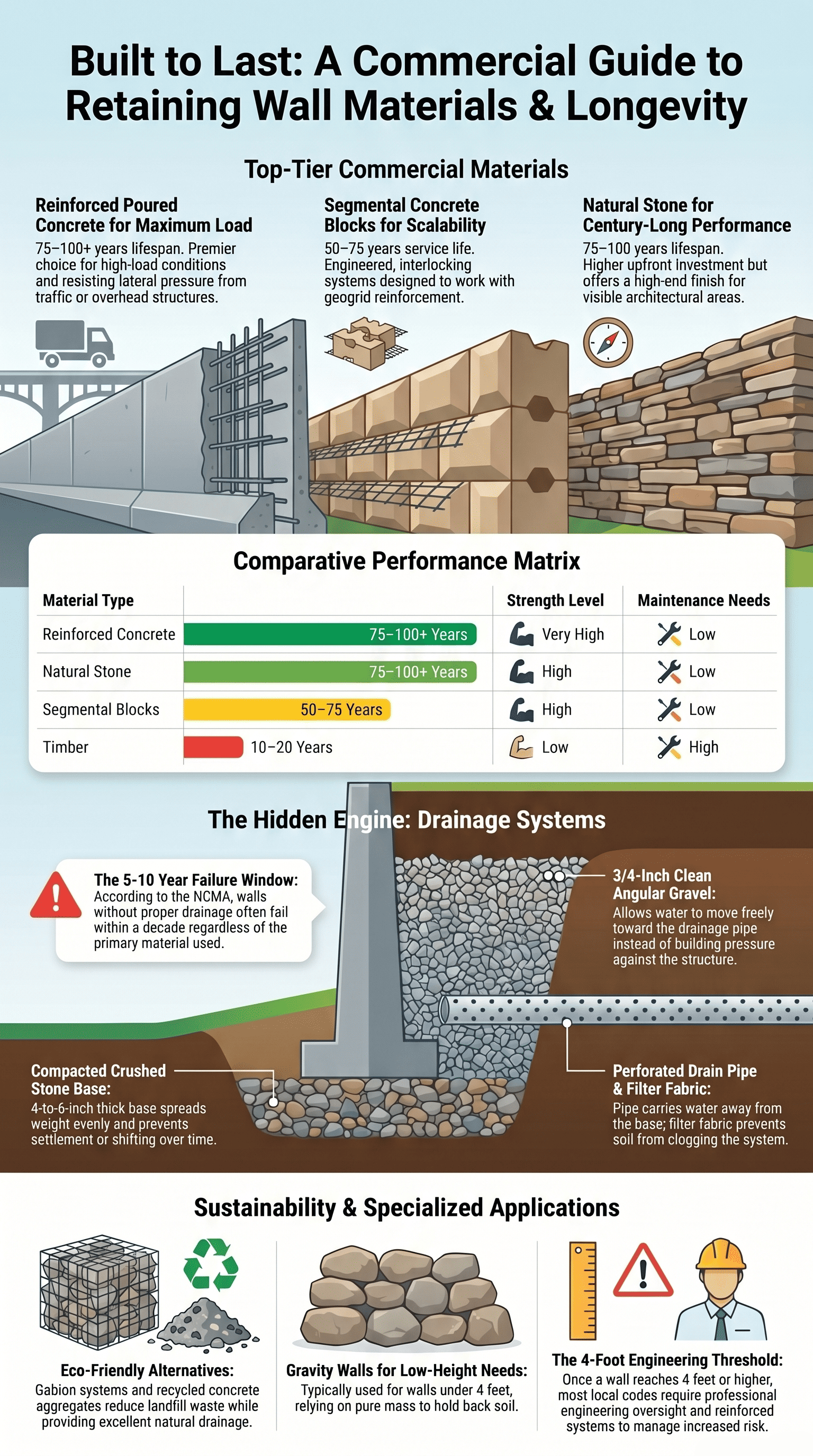
Durability comes down to structure, not surface. Reinforced concrete, engineered block systems, and natural stone all perform well when installed with proper drainage and soil prep, which is why durable retaining wall materials are typically chosen based on load resistance and lifespan. These materials regularly reach 50 to 100 years of service life.
Reinforced poured concrete handles the highest loads. With steel or fiberglass reinforcement, it resists strong lateral pressure and added weight from traffic or structures above. The American Concrete Institute notes that these systems can exceed 75 years when designed and built to spec.
In a recent analysis by the Kentucky Transportation Cabinet (KYTC)
“The segmental retaining wall units shall be solid concrete interlocking units with a split rock face appearance… Concrete units shall have a minimum 28-day compressive strength of 4,000 psi… and shall be resistant to freeze-thaw cycles as determined by ASTM C1262.” – Kentucky Transportation Cabinet (KYTC)
Segmental block systems also hold up over time. When combined with geogrid, they act as mechanically stabilized earth walls. Instead of relying on mass alone, they spread loads through reinforced soil layers behind the wall.
Natural stone has the longest track record. Many stone walls across the U.S. have been in place for over a century. The key is proper drainage and a stable base. Without those, even stone can fail early.
Here is how the main materials compare:
- Reinforced concrete: 75–100+ years, very high strength, low maintenance
- Segmental concrete blocks: 50–75 years, high strength, low maintenance
- Natural stone: 75–100+ years, high strength, low maintenance
- Timber: 10–20 years, lower strength, higher maintenance
| Material Type | Expected Lifespan | Strength Level | Maintenance Needs |
| Reinforced Concrete | 75–100+ years | Very High | Low |
| Segmental Concrete Blocks | 50–75 years | High | Low |
| Natural Stone | 75–100+ years | High | Low |
| Timber | 10–20 years | Low | High |
Timber rarely fits commercial use. Moisture, pests, and shorter lifespan make it a poor long-term investment. Many property managers end up replacing wood walls within 15 to 20 years.
In practice, durability depends just as much on what you do behind the wall. Drainage systems, base prep, and soil conditions often decide how long a wall lasts.
Eco-Friendly Retaining Wall Materials
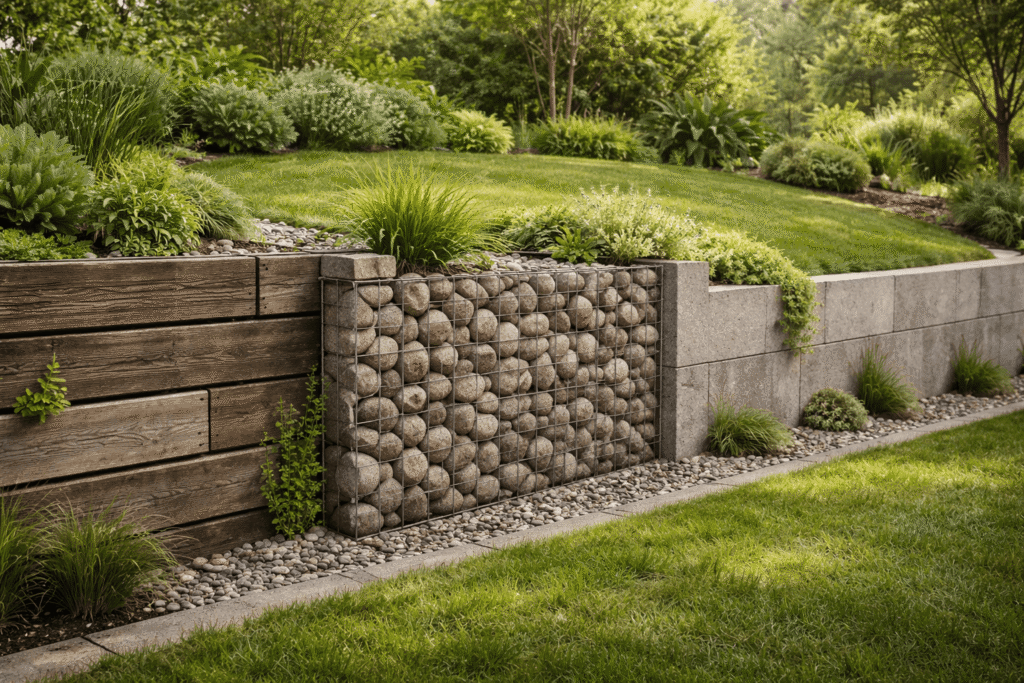
Sustainable construction is less about trends and more about lifespan and material sourcing, especially when using eco-friendly retaining wall materials that reduce waste and extend service life. Walls that last longer reduce rebuild cycles, which cuts waste over time.
Recycled concrete is widely used in both wall units and backfill. The U.S. Environmental Protection Agency links concrete recycling to lower landfill use and reduced demand for new raw materials.
Gabion systems offer another option. These use steel cages filled with stone, often sourced locally or recycled. Because they allow water to pass through, they reduce pressure buildup behind the wall.
Locally sourced natural stone also lowers transport impact. Over a long service life, it often has a smaller environmental footprint than shorter-lived materials that require replacement.
Common sustainable options include:
- Recycled concrete blocks and aggregates
- Gabion wall systems with recycled steel
- Locally quarried natural stone
- FSC-certified or reclaimed timber, used in limited cases
In commercial work, sustainability usually comes back to performance. Contractors like Lapis Patios focus on building walls that last, with proper drainage and structural design. Fewer rebuilds mean less material waste over the life of the property.
Materials For Gravity Retaining Walls
Credits: I Am a Hardscaper
Gravity walls rely on weight and shape to hold back soil, and the choice of materials for gravity retaining walls plays a direct role in how well they perform in lower-height applications, usually under 3 to 4 feet.
Boulder walls are one of the simplest forms. Large stones provide natural mass and work well for entrances and landscape features. They are often used where a more natural look is required.
Segmental block systems can also act as gravity walls at smaller heights. These are common for patio edges, seating walls, and tiered landscaping.
Other materials used in gravity walls include large concrete units and, in some cases, brick or veneer for short sections.
Typical gravity wall materials include:
- Natural boulders and large stone units
- Segmental retaining wall blocks
- Large concrete masonry units
- Limited brick or veneer for low-height use
Even small walls need a solid base. Crushed stone foundations and proper drainage prevent shifting and settlement.
Most commercial projects avoid pushing gravity walls too far. Once heights approach four feet, reinforced systems with engineering oversight become the safer and more reliable choice. In regulated areas like Charlotte, that also helps meet code requirements and reduce long-term risk.
Gravel For Retaining Wall Drainage
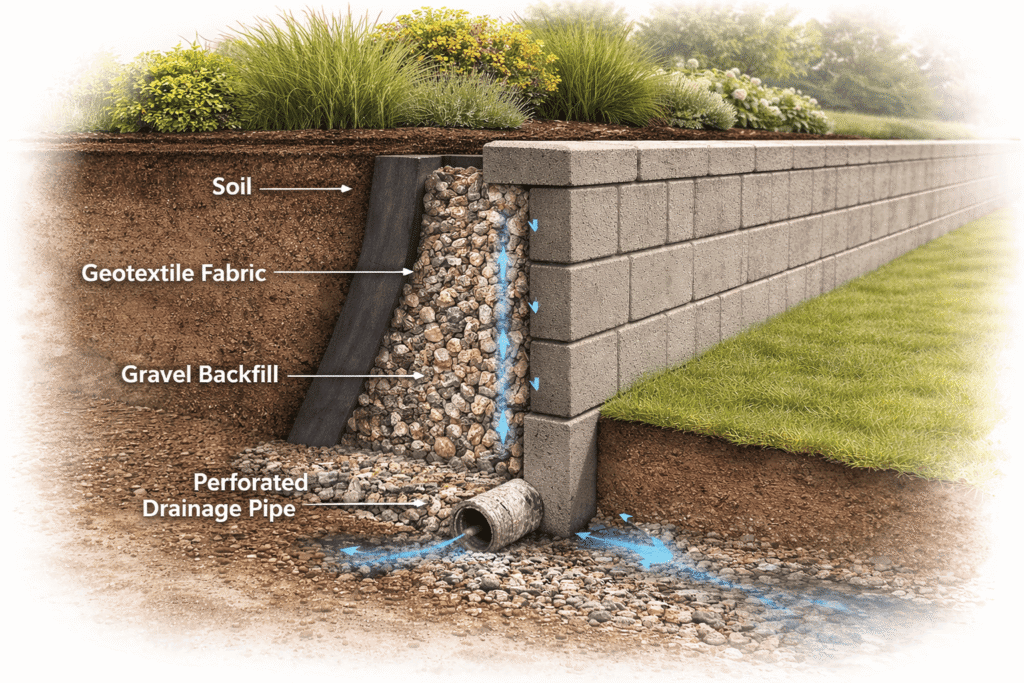
Drainage gravel sits at the center of every retaining wall system, and using the right gravel for retaining wall drainage helps prevent pressure buildup and long-term structural failure. Without it, water builds up behind the wall, creating pressure that pushes the structure out over time. Most failures trace back to this issue, not the wall material itself.
Industry guidance from the National Concrete Masonry Association shows that walls without proper drainage often fail within 5 to 10 years. That risk shows up across commercial sites where water is not managed from the start.
Two areas need attention on every build: behind the wall and beneath the base.
Behind the wall, crews use clean, angular gravel, typically 3/4-inch stone. This material leaves space for water to move freely. It feeds into a perforated drain pipe placed at the base of the wall, which carries water away from the structure.
Below the wall, a crushed stone base, usually 4 to 6 inches thick, supports the load. It spreads the weight evenly and reduces settlement. It also keeps water from sitting under the wall, which can weaken the foundation over time.
A complete drainage system includes:
- Clean angular gravel, often ASTM No. 57 stone
- Perforated drain pipe with a clear outlet path
- Filter fabric to keep soil from clogging the system
- Compacted crushed stone base
Federal Highway Administration guidance on retaining structures puts strong emphasis on drainage design. The message is consistent: water control is part of the structure, not an add-on.
On commercial projects in Charlotte and nearby areas, Lapis Patios plans drainage alongside grading and site layout. Water is directed away from buildings, paved areas, and footings before construction begins. That approach helps meet local codes and HOA requirements while reducing long-term risk.
Clay-heavy soils in North Carolina make drainage even more important. These soils hold water, which increases pressure behind the wall after heavy rain. Without a proper system in place, failure can happen sooner than expected.
Skipping or cutting corners on drainage usually leads to repairs, rebuilds, and added cost. A well-built wall handles water from day one and continues to perform years after installation.
FAQ
What retaining wall materials work best for steep slopes?
For steep slopes, strong retaining wall materials such as reinforced concrete, interlocking concrete blocks, and gabion wall systems provide reliable structural support.
These materials help stabilize soil and reduce soil erosion. They also manage water flow more effectively. Adding geotech fabric and drainage stone improves erosion control and ensures long-term stability in challenging landscape conditions.
How do I choose between natural stone and concrete blocks?
Natural stone creates a timeless look and works well in landscape design, especially around garden beds or water features. Concrete blocks, including modular blocks and paver wall blocks, are more cost-effective and easier to install.
Both options support outdoor space needs, but the final choice depends on your budget, design preference, and required structural strength.
Do retaining walls need drainage systems?
All retaining walls require proper drainage systems to perform well over time. Without drainage, water flow builds pressure behind the wall and can cause structural damage.
Using drainage stone, a weep hole, and filter fabric helps control moisture runoff. These elements improve moisture resistance and protect the wall from freeze-thaw cycles and long-term wear.
Are timber walls a good option for landscaping projects?
Wood and timber retaining walls are suitable for small landscaping projects, such as garden beds or light outdoor features. Common materials include pressure-treated wood and Douglas fir.
These walls are easier to install, but they do not last as long as concrete or masonry retaining walls. Timber walls work best when only light structural support is required.
What factors affect retaining wall durability over time?
Several factors affect the durability of retaining wall materials, including material strength, climate conditions, and design quality. Reinforced concrete, masonry blocks, and gabion-style retaining walls offer high compression strength.
Elements such as frost line depth, freeze/thaw cycles, and moisture resistance are critical. Proper drainage, erosion protection, and sound landscape engineering help extend the wall’s lifespan.
Build It Once, Let It Hold
You’re dealing with shifting clay, trapped water, and walls that can fail when pressure builds up over time. It’s frustrating when a wall looks solid but starts cracking or leaning after a few seasons. It doesn’t last.
That’s why working with Lapis Patios makes a difference. They focus on systems that handle real site conditions, not just surface looks, combining proper materials with drainage and engineering from the start. It’s a smarter move that protects your investment and avoids costly fixes later.
References
- https://www.homeinspector.org/reporter-articles/the-word-retaining-walls/
- https://transportation.ky.gov/Construction-Procurement/Proposals/201-JEFFERSON-09-1038.pdf