
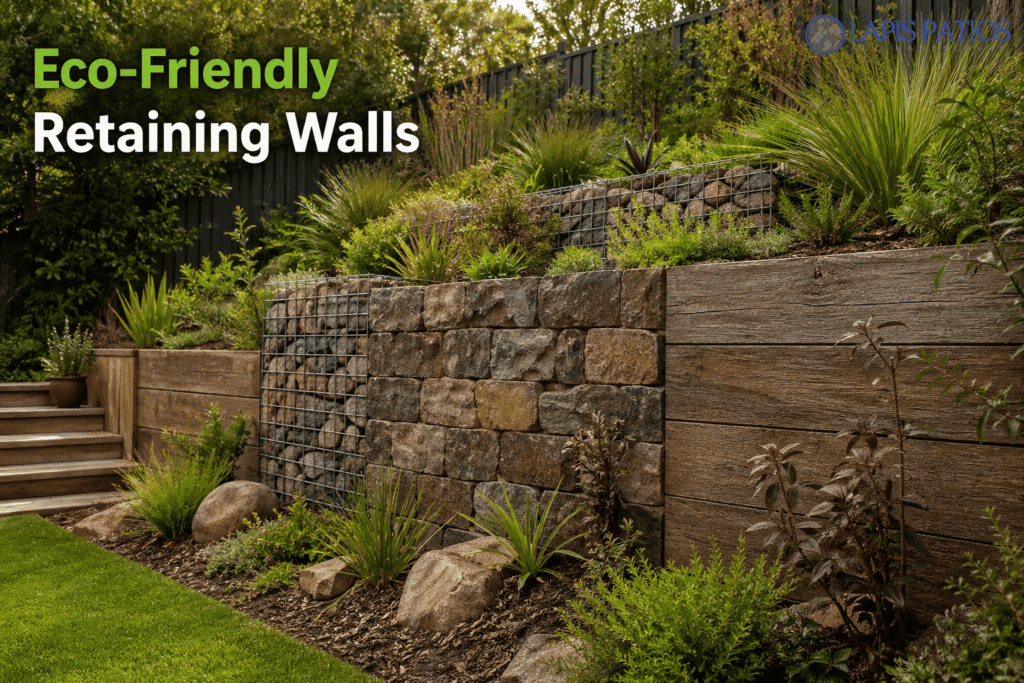
Eco-friendly retaining wall materials cut waste, improve drainage, and create stronger outdoor spaces that last.
A retaining wall does more than just hold dirt back. It protects property, manages water, and helps shape land you can actually use. The material you pick matters, but maybe not why you’d think. The truth is, a wall is only as strong as everything behind it.
That means the base, the drainage setup, and the soil it’s holding all matter just as much as the blocks you see. For commercial properties around Charlotte, these walls deal with heavier loads, strict building codes, and HOA rules.
A weak wall leads to drainage issues, erosion, or a big repair bill. That’s why builders and property managers here look at long-term performance first.
Lapis Patios builds retaining walls for commercial sites, communities, and homes with that in mind. The goal is straightforward: build walls that stay put, drain water, and last.
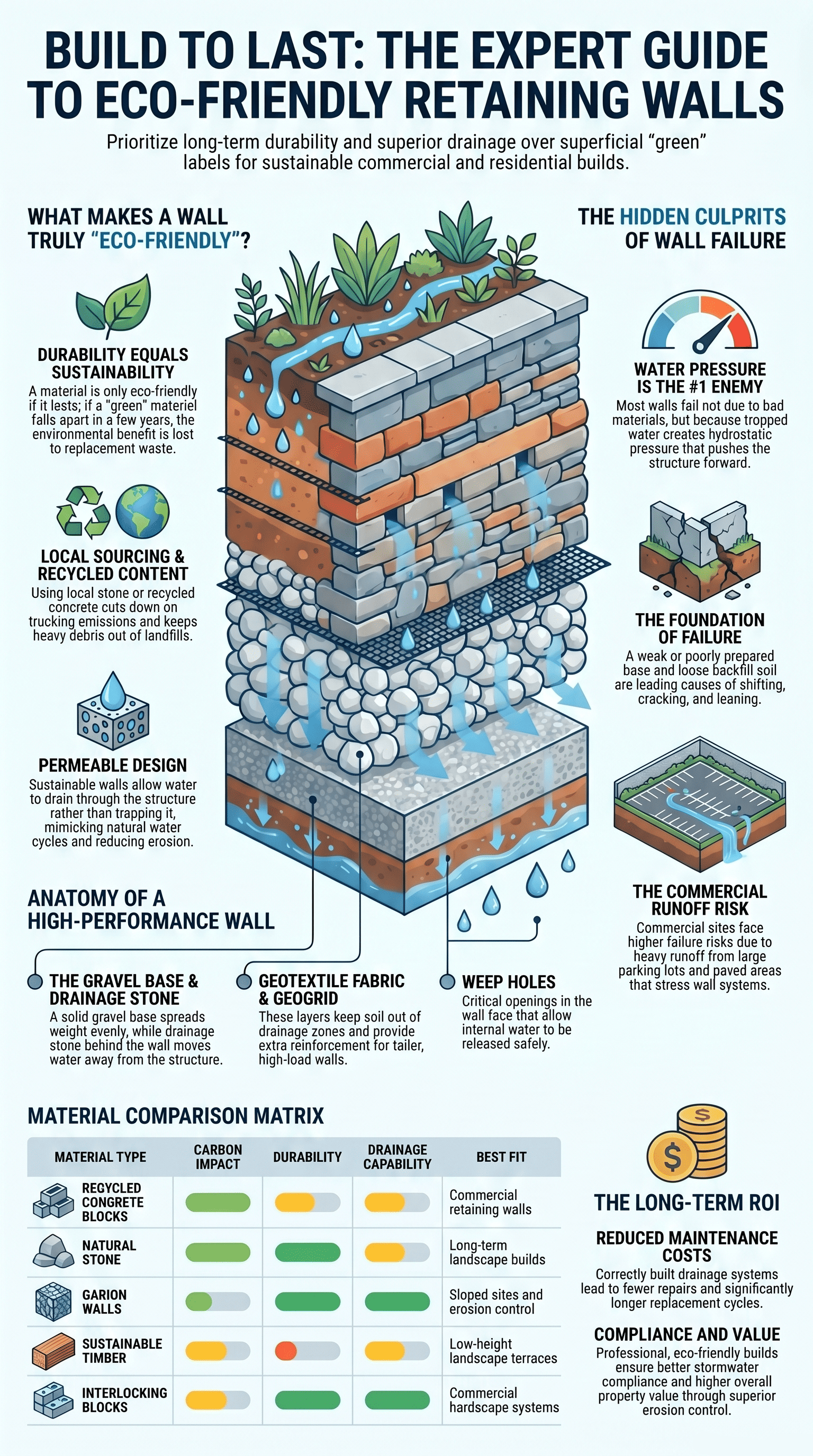
What Really Matters in an Eco-Friendly Wall
- Materials that last longer mean less replacement and less waste.
- How you handle drainage affects the wall’s life more than the material itself.
- Stone, recycled concrete, and gabion systems are solid picks for the long haul.
What Makes a Retaining Wall Material “Eco-friendly” for a Commercial Job?
Not every “green” material is a smart choice for a wall. A wall might be made from recycled stuff, but if it falls apart in a few years, any environmental benefit is gone. That’s why commercial projects need to see the full picture.
Where did the material come from? How far was it trucked? How long will it last before it needs fixing? These questions matter more than a “green” label.
For developers, sustainable materials often mean lower costs over time and fewer headaches. A good eco-friendly retaining wall usually does these things:
- Uses recycled or local materials.
- Helps water drain through instead of trapping it.
- Creates less junk during the build.
- Holds up for years without major fixes.
The usual options are:
- Recycled concrete block
- Natural stone
- Gabion wall systems (stone-filled cages)
- Interlocking block systems
If you’re comparing retaining wall materials for a commercial build, the biggest difference usually comes down to drainage behavior, structural load, and how the wall handles long-term soil pressure.
In Charlotte, the land’s slope and where water runs often decide the material. Lapis Patios plans for those conditions first, not what’s trendy.
Why Retaining Walls Fail, Even with “Green” Materials
Most walls don’t fail because the material was bad. They fail because water got stuck. When water builds up behind a wall, the pressure pushes on the structure. Eventually, the wall shifts, cracks, or starts to lean. This happens a lot. On commercial sites, it’s worse because there’s more runoff from parking lots and paved areas.
Here’s why walls usually fail:
- A weak or poorly prepared base.
- Bad drainage behind the wall.
- Loose backfill soil.
- Missing filter fabric.
- No reinforcement for taller walls.
Even the best stone or block can’t make up for a bad installation. That’s why Lapis Patios designs the drainage right into the wall system from the start. It’s built-in, not an afterthought.
Recycled Concrete in Retaining Walls: Smart Reuse or Extra Risk?
Recycled concrete is a practical choice for walls now. It keeps old concrete out of the dump and means we need less new rock. That’s good, especially on big commercial jobs that use a lot of material.
But recycled concrete has its limits. How well it works depends on how clean and consistent the old concrete is. Good material performs well. Bad material can cause drainage problems and settling.
Where recycled concrete helps:
- Cuts down landfill waste.
- Reduces the need for new rock.
- Can lower trucking costs if it’s sourced locally.
Where it can cause trouble:
- Strength can vary from piece to piece.
- Small bits can clog up drainage.
- Needs to be packed down really well to stay stable.
For bigger wall systems, Lapis Patios uses recycled concrete only when it fits the engineering plan and the drainage design. It’s not a cheap shortcut. It has to be part of the whole system.
Natural Stone Walls and Using Reclaimed Stone
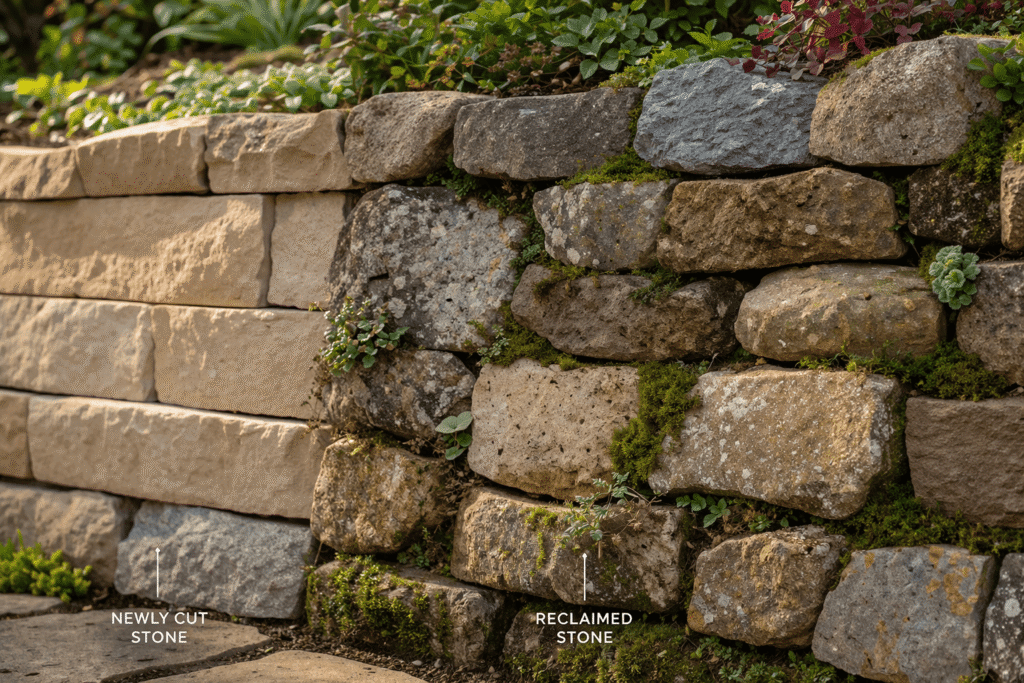
People have used natural stone for retaining walls forever because it works. It handles pressure, stands up to weather, and lasts. Using stone from nearby quarries cuts down on trucking, which is better for the environment.
Reclaimed stone goes a step further, it reuses old stone from other projects instead of cutting new stone. This works for both commercial and residential jobs.
Common uses for natural stone walls:
- Holding back soil on sloped land.
- Creating tiered landscape walls.
- Building commercial outdoor spaces.
Advantages
- Very long life.
- Strong against weather and soil movement.
- Needs less processing than man-made concrete.
Challenges
- Higher upfront cost to install.
- Takes more labor to build.
- Depends on what’s available locally.
For business properties, HOAs, and larger homes in Charlotte, natural stone is still one of the toughest, longest-lasting choices. Among the most durable retaining wall materials, natural and reclaimed stone continue to perform well where long-term stability matters most. Lapis Patios uses these systems when both durability and looks are important.
Gabion Walls and Interlocking Block Systems
Gabion walls are simple but strong. They’re wire cages filled with stone or recycled rubble. Water flows right through them instead of building up pressure behind them. This makes them great for spots with serious drainage or erosion problems. You often see them on slopes, near creek banks, or on commercial land with heavy runoff.
Best uses for gabion walls:
- Stabilizing slopes.
- Controlling erosion.
- Landscapes with a lot of water flow.
Benefits
- Excellent drainage.
- You can fill them with reclaimed material.
- They flex and fit on uneven ground.
Limits
- The wire can rust over a very long time.
- You have to plan the stone size carefully.
Interlocking block systems are another good option. They go together faster and work well for larger, taller walls. For commercial work, they also help meet structural plans and local building codes. Lapis Patios builds both gabion and block systems, choosing based on the site’s slope, how water flows, and how tall the wall needs to be.
Eco-Friendly Timber And Reclaimed Wood Retaining Systems
Timber retaining walls still have a place in certain projects, but mainly where wall height is low and soil loads are lighter. Reclaimed wood and sustainably sourced timber can lower environmental impact, especially in smaller landscape zones.
In Charlotte, timber walls are more common in residential properties, HOA-managed green spaces, and low-rise terraced layouts.
Advantages:
- Renewable building material when responsibly sourced
- Lower production impact compared to concrete-based systems
- Fits well into natural landscape designs
Limitations:
- Shorter life compared to stone or block walls
- Higher risk of rot in wet soil conditions
- Needs proper treatment to meet long-term performance needs
For larger commercial projects, timber is usually not the first choice because of lifespan and maintenance. Still, it can work in smaller support walls or decorative landscape tiers when backed by proper drainage and reinforcement.
Lapis Patios uses timber systems where they make structural sense and where project requirements, HOA guidelines, and site conditions support long-term performance.
Table: Eco-Friendly Retaining Wall Material Comparison
| Material Type | Carbon Impact | Durability | Drainage Capability | Best Fit |
| Recycled Concrete Blocks | Low | Medium | Medium | Commercial retaining walls |
| Natural Stone | Low | High | Medium | Long-term landscape builds |
| Gabion Walls | Low | High | High | Sloped sites and erosion control |
| Sustainable Timber | Medium | Low | Medium | Low-height landscape terraces |
| Interlocking Blocks | Medium | High | High | Commercial hardscape systems |
No material checks every box. The right choice depends on site conditions, drainage needs, wall height, and how long the structure is expected to last.
For commercial projects, durability and drainage usually carry more weight than upfront material cost. A wall that lasts longer and handles water well often costs less over time.
Lapis Patios helps developers, property managers, and contractors weigh those factors before construction starts, so the retaining wall fits both the site and the long-term plan.
Drainage Systems And Soil Pressure Management In Sustainable Retaining Walls
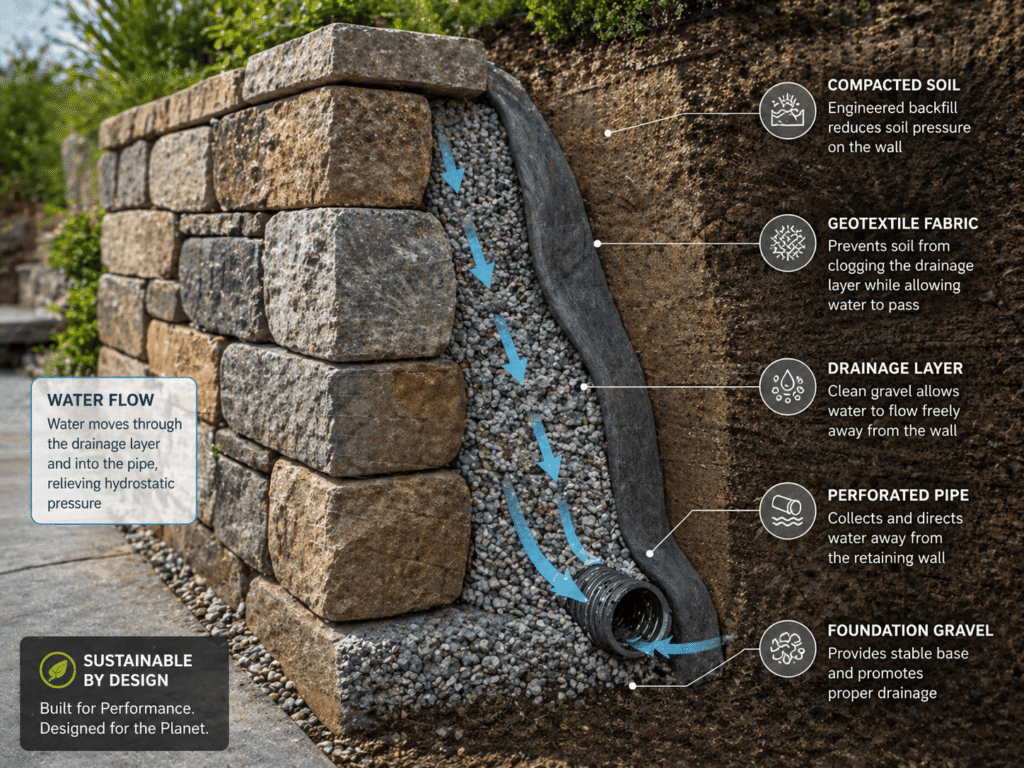
Most retaining wall failures start with water.
It does not matter if the wall is built from stone, block, or recycled material. If water cannot move out from behind it, pressure builds and the wall starts to shift.
That is why drainage is part of the structure, not an extra feature.
On commercial properties in Charlotte, NC, drainage matters even more because larger paved areas create heavier runoff. Parking lots, shared-use spaces, and sloped developments move a lot of water during storms.
As noted by U.S. Environmental Protection Agency (EPA)
“These alternative materials, which include pervious asphalt, pervious concrete, interlocking pavers, and plastic grid pavers, allow rain and snowmelt to seep through the surface down to underlying layers of soil and gravel. In addition to reducing the runoff from the rain that falls on them, permeable pavements can help filter out pollutants that contribute to water pollution.” – EPA
A strong retaining wall system usually includes:
- A gravel base to spread weight and improve stability
- Drainage stone behind the wall to move water away
- Weep holes for water release
- Geotextile fabric to keep soil out of drainage zones
- Geogrid layers for extra soil reinforcement on taller walls
Each part works together. Miss one, and the wall carries more stress than it should.
Lapis Patios builds retaining wall systems with drainage planned from the ground up, especially for commercial sites where code requirements and runoff control are stricter.
Sustainable Construction Practices Used By Lapis Patios
Sustainable retaining wall construction is not only about choosing better materials. It is about building the system the right way from the start.
At Lapis Patios, every retaining wall project starts with site conditions. Soil type, slope angle, drainage flow, and load pressure all shape the build plan. That matters for commercial sites where wall failure can affect access roads, parking areas, or nearby structures.
Research from MDPI shows
“The design of hollow thin-walled columns can effectively reduce the amount of concrete used and, as a consequence, reduce its carbon emissions, while meeting the design strength requirements of the retaining wall. The PGERW addresses the challenges of improving the extent of greening and drainage performance of traditional prefabricated retaining walls.” – MDPI
Core practices used on retaining wall projects include:
- Site-based soil review for load and stability planning
- Construction built to local building code requirements
- HOA compliance for managed communities and shared developments
- Use of recycled concrete, natural stone, and permeable block systems where practical
- Drainage systems designed for runoff control and erosion prevention
For larger projects, Lapis Patios also builds tiered retaining systems, permeable wall layouts, and integrated landscape drainage features that help control water across the property.
For developers, construction teams, and property managers in Charlotte and surrounding areas, the goal is straightforward: build retaining walls that meet code, manage water, and hold up for the long haul.
Cost-Benefit Analysis Of Eco-Friendly Retaining Wall Materials
Credits: HYPE Building
Eco-friendly retaining wall materials can cost more at the start, but the bigger cost is what happens after installation.
A lower-priced wall that needs repairs in a few years often costs more than a stronger system built to last. For commercial properties, that difference adds up fast, especially on large sites where repairs affect access, drainage, and tenant use.
When comparing retaining wall options, the full life of the wall matters more than the install price.
Key cost factors to review:
- Lower maintenance costs when drainage systems are built correctly
- Fewer repairs and longer replacement cycles with stronger materials
- Better stormwater compliance for regulated commercial developments
- Added property value through long-term site improvement and erosion control
In many commercial builds, recycled concrete and natural stone offer strong long-term value because they hold up well and need less upkeep over time.
For developers and property managers in Charlotte, NC, that makes the decision less about upfront savings and more about long-term site performance.
Lapis Patios helps clients plan retaining wall systems around lifespan, drainage demands, and project scale, so the budget works beyond day one.
Eco-Friendly Retaining Walls For Commercial And Residential Development
Eco-friendly retaining walls work best when the focus stays on performance first.
For commercial projects, that means stability, drainage control, code compliance, and long-term durability. Material choice matters, but installation quality and site planning matter more.
A retaining wall has to handle soil pressure, move water correctly, and stay stable through years of weather and ground movement.
That is true for large commercial developments, HOA-managed communities, retail properties, and residential builds. In outdoor spaces where retaining walls connect with hardscape areas, pairing them with eco-friendly patio flooring can improve drainage control and support a more sustainable landscape design.
Lapis Patios builds retaining wall systems across Charlotte, NC and surrounding areas for projects that need more than a basic landscape wall.
That includes:
- Soil erosion control on sloped properties
- Drainage-focused wall systems for runoff management
- Structural retaining walls for grade changes and land support
- HOA-compliant wall installations for managed communities
- Large-scale retaining systems for commercial site development
The right retaining wall is not the one with the strongest marketing. It is the one built for the site, built to code, and built to last. For property owners and development teams planning long-term site improvements, that makes the difference.
FAQ
How do eco-friendly retaining wall materials reduce carbon footprint in outdoor space projects?
Eco-friendly retaining wall materials reduce carbon footprint by using sustainable materials like recycled concrete and natural stone. These options require less energy during production and reduce waste.
In outdoor space projects, they also limit environmental impact while still providing strong support against soil erosion. This helps create durable retaining walls that protect land and improve long-term sustainability for local communities.
What retaining wall materials like natural stone and concrete blocks work best for soil conditions?
Natural stone and concrete blocks are strong retaining wall materials that work well in many soil conditions. They handle soil pressure and help stabilize sloped land.
These materials also support proper drainage capabilities when installed with gravel base and drainage stone. In outdoor space design, they offer long-lasting structure while reducing environmental impact compared to weaker options over time use.
Why are recycled concrete and reclaimed wood important for sustainable retaining wall materials?
Recycled concrete and reclaimed wood are important because they reduce waste and support a circular economy. They lower environmental impact by reusing materials instead of creating new ones.
In retaining walls, they still provide strength and durability when designed properly. These sustainable materials also help reduce carbon footprint and promote eco-friendly construction practices in outdoor space projects over long term.
How do drainage systems in retaining walls control water flow and prevent soil erosion?
Drainage systems in retaining walls manage water flow and reduce hydrostatic pressure behind the wall. Without proper drainage, water buildup can cause soil erosion and structural damage.
Using drainage stone, weep hole openings, and gravel base helps water move safely away. This keeps outdoor space stable and protects soil conditions during heavy rain in uneven terrain areas over time well.
How do sustainable landscaping and permeable designs improve retaining walls in outdoor space?
Sustainable landscaping and permeable designs help retaining walls manage water flow and reduce runoff. They support healthy soil conditions and reduce environmental impact in outdoor space.
Features like native plants, green walls, and terraced walls improve stability on sloped land. These methods also reduce soil erosion and work well with local soil and changing weather conditions over time naturally balanced.
Smart Retaining Wall Choices Start With Long-Term Performance
When your retaining wall starts shifting, draining poorly, or breaking under pressure, you’re looking at more than a repair, you’re facing site delays, safety risks, and added costs. That’s the reality.
Choosing eco-friendly retaining wall materials helps protect structural performance while cutting waste, improving drainage, and supporting long-term land stability for commercial sites and residential properties.
For large developments, managed communities, and high-value landscapes in Charlotte, Lapis Patios brings contractor-level expertise to build code-compliant retaining walls that meet HOA standards and handle demanding site conditions. Explore sustainable retaining wall solutions built for lasting results.
References
- https://www.epa.gov/soakuptherain/soak-rain-permeable-pavement
- https://www.mdpi.com/2071-1050/14/19/11841