
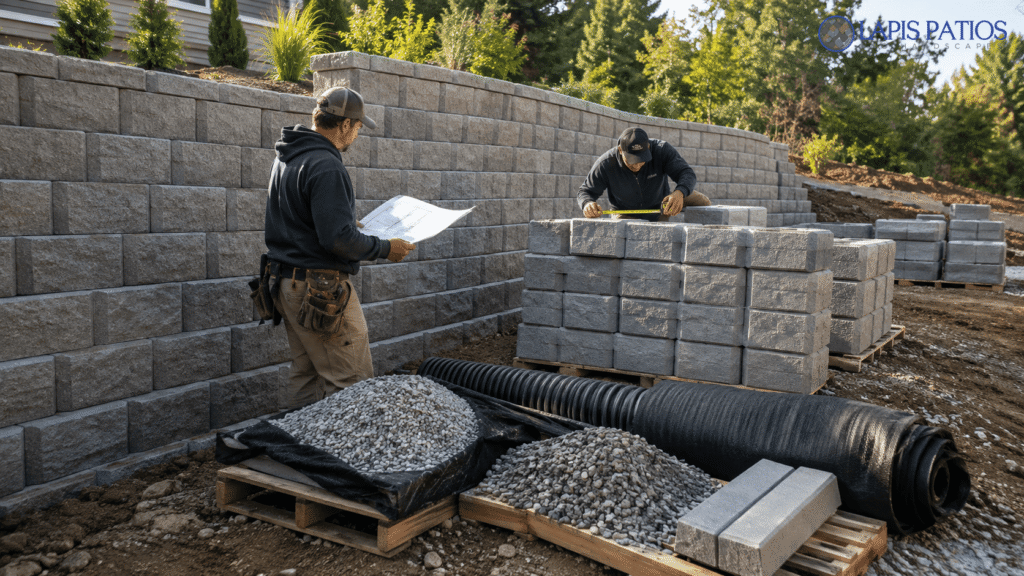
Learn what affects retaining wall pricing for materials. Compare popular options and choose the right solution for commercial and residential projects in Charlotte, NC.
A retaining wall’s real cost often includes more than the visible wall. The materials you see, blocks or stone, are just part of the story. What’s behind the wall, like drainage and reinforcement, is crucial for strength and adds to the price. Two finished walls can look identical, but one may cost more because of unseen site work, drainage, and reinforcement. For developers and homeowners in Charlotte, the goal isn’t the cheapest wall, but one that’s built correctly to last. Good planning helps avoid costly fixes down the line.
Retaining Wall Material Pricing Essentials
Material pricing covers much more than the visible wall. A properly built retaining wall is a complete system with structural, drainage, and site preparation materials working together. Knowing what is included helps developers, property managers, and homeowners compare quotes more accurately and budget for a wall that will perform well for years.
- Material costs include more than the wall blocks or stone. Base aggregate, drainage gravel, filter fabric, drainage pipe, reinforcement, backfill, excavation, and hauling all affect the total project cost.
- Proper drainage and reinforcement protect the wall’s long-term performance. Leaving out these components can lead to drainage problems, movement, or early failure.
- Having designed and built retaining walls across the Charlotte region for over a decade, from red clay hillsides in Lake Norman to tight residential lots in South End, we’ve seen firsthand how cutting corners on base preparation and drainage leads to wall failure within just a few seasons. We build every wall to meet local Mecklenburg County codes and strict HOA guidelines, ensuring long-term structural integrity over quick, cheap fixes.
What Affects Retaining Wall Material Pricing?
Every retaining wall is different.
So the material list changes from one project to the next. Soil conditions, drainage, wall height, and local building requirements all affect the final cost.
Several factors can increase material pricing.
- Wall height
- Soil conditions
- Drainage requirements
- Excavation difficulty
- Reinforcement needs
- Engineering plans
- Material availability
- Transportation costs
Commercial projects usually require even more planning.
A retaining wall supporting a parking lot has different structural demands than one around a backyard patio. Commercial projects often need engineered wall systems to support heavier loads and meet local code.
Charlotte projects often face site-specific soil and drainage conditions, along with grading and permitting requirements.
Every site tells a different story.
Why Do Similar Walls Have Different Prices?
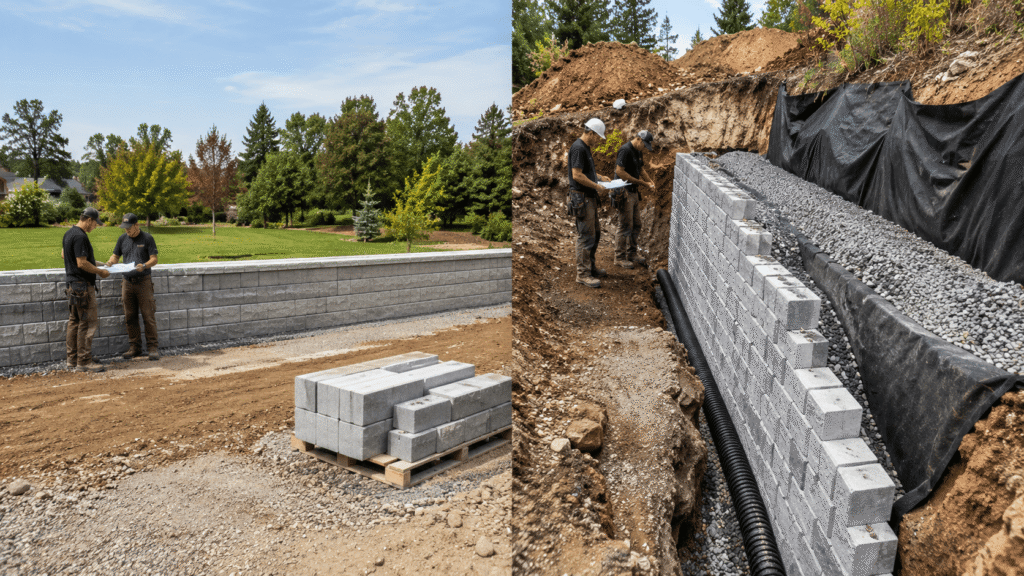
When you walk up to a finished wall, you are only seeing about 30% of the total investment.
The rest of your money lives underground and behind the block, in the 6-inch compacted #57 stone base, perforated 4-inch drain tile, filter fabric envelopes, and tons of clean washed gravel required to keep hydro-static pressure from pushing your wall over.
One property may need deeper excavation. Another may require additional drainage stone or reinforcement because of poor soil conditions. A nearby driveway or parking area can also increase pressure on the wall, which changes the design.
That is why experienced contractors price the entire retaining wall system instead of counting only the visible blocks.
It saves surprises later.
Which Retaining Wall Material Costs the Least?
Pressure treated timber usually has the lowest upfront cost among common residential options. Still, the cheapest material is not always the least expensive over time. Comparing different retaining wall materials based on lifespan and maintenance often provides a clearer picture than looking at installation price alone.
| Material | Typical Material Cost | Expected Lifespan | Best Use |
| Pressure treated timber | $15 to $30 per SF (approximate installed range) | 15 to 20 years | Small landscape walls |
| Segmental concrete block | $15 to $40 per SF (approximate installed range) | 50 plus years | Residential and commercial |
| Poured concrete | $20 to $45 per SF (installed range may vary by wall height and reinforcement ) | 50 to 100 years | Structural walls |
Premium materials like natural stone can cost significantly more, especially for complex designs.
Timber can be a good fit for small decorative walls.
Commercial owners usually think differently. They often focus on maintenance costs over the next several decades instead of the lowest installation price. Spending more today can reduce repairs later.
That’s often the better investment.
Should You Always Choose the Lowest Cost Material?
Not always.
Lower priced materials may lead to:
- More repairs
- Earlier replacement
- Drainage problems
- Higher maintenance costs
- Additional reinforcement
For commercial properties, those repairs can interrupt business operations or create safety concerns. That makes long term performance part of the value.
Every project has different priorities. A decorative landscape wall does not need the same materials as a retaining wall supporting a roadway or parking lot.
How Much Do Concrete Retaining Wall Materials Cost?
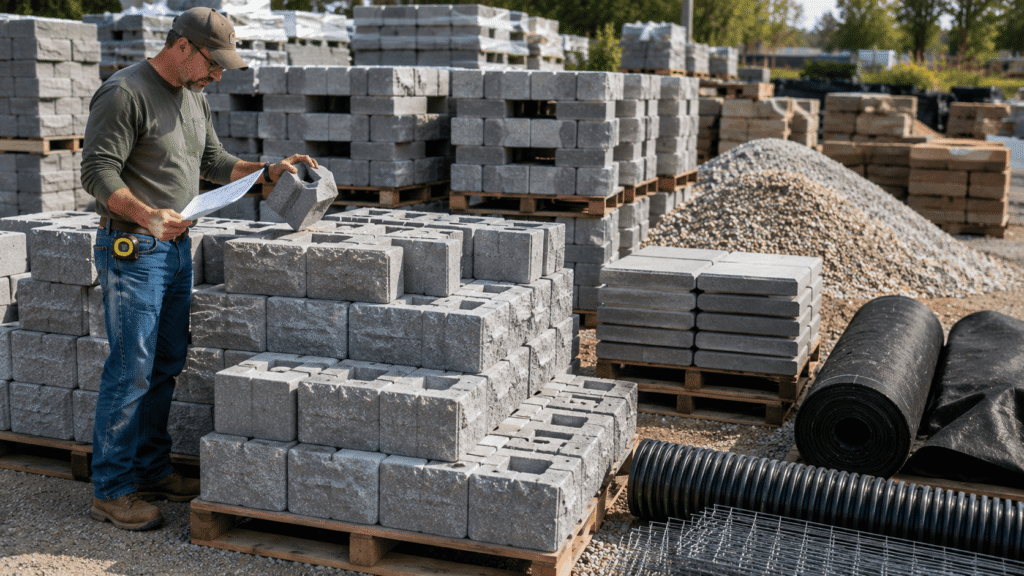
Concrete block systems are a common retaining wall option and are often chosen for their balance of cost, durability, and appearance.
Concrete block systems remain our most requested solution because they deliver predictable load-bearing strength across Charlotte’s shifting soil types without requiring continuous specialized maintenance.
They offer a strong mix of durability, appearance, and long term value. In our local project estimating, a standard poured concrete wall in the Charlotte market typically starts around $35 to $50 per face square foot.
However, on actual job sites, that figure shifts quickly once we factor in heavy excavation through Charlotte’s dense red clay, necessary rebar grid spacing, and concrete pump truck access for tight backyards.
Final pricing depends on the project and the amount of reinforcement required.
Commercial developers often choose concrete systems because they can be engineered for durability and can fit a range of aesthetic finishes, and they offer:
- Long service life
- Multiple colors and textures
- Consistent appearance
- Low maintenance
- Flexible engineering options
- Easy future expansion
Concrete systems also fit well into larger commercial developments where utilities, sidewalks, grading, and parking areas must all work together.
Is Natural Stone Worth the Extra Cost?
For many projects, yes.
Natural stone gives a premium look and can last for many years when it’s designed, drained, and installed correctly.
For sustainability-focused projects, eco-friendly options often include durable natural stone. Its long service life can mean fewer replacements over time, which can help with the overall retaining wall cost.
It’s often chosen for:
- HOA entrances
- Commercial landscapes
- Luxury communities
- Estate homes
- Public spaces
Installation takes more time because every stone is different. Curves, corners, and uneven shapes need experienced crews who know how to handle both appearance and structural performance.
When the finished look matters, many owners feel the added cost is worth it.
Why Does Wall Height Increase Material Costs?
A taller wall needs more than extra blocks.
As the wall gets higher, soil pressure increases. That means more reinforcement, additional drainage, and a stronger foundation.
Many taller walls may require engineering and permits before construction begins, depending on local code.
When a wall exceeds four feet, standard material quotes increase to include heavy-duty additions:
- Deeper Footings: 12+ inches of compacted #57 crushed stone base below the frost line.
- Geogrid Reinforcement: High-tensile structural fabric extended several feet into the backfill soil.
- Increased Aggregate Backfill: Clean, washed stone envelopes to ensure rapid water evacuation.
Nearby roads, sidewalks, or buildings can add surcharge loads that increase structural requirements. Those conditions place even more pressure on the retaining wall.
Managing wall height is a structural balancing act, what looks like a simple two-foot addition actually doubles the hydro-static load behind the footing.
What Hidden Material Costs Should You Expect?
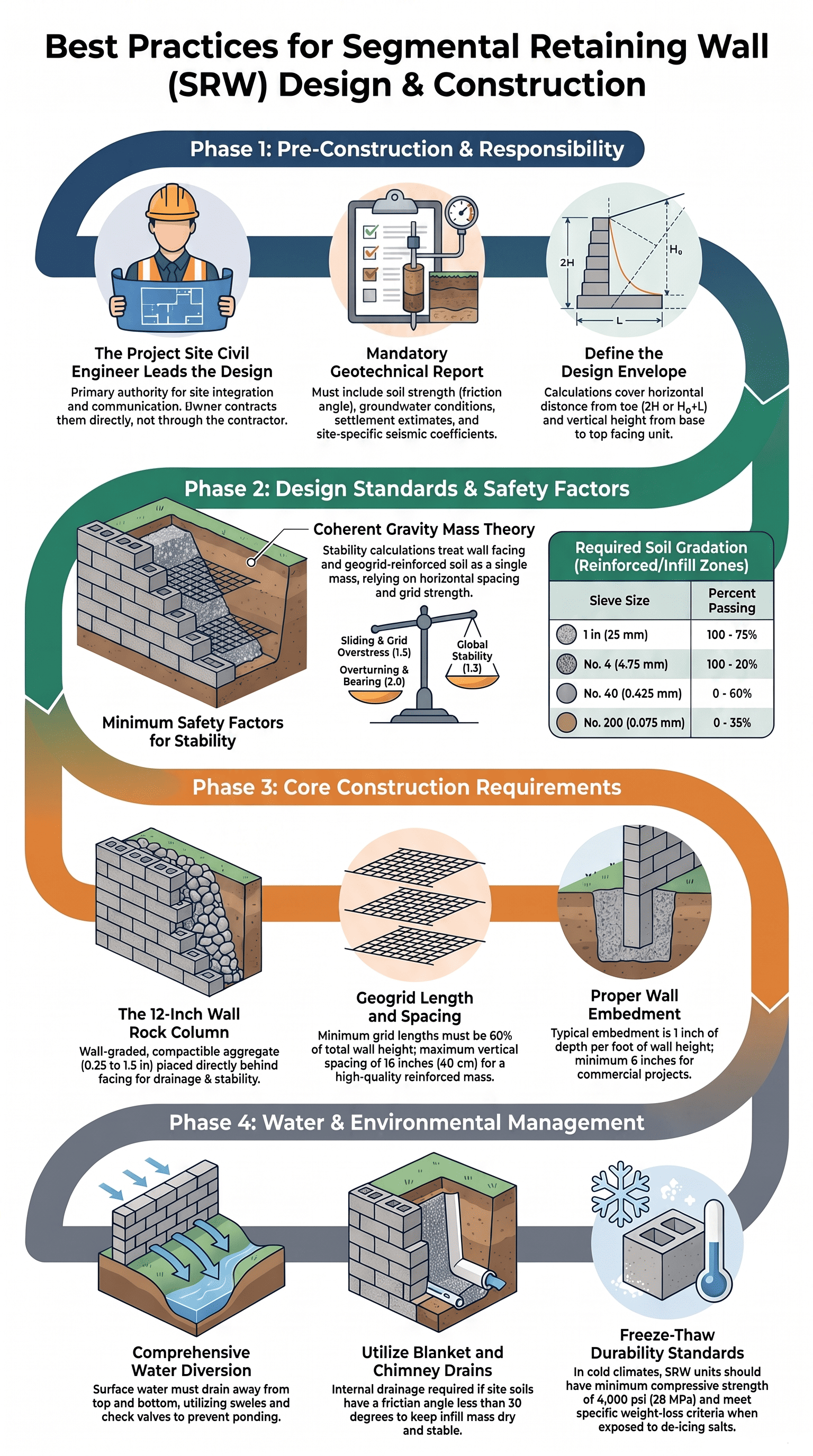
The materials you see are only part of the budget.
Professional retaining wall installations often include drainage pipe, crushed stone, filter fabric, structural backfill, wall caps, and excavation and site preparation. Some systems also use adhesives.
Aggregate surprises many property owners.
Some larger projects may require significant quantities of crushed stone behind the wall. Those materials help move water away from the structure and create a stable foundation. Without them, even expensive wall blocks may fail over time.
Research from ScienceDirect shows
“A cost analysis correlating the efficiency and cost of inclusion is presented, providing guidelines for practitioners to select inclusion thickness and estimate the associated costs to achieve a desired reduction in lateral pressure.” – ScienceDirect
That is why professional estimates include the complete retaining wall system instead of only the visible face.
How Can You Reduce Material Costs?
Good planning often saves more money than choosing cheaper materials.
Developers frequently reduce costs by improving site access, lowering unnecessary wall height, and planning drainage before construction begins.
Other ways to control costs include:
- Improve equipment access
- Choose modular systems
- Buy local materials
- Coordinate grading early
- Reduce waste
Small changes during planning can prevent expensive revisions once construction starts.
Should You Hire a Professional Contractor?
Small decorative walls are one thing.
Structural retaining walls are another.
Drainage mistakes, poor base preparation, and missing reinforcement remain some of the biggest reasons retaining walls fail. Those problems are difficult to fix after construction is complete.
Commercial retaining wall projects often require:
- Engineered drawings
- Building code compliance
- Permit coordination
- Municipal inspections
- HOA approval
- Site logistics planning
Managing soil reports, engineered drawings, and city permit approvals is standard procedure on our commercial and HOA sites.
Handling these logistical requirements early in the design phase protects property managers from unexpected inspection delays and budget overruns during construction.
At Lapis Patios, we design and engineer every retaining wall around Mecklenburg County building codes, ensuring your structure handles heavy rainfall and soil expansion long after construction is complete.
Which Material Offers the Best Long Term Value?
There is no single answer.
The best material depends on the project. Evaluating the best materials means balancing structural requirements, maintenance expectations, appearance, and long-term ownership costs instead of focusing on upfront pricing alone.
As noted by London South Bank University
“The Cantilever Concrete Wall was the best option, costing about 17% less than the Gabion Wall. On the other hand, the results of multi-criteria decision-making showed that the Gabion Wall was the most sustainable choice.” – London South Bank University
| Priority | Recommended Material |
| Lowest upfront cost | Pressure treated timber |
| Best overall value in many residential projects | Segmental concrete block.” |
| Premium appearance | Natural stone |
| Strong drainage potential (open structure) | – |
| Heavy commercial use | Reinforced concrete systems |
Commercial owners often prioritize durability and predictable maintenance costs.
Homeowners may place more value on appearance.
Both approaches make sense. The right material depends on the site, the budget, and the purpose of the wall.
Choosing Materials for a Stone Wall
Credits: This Old House
Choosing stone for a wall requires more than selecting a color. The wall’s purpose should guide the decision. Freestanding sitting walls can use concrete blocks joined with adhesive, but these blocks do not provide enough strength for retaining soil.
Retaining walls need mechanical support, such as tongue-and-groove blocks or connecting pins. These features lock the courses together and help the wall resist sideways pressure.
Fieldstone offers a varied appearance, although its rounded shape can make fitting difficult. Stones must be selected, cut, or chiselled so that joints remain tight.
Mortar joints can be raked back to create shadow lines. Stone veneer provides another option. Thin pieces are attached to a concrete or block wall, making installation lighter and easier. Manufactured stone can provide consistent colors and faster installation.
By matching the material and support system to the wall’s function, homeowners can achieve performance and a style that suits the landscape.
FAQ
Which Retaining Wall Material Provides the Best Long-Term Value?
The right material depends on your property’s slope, soil type, and structural demands. While timber works for simple 2-foot garden borders, concrete block systems and natural stone offer the long-term load capacity needed for steeper residential lots and commercial developments.
How Can I Estimate Retaining Wall Material Costs Accurately?
A retaining wall material calculator or retaining wall block calculator helps estimate the quantity of materials based on the wall’s dimensions. A complete retaining wall material estimate should include blocks, base materials, drainage products, reinforcement, adhesives, and finishing components. Calculating every required item gives you a more accurate estimate of retaining wall material prices before construction begins.
What Materials Should I Budget Besides Retaining Wall Blocks?
Retaining walls require more than blocks to perform properly. Your budget should include retaining wall base material, retaining wall gravel base, retaining wall drainage gravel, retaining wall drainage pipe, retaining wall landscape fabric, retaining wall backfill material, and retaining wall adhesive. Including all required retaining wall construction materials helps reduce unexpected expenses during installation.
Why Do Retaining Wall Block Prices Vary Between Products?
Retaining wall block prices vary because products differ in size, strength, design, and finish. Larger retaining wall block sizes, specialized retaining wall block types, decorative textures, premium retaining wall block color options, and matching retaining wall cap blocks all affect pricing. These differences change both the retaining wall block cost per square foot and the retaining wall cost per block.
Which Retaining Wall Material Has the Lowest Long-Term Cost?
The material with the lowest purchase price is not always the most economical over time. Compare natural stone retaining wall cost, poured concrete retaining wall cost, cinder block retaining wall cost, and pressure-treated wood retaining wall cost together with expected retaining wall maintenance costs, repair frequency, and service life. Durable materials often reduce replacement costs over the life of the wall.
Estimate Material Costs With Confidence
Material costs are only one part of a successful retaining wall project. Drainage systems, reinforcement, excavation, foundation preparation, and site conditions all influence long-term performance and the total investment.
For commercial developments, proper planning and code compliance help reduce unexpected costs and support lasting structural stability.
Lapis Patios delivers retaining wall solutions for developers, construction companies, property managers, HOA communities, and homeowners throughout Charlotte, NC, and surrounding areas.
Every project is designed with commercial-grade performance, local building codes, HOA requirements, and long-term durability in mind.
Ready to plan your project? Contact Lapis Patios for a commercial retaining wall estimate tailored to your property’s specific requirements.
Related Articles
- https://lapispatios.com/articles/retaining-wall-materials/
- https://lapispatios.com/articles/retaining-wall-cost/
- https://lapispatios.com/articles/best-materials-for-retaining-walls/
References
- https://www.sciencedirect.com/org/science/article/abs/pii/S1751761326000049
- https://researchportal.lsbu.ac.uk/en/publications/assessing-the-life-cycle-study-of-alternative-earth-retaining-wal/