
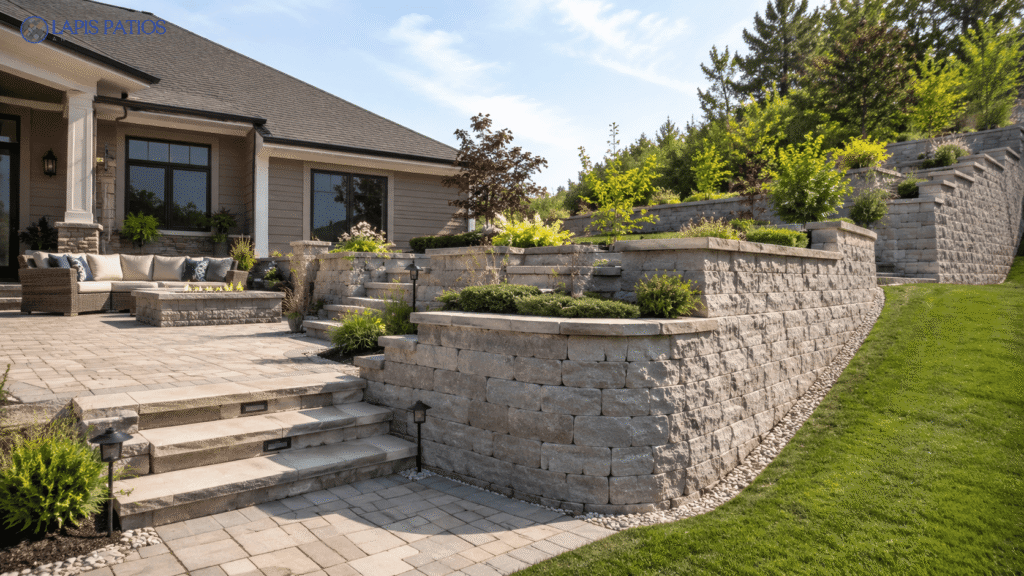
Learn how retaining wall height and design decisions affect patio drainage, slope stability, and long-term performance for commercial and residential properties.
A retaining wall needs to fit the property, not only the patio plan. The height depends on the slope, the soil, how water moves through the site, and how much weight the wall must support. In Charlotte, NC, taller walls often need permits or engineering review, especially on commercial properties and HOA projects. Lapis Patios checks the site before work begins.
That includes soil conditions, drainage patterns, runoff, and compaction. Those details matter because small problems under the ground can turn into cracked patios, leaning walls, drainage issues, and erosion later.
For developers, builders, property managers, and homeowners, the right retaining wall plan helps protect the property and avoid costly repairs down the road.
What Matters Most For Retaining Wall Height
- Retaining wall height should match the slope, drainage conditions, soil pressure, and weight loads on the site.
- Poor drainage is one of the biggest reasons retaining walls lean, crack, or shift over time.
- Lapis Patios builds retaining walls around drainage control, code requirements, and long-term structural performance across Charlotte, NC, and surrounding communities.
Quick Reads: What Determines Retaining Wall Height?
The height of a retaining wall depends on how much soil it needs to hold back and how steep the property is. It also depends on what sits above or behind the wall. A patio, driveway, parking area, or seating wall adds more pressure to the structure.
A short garden wall and a retaining wall supporting a commercial patio do not work the same way. One may only hold a small amount of soil. The other may support heavy pavers, foot traffic, drainage flow, and nearby structures. That is why Lapis Patios reviews every property before construction starts.
The 4-foot mark matters because many local building departments require permits or engineering review above that height. Taller retaining walls hold more soil, and that creates more force pushing against the wall.
The main design factors include:
- Slope gradients and retained height
- Soil type such as clay, sand, or loose fill
- Hydrostatic pressure from trapped water
- Patio loads and vehicle traffic
- Drainage systems including Weep Holes and gravel backfill
- HOA requirements and local code rules
- Reinforcement systems like geogrid layers
Good retaining wall planning also helps protect nearby sidewalks, patios, parking lots, and landscaped areas from water damage and erosion. Strong retaining wall design also helps improve long-term drainage performance and structural stability across sloped properties.
How Tall Should A Patio Retaining Wall Be?
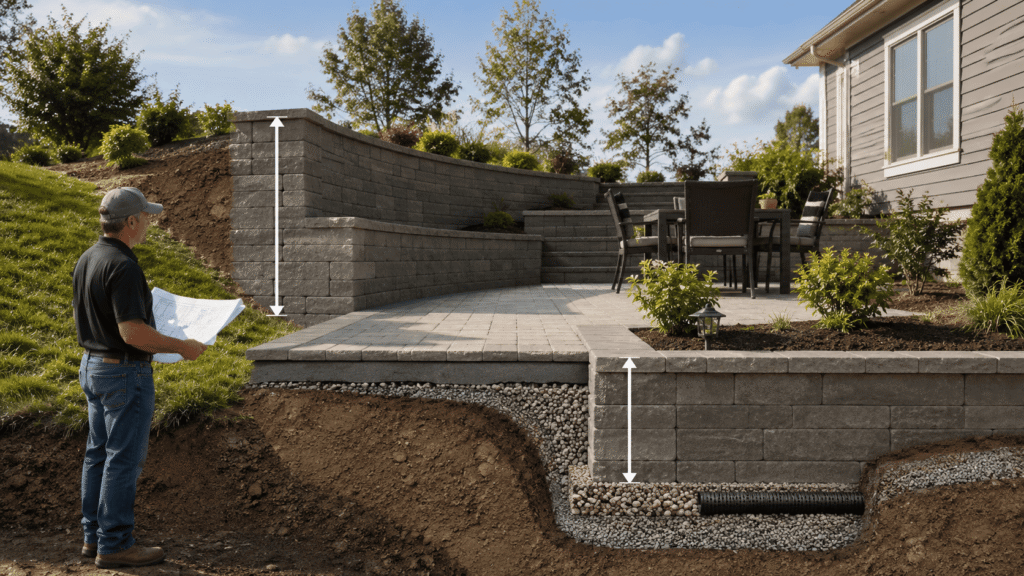
The best retaining wall height is the height needed to create a safe and stable patio area without adding extra pressure to the site.
Most residential patio retaining walls fall between 2 and 4 feet tall. These walls are common around patios, garden spaces, and moderate slopes. Many use Gravity walls, concrete blocks, or Natural Stone because shorter walls usually deal with less soil pressure.
As walls get taller, the pressure behind them increases fast. Taller retaining walls often need wider footings, stronger reinforcement, and larger drainage systems.
Commercial retaining walls are often taller because they support parking lots, outdoor seating spaces, multifamily developments, and HOA common areas. On these projects, the retaining wall becomes part of the property’s structural support system.
Before recommending a wall system, Lapis Patios reviews:
- Soil compaction
- Drainage flow
- Slope grade
- Runoff direction
- Nearby structures
- Weight loads on the property
Some conditions make retaining wall projects more difficult:
- Steep slopes with higher active earth pressure
- Poor drainage behind the wall
- Heavy patio pavers or seating walls
- Vehicle traffic near the wall
- Loose fill or weak soil conditions
Research from MDPI shows
“The most important parameter for the optimal cost of a gravity retaining wall is the height of the retained ground, followed by the shear angle of the soil, the soil-wall interaction coefficient, the slope angle and the variable surcharge load.” – MDPI
A taller wall is not always the best answer. In many commercial and HOA projects, tiered retaining walls lower the pressure on each section and improve drainage across the property.
Typical Retaining Wall Height Ranges
| Wall Height | Common Use | Design Complexity |
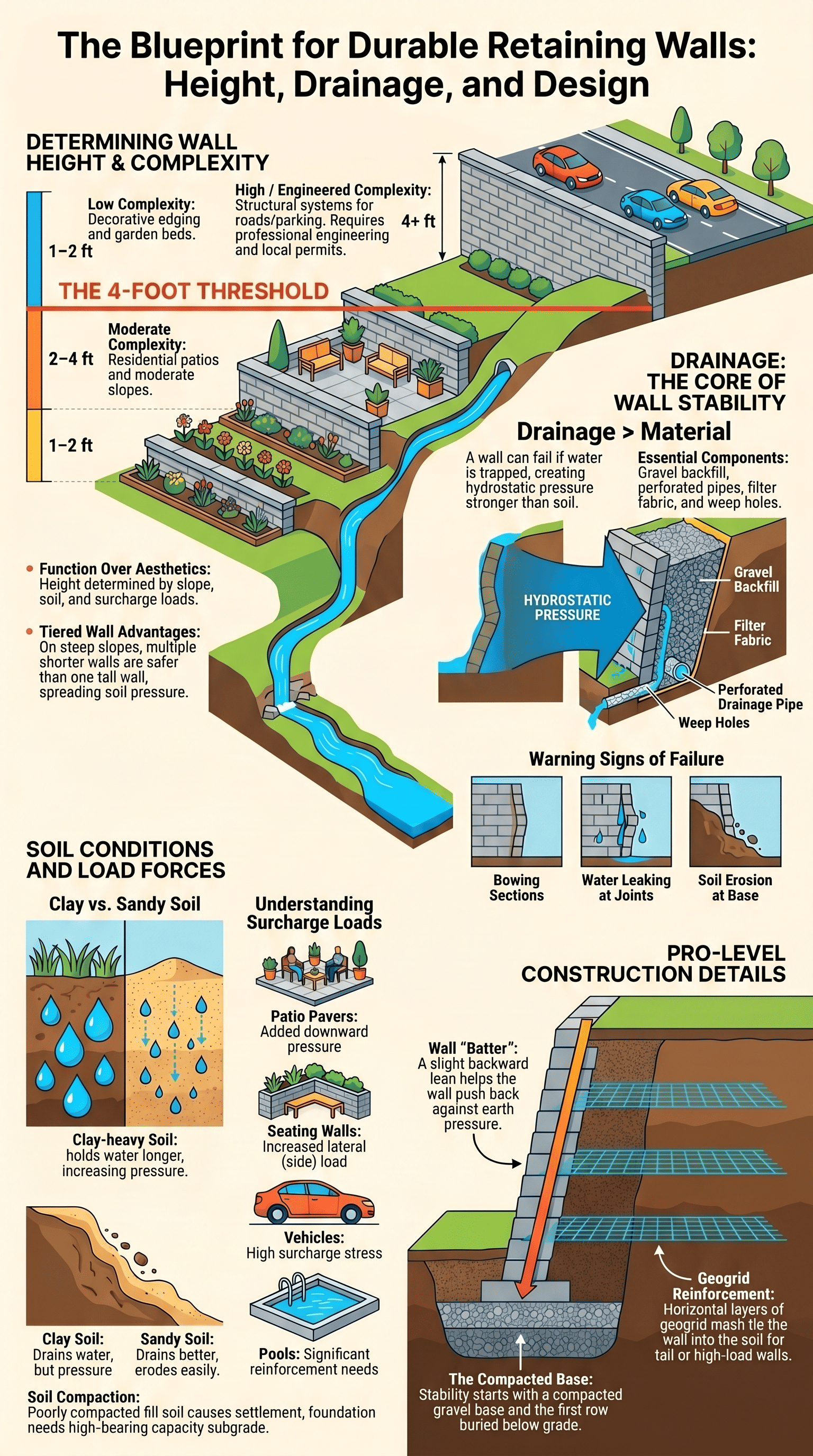
| 1–2 ft | Decorative edging and garden beds | Low |
| 2–4 ft | Residential patios and moderate slopes | Moderate |
| 4+ ft | Structural retaining systems | High / engineered |
Commercial retaining walls often go beyond standard residential heights because they support roads, parking areas, shared outdoor spaces, and multifamily properties.
Why Drainage Matters More Than Wall Material
Many retaining wall failures start with water, not the wall material itself.
A retaining wall can still fail even when built with Precast Concrete, reinforced concrete, or Natural Stone. The best materials for retaining walls still depend heavily on drainage control, soil pressure, and overall site conditions.
The problem usually starts when water gets trapped behind the wall. Over time, that trapped water creates hydrostatic pressure, which pushes against the structure.
After heavy rain, the pressure from water buildup can become stronger than the pressure from the soil alone. Without proper drainage, the wall may start to crack, lean forward, or shift out of place.
Common warning signs include:
- Cracking or bowing
- Leaning wall sections
- Soil erosion near the base
- Water leaking through joints
- Settling behind the wall
Lapis Patios puts strong focus on drainage planning because water management affects wall stability, long-term maintenance, and repair costs, especially on commercial and HOA projects in Charlotte.
Common drainage systems include:
- Gravel backfill
- Perforated drainage pipes
- Compacted gravel foundations
- Water diversion grading
- French drains
- Surface runoff control
- Properly spaced Weep Holes
Good drainage planning also helps protect nearby sidewalks, patios, outdoor seating areas, and shared spaces from water damage over time. Proper runoff control also reduces buildup that often leads property owners to deal with frequent patio cleaning for pavers and surface staining issues.
Drainage Components Behind A Retaining Wall
Every retaining wall drainage system should move water away from the structure before pressure builds behind the wall.
- Compacted gravel helps water move through the system
- Perforated pipes collect groundwater
- Filter fabric helps stop soil clogs
- Drain outlets lower pressure buildup
- Surface grading redirects runoff
- Weep paths release trapped moisture
Walls without proper drainage often fail early, even when expensive materials are used.
How Soil Conditions Affect Retaining Wall Design
Credits: GeoStruct Academy
Soil changes how much pressure pushes against a retaining wall and how water moves through the site. Those conditions affect wall height, drainage design, reinforcement, and foundation support.
Clay-heavy soil holds water longer than sandy soil. That extra moisture increases pressure behind the wall and may lead to movement during heavy rain or freeze-thaw cycles. Loose fill soil can also settle unevenly over time, which places stress on the wall.
Sandy soil drains better in many cases, but it may erode faster on steep slopes because it does not hold together as tightly. Every property is different, which is why retaining wall projects should start with a full site review.
Lapis Patios checks soil conditions before recommending wall materials or reinforcement methods. Many commercial projects in Charlotte and nearby areas also require geotechnical testing to confirm long-term stability.
Several soil conditions directly affect retaining wall performance:
- Weak subgrade soil
- High groundwater levels
- Existing erosion problems
- Poor compaction
- Steep slope conditions
Poor compaction is one of the most common reasons retaining walls settle over time. Proper site preparation helps reduce movement before construction begins.
When Does A Retaining Wall Need Engineering?
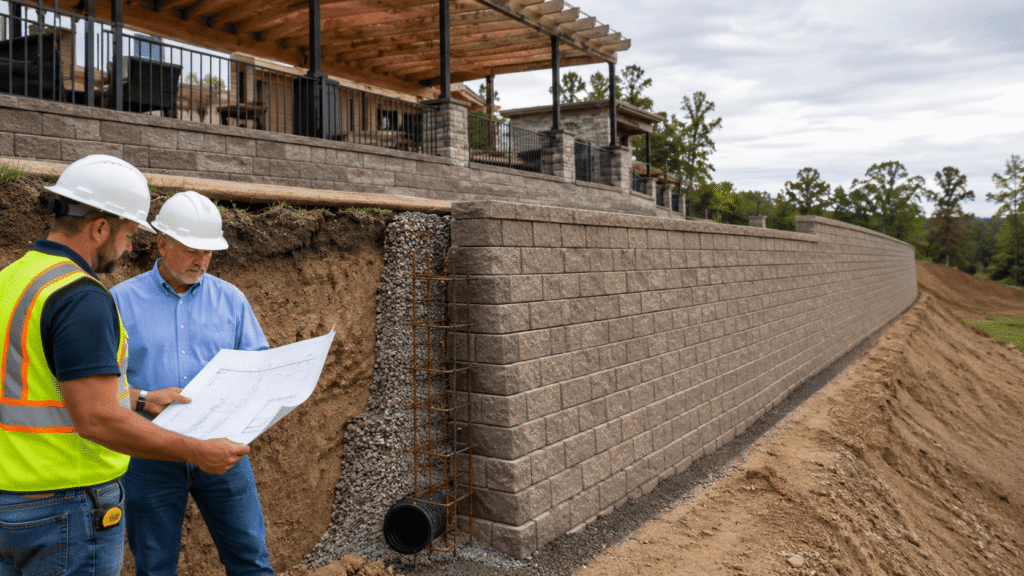
Engineering becomes more important when retaining walls are taller, support added weight, or sit on steep slopes.
In many areas, walls above 4 feet require engineering review or permits. That becomes even more important for commercial patios, parking areas, HOA properties, and multifamily developments.
A wall holding back flat ground handles less pressure than one supporting vehicles, pools, outdoor gathering spaces, or elevated patios. Those added forces are called surcharge loads, and they increase stress behind the wall.
Commercial retaining wall projects often use added reinforcement such as:
- Reinforced soil systems
- Reinforced concrete footings
- Geogrid layers
- Piled foundations
- Engineered drainage systems
- Soil-retaining mesh TR2 system designs
Engineering reviews focus on several major safety factors:
- Active earth pressure
- Passive earth pressure
- Sliding resistance
- Overturning stability
- Foundation bearing capacity
As noted by Neliti research repository
“The maximum height of cantilever retaining wall is 6m. During the design following checks to be satisfy: a) Check for Overturning b) Check against Sliding c) Check for Uplift Pressure PRELIMINARY DIMENSIONS: • Base width (B) = 0.6 H to 0.8 H • Thickness of slab(T) = 0.1H” – Neliti
Construction shortcuts often lead to expensive repairs later. Weak compaction, poor drainage, or undersized footings can cause leaning walls, cracked patios, and erosion around nearby structures.
Lapis Patios builds retaining walls with long-term performance in mind. That approach helps support HOA requirements, local code compliance, and durable commercial construction across Charlotte, NC, and surrounding communities.
Common Surcharge Loads
| Load Type | Impact on Wall |
| Patio pavers | Added downward pressure |
| Seating walls | Increased lateral load |
| Vehicles | High surcharge stress |
| Pools and steep slopes | Significant reinforcement needs |
Surcharge loads often decide whether a retaining wall needs engineering review or reinforced support systems.
Why Tiered Walls Can Be Safer Than One Tall Wall
Tiered retaining walls spread pressure across several shorter walls instead of one tall structure. In many cases, that improves drainage, stability, and long-term performance.
One tall retaining wall holds a large amount of soil pressure in one area. Tiered systems break that pressure into smaller sections, which lowers stress on each wall.
This design is common in commercial developments, HOA communities, and multifamily outdoor spaces built on steep slopes. Tiered retaining walls also improve drainage because water has more ways to move through the site.
Lapis Patios often recommends terraced retaining wall layouts when a property has major elevation changes. Tiered walls can also create better access to outdoor features such as:
- Garden beds
- Fitness trails
- Outdoor gathering spaces
- Custom play environment areas
- Landscape-led urban redevelopment features
Tiered systems usually create a cleaner and more balanced appearance than one large vertical wall. They also make large commercial properties feel more open and easier to navigate.
Proper spacing between walls still matters. Walls placed too close together can act like one larger retaining wall, which increases pressure and structural demands. Careful planning remains important even when the walls are shorter.
What Build Details Improve Retaining Wall Stability?
Strong retaining walls start below ground. A compacted base, buried first row, proper footing width, and slight backward lean all help the wall resist soil pressure over time.
Many retaining wall failures begin at the foundation level. Poor base preparation can lead to settling, cracking, leaning walls, and drainage problems long before damage becomes visible at the surface.
The foundation must support the weight of the wall, the soil behind it, nearby hardscapes, and any added surcharge loads. Commercial retaining walls often carry even more stress because they support patios, parking areas, sidewalks, or shared outdoor spaces.
Important construction practices include:
- Installing a compacted gravel base
- Embedding the first course below grade
- Using the correct footing width
- Adding slight wall batter for stability
- Reinforcing taller walls with geogrid systems
- Managing runoff with drainage pipes
- Compacting backfill in controlled layers
A slight backward lean, called batter, helps the wall push back against soil pressure. This detail is especially important for Gravity walls and taller retaining systems.
Drainage planning also plays a major role in wall stability. Water must move away from the structure before pressure builds behind the wall. Depending on the site, drainage systems may include French drains, grading adjustments, erosion control measures, and connected runoff systems throughout the property.
Poor base preparation remains one of the leading causes of retaining wall movement. Proper installation methods help reduce future repairs and improve long-term performance.
Commercial retaining wall construction also requires close attention to safety, code compliance, and nearby structures. A failed wall can affect sidewalks, utilities, drive lanes, and public access areas across the property.
How Lapis Patios Approaches Retaining Wall Design
Lapis Patios evaluates soil conditions, compaction, slope grade, drainage flow, and local code requirements before determining retaining wall height or structural design.
Every project starts with site planning based on the actual property conditions. Soil type, runoff patterns, and elevation changes can vary widely across Charlotte, NC, and nearby communities, especially on commercial and HOA-managed properties.
The company designs retaining walls as part of larger outdoor living and hardscape systems. That approach helps support drainage control, erosion management, patio integration, and long-term structural stability across the full site.
Lapis Patios also focuses on:
- HOA compliance
- Local building regulations
- Commercial-grade construction methods
- Structural stability
- Drainage-first planning
- Large-scale project coordination
Many DIY retaining wall guides stop at 4 feet because taller walls often require engineering review, permits, and reinforced support systems. Commercial retaining walls may also require reinforced concrete, engineered backfill, or geotechnical planning depending on the site conditions.
Long-term retaining wall performance depends heavily on drainage control, foundation preparation, and soil evaluation. Those factors remain central to every retaining wall project planned by Lapis Patios across Charlotte and surrounding areas.
FAQ
How Do Weep Holes Help Retaining Walls Last Longer?
Weep Holes allow water to drain away from retaining walls before hydrostatic pressure builds behind the structure. Excess water can weaken concrete blocks, Natural Stone, and reinforced concrete over time.
A proper drainage system with gravel backfill, drainage pipes, or perforated pipes helps reduce Water Damage and soil erosion. These drainage solutions improve structural stability and help retaining walls handle changing weather conditions more effectively.
Why Does Soil Type Matter In Retaining Wall Design?
Soil type affects soil pressure, bearing capacity, and drainage management around retaining walls. Sandy soil drains water quickly, while dense clay soil holds water and creates higher lateral earth pressure.
Different soil conditions also change active earth pressure and passive earth pressure against the wall. A detailed soil assessment and geotechnical investigations help retaining wall contractors choose safer construction practices and prevent future structural failure.
What Types Of Retaining Walls Work Best On Steep Slopes?
Gravity walls, gabion walls, Anchored Retaining Wall systems, and sheet pile retaining walls are common choices for steep slope gradients. Engineers select the wall type based on soil properties, surcharge loads, and local regulations.
Reinforced soil systems with geogrid layers improve erosion control and increase structural stability. Contractors also install compacted gravel and drainage pipes to reduce hydrostatic pressure and improve long-term wall performance.
Can Retaining Walls Improve Backyard And Garden Space?
Retaining walls can create level garden space, organized garden beds, and safer play area sections on uneven land. Many homeowners also use retaining walls to build terraced landscapes that improve property design and increase curb appeal.
Materials such as treated lumber, poured concrete, Precast Concrete, and Natural Stone can support different landscape design goals. Proper water diversion and erosion control also help protect outdoor spaces during heavy rainfall.
Why Are Local Building Codes Important For Retaining Walls?
Local building codes and safety standards help ensure retaining walls remain safe under changing soil conditions and heavy soil pressure. Many projects require a site evaluation, building application approval, or geotechnical engineering review before construction begins.
Structural Considerations such as piled foundations, reinforced concrete, and drainage system planning help reduce risks from surcharge loads, hydrostatic pressure, and long-term structural failure.
Final Thoughts on Retaining Wall Height and Design
A retaining wall that fails can lead to drainage problems, soil movement, and costly repairs. That’s why smart planning matters from the start. Commercial developers, property managers, HOAs, and homeowners in Charlotte need wall systems built for real site conditions, proper drainage, and local code compliance.
Retaining wall and patio site evaluation from Lapis Patios helps teams plan safer, longer-lasting outdoor spaces. Their crew focuses on commercial projects, HOA requirements, structural safety, and dependable construction that holds up over time across Charlotte and nearby communities.
References
- https://www.mdpi.com/2076-3417/11/13/6233
- https://media.neliti.com/media/publications/428534-none-5550a462.pdf