
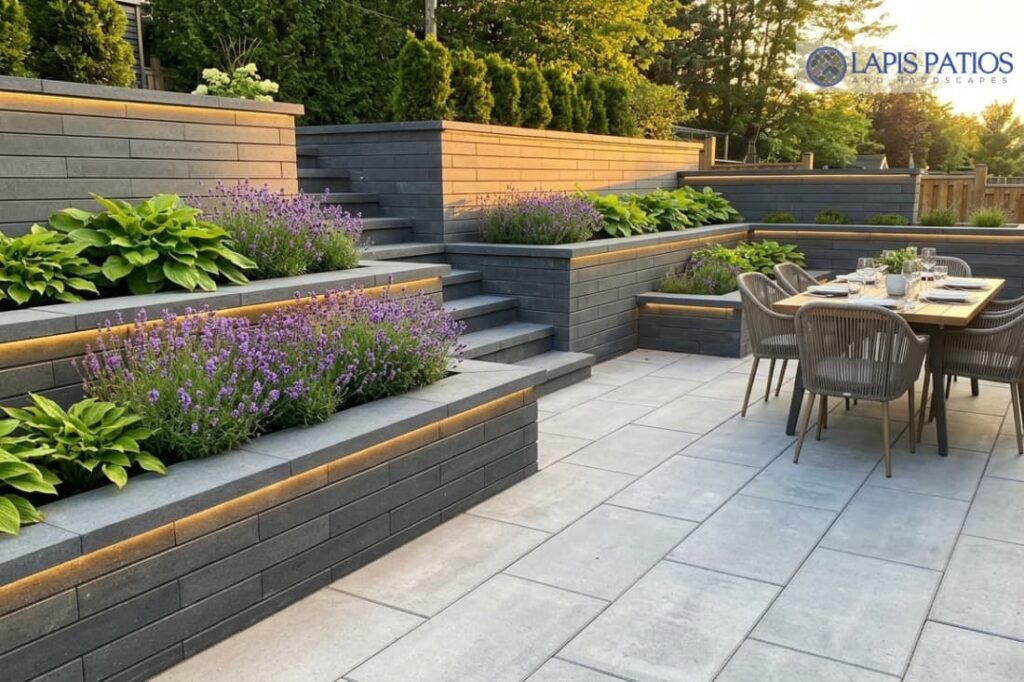
Get inspired by stylish retaining wall designs for patios that enhance curb appeal, improve layout, and complement your landscape.
A stylish retaining wall is the part that helps organize a patio into a more functional outdoor space. For commercial developers and property managers in Charlotte, NC, these walls establish a defined atmosphere.
At Lapis Patios, we build every wall for two jobs: it’s a strong structure made to last and a chance to improve visual consistency. Effective walls combine visual appeal with structural performance
Keep reading to see how design and building skills come together to make amazing outdoor spaces.
Core Functions of a Stylish Wall
Before exploring aesthetics, ground the design in these commercial-grade realities.
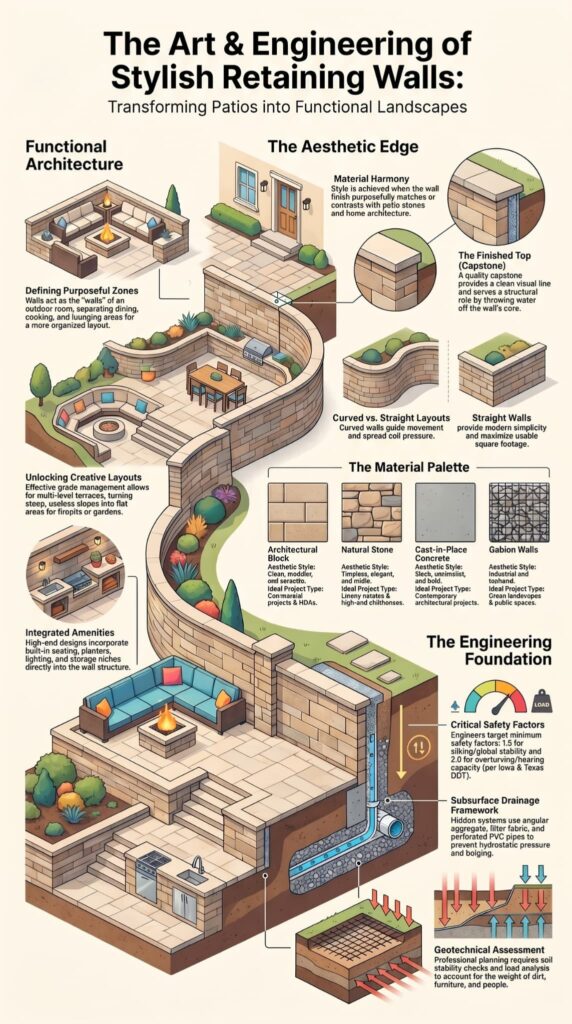
- They define outdoor living zones: Retaining walls help separate dining, lounging, and cooking areas, making the patio feel like a collection of purposeful outdoor rooms.
- They unlock creative layouts: Multi-level patios, sunken gathering spaces, and elevated viewing areas become possible when grade changes are managed effectively.
- They combine structure with amenities: Built-in seating, planters, fire features, and lighting can be integrated into the wall design for a cleaner and more cohesive look.
What Makes a Retaining Wall Stylish?
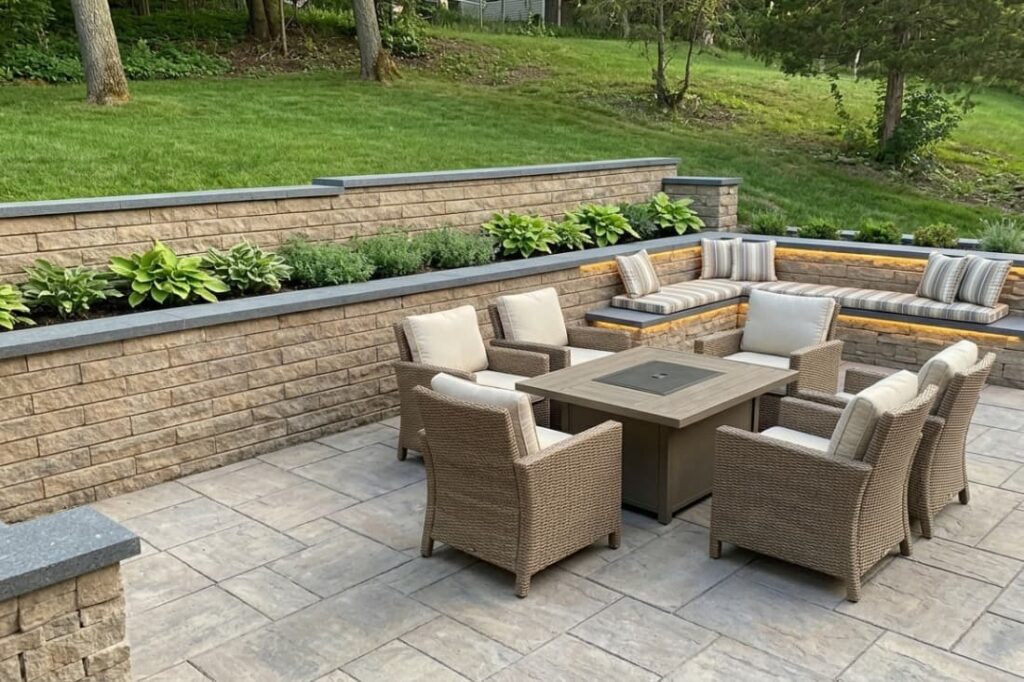
Style in a retaining wall means it looks intentional, not like an afterthought. It’s the difference between a wall that fits the plan and one that just fixes a slope.
We judge style by fit: how the wall’s materials, lines, and size relate to the home, patio, and yard. A well-designed wall has a finished top, smart details like lighting, and a size that feels right for the space. It should integrate naturally into the overall patio design.
Data from Iowa Department of Transportation (Iowa DOT) demonstrates
“External Stability Minimum Factor of Safety: Sliding, Fssl 1.5; Overturning, Fsot 2.0; Bearing Capacity, Fsbc 2.0. Internal Stability Minimum Factor of Safety: Tensile Overstress, Fsto 1.2; Pullout, Fspo 1.5. Global Stability 1.5.” – Iowa Department of Transportation (Iowa DOT)
Key elements include:
- Material Harmony: The wall finish should match or purposely contrast with patio stones and home siding.
- Clean Lines & Proportions: Sharp edges, even layers, and appropriate height.
- Integrated Functionality: Built-in benches, seating capstones, or storage niches.
- Softening & Framing: Using plants, lighting, or planting beds to blend the wall into the landscape.
- A Finished Top: A capstone that provides a clean line and protects from water.
The goal is a wall that complements the surrounding landscape.
How Do Retaining Walls Make Patios More Usable?
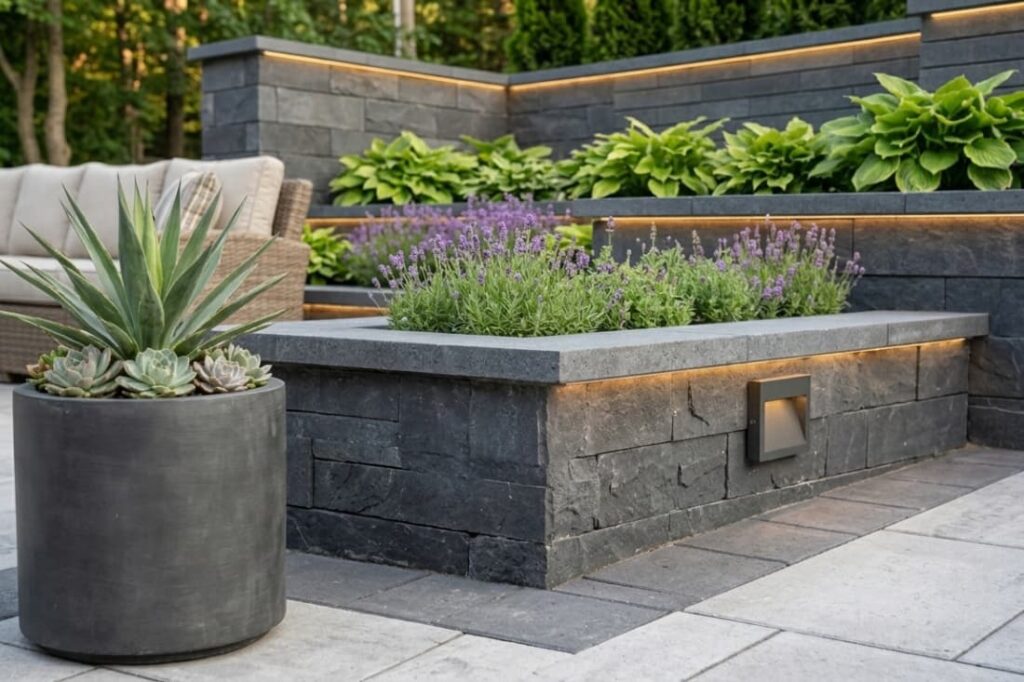
The main job of a retaining wall is to create usable, level ground. Good design makes that space far more useful. A well-placed wall doesn’t just hold back dirt; it builds the “walls” of your outdoor room. It can offer privacy, block wind, or frame a view.
A thoughtful retaining wall design helps define how people move between spaces while making each patio zone feel intentional and connected.
We’ve built walls that turn a steep, useless backyard into connected flat terraces, one for dining, another for a firepit, and a third for a quiet garden. This terracing uses every bit of a difficult lot, which is crucial for apartments and high-value homes.
- Defined Seating Areas: Low walls mark conversation spaces, with the wall top as extra seating.
- Firepit Zones: Curved or straight walls surround a firepit for safety, wind protection, and a cozy feel. Many curved retaining wall designs work especially well in these areas because they naturally encourage conversation and create a more enclosed gathering space.
- Outdoor Kitchen Support: Tall, strong walls form the back for built-in grills and counters, creating a polished kitchen.
- Raised Planting Beds: Walls create easier-to-maintain garden beds that can include trellises.
- Privacy Screens: Tall walls provide privacy from neighbors or shared spaces.
Which Retaining Wall Material Best Matches Your Patio Style?
The material is the most visible style choice. Each option has its own look and performance. Our job is to guide clients to the material that fits their design vision and the site’s structural needs. In Charlotte’s climate, we also think about how well a material holds up to freezing, thawing, and humidity.
| Material | Aesthetic Style & Feel | Ideal Patio Pairing & Project Type |
| Architectural Concrete Block Systems | Clean, modular, and versatile. Comes in many colors and textured finishes that look like natural stone or offer a smooth, modern face. | Modern & Transitional Patios. Great for commercial projects, HOA communities, and homes wanting a uniform, low-maintenance look. Pairs well with sleek concrete pavers or large porcelain tiles. |
| Natural Stone (Dry-Stack or Mortared) | Timeless, elegant, and natural. Each wall is unique, offering a rustic, resort-like, or formal look based on the stone type (limestone, granite, fieldstone). | Luxury & Estate-Style Patios. Best for high-end homes, clubhouses, or properties where a natural, blended look is key. Works with flagstone, bluestone, or tumbled paver patios. |
| Cast-in-Place Concrete (Poured & Finished) | Sleek, minimalist, and solid. Allows for custom curves and perfectly smooth faces.Can be stained, stamped, or textured. | Contemporary & Architectural Patios. The choice for bold, design-focused projects. Creates a seamless look with stained concrete patios or a strong contrast with wood or metal. |
| Gabion Walls (Stone-Filled Wire Cages) | Industrial, textured, and modern. The mix of metal mesh and natural stone creates visual interest and a sense of openness. | Urban & Modern Landscapes. Excellent for commercial properties, public spaces, or homes wanting a distinctive, low-maintenance appearance. Pairs well with decomposed granite, concrete, and metal accents. |
Should You Choose a Curved or Straight Retaining Wall?
This is a basic design choice that sets the patio’s flow and feel. The decision is rarely just about looks; it’s often guided by the existing slope, the desired patio shape, and the need to manage soil pressure well.
| Design Approach | Visual & Functional Benefits | Best Application |
| Curved or Serpentine Walls | Create natural appearance and improved visual flow. Gently guides movement. Can be structurally helpful for spreading soil pressure over a wider area. | Naturalistic Settings: Patios following a curved lot line, around freeform pools, or blending with existing mature landscapes. Great for making smaller private seating areas. |
| Straight & Geometric Walls | Gives a sense of order, crispness, and modern simplicity. Makes the most usable space within the patio area. Often easier to engineer and build for very tall walls. | Architectural & Formal Settings: Patios next to modern homes, defining rectangular zones for dining or kitchens, or creating strong lines that match the home’s shape. |
| Combined Layout (Straight with Curved Accents) | Offers the most design flexibility. Straight sections can define main spaces, while curved parts soften corners or create focal points. | Complex, Multi-Function Patios: Large projects where different zones need different moods. A straight wall might frame an outdoor kitchen, while a curved one surrounds a firepit lounge. |
Why Does Drainage Matter Behind a Beautiful Retaining Wall?
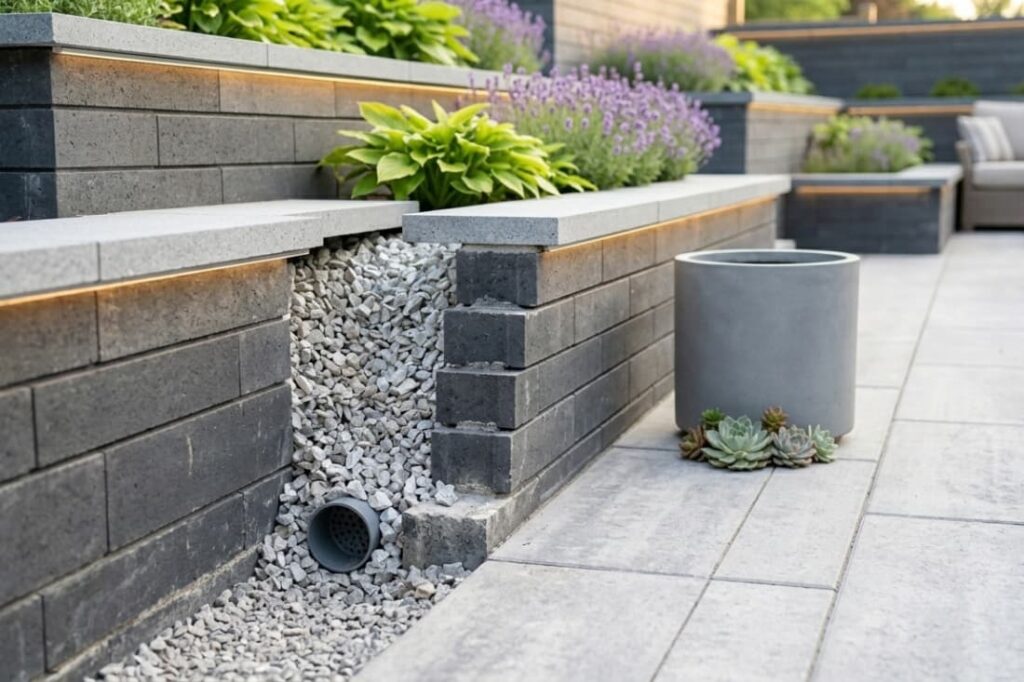
Water is the hidden destroyer of even the most properly finished walls. Pressure from trapped water can cause bulging, cracks, and total failure.
A stylish wall must be a dry wall. Our building puts hidden, high-performance drainage systems behind every wall. This includes layers of fast-draining gravel, wrapped in a filter fabric to stop clogs, and pipes with holes that carry water away from the structure.
The stylish capstone on top isn’t just for looks; it also throws water off the wall’s core. Good drainage is the essential base that lets a beautiful design last for years without ugly stains, white powder, or moving.
Mitigating severe hydrostatic pressure requires installing a multi-component subsurface drainage framework directly behind the wall facing.
The baseline infrastructure demands a continuous column of clean, open-graded angular aggregate to intercept migrating groundwater and guide it downward.
At the footing layer, a perforated PVC drain pipe collects this runoff, while a durable layer of non-woven geotextile filter fabric wraps the aggregate to prevent fine clay soils from washing in and clogging the discharge system.
How Do You Match a Retaining Wall to Your Patio Design?
Cohesion is key. The wall should feel like a natural part of the patio, not an add-on. We achieve this through a planned design process that thinks about the whole outdoor space.
We also think about color: do the wall materials go with the patio pavers? Should the wall capstone be the same material as the patio edge? These details, though small, are what contribute to a more cohesive design.
What Are Examples of Successful Design Pairings?
- Modern Unity: A smooth, charcoal-gray concrete block wall with large, light gray porcelain pavers for a seamless, single-color look. This aesthetic often pairs well with geometric retaining wall layouts that emphasize clean lines, symmetry, and contemporary outdoor architecture.
- Rustic Contrast: A warm, tumbled limestone retaining wall next to a patio of cool, blue-hued bluestone, creating texture and color interest.
- Industrial Edge: A gabion wall with dark basalt stone fill next to a patio of stained concrete and stainless-steel railings.
- Transitional Blend: A beveled-face concrete block in a sandstone color, topped with a natural flagstone cap, mixing modern materials with traditional warmth.
Why Does Professional Hardscape Planning Matter?
Credits: Designing Spaces
A stylish retaining wall is a permanent investment. Its success depends on hidden factors: soil strength, a well-packed base, pressure math, and local codes for walls over certain heights (often 4 feet here).
As an experienced contractor, we handle this from the start. Our process includes a site check, soil tests, and often working with an engineer for tall walls. We get the permits and follow HOA rules.
Insights from Texas Department of Transportation (TxDOT) indicate
“The project engineer must ensure that the retaining wall system is appropriate for its location. Check walls to ensure minimum factors of safety are met for all potential modes of failure. These include sliding, overturning, bearing pressure, and global stability. Make the global safety factor 1.5 or greater where the data obtained for the design and analysis is based primarily on strength correlations or walls that support abutment, buildings, critical utilities, or for other installations with a low tolerance for failure.” – Texas Department of Transportation (TxDOT)
This planning stops expensive callbacks and failures, making sure your beautiful wall is also safe and lasts.
What Goes Into Professional Planning?
- Geotechnical Assessment: Checking soil type and stability to see what foundation and reinforcement (like geogrid) is needed.
- Load Analysis: Accounting for the weight of the dirt, plus extra weight from the patio, furniture, or people.
- Drainage Integration: Designing a system that fits the site’s overall water plan.
- Material Logistics & Sequencing: Coordinating delivery and work on a busy job site or lived-in property.
- Final Aesthetic Detailing: Making sure every capstone, the stone pattern, and added lighting or plants matches the design.
FAQ
How does an engineered retaining asset optimize a sloped hardscape layout?
Overcoming an uneven grade requires using vertical block masses to carve functional, level structural footprints out of unusable slopes. From a builder’s perspective, setting a series of interlocking modular block tiers is the most effective way to separate high-traffic dining spaces from quiet firepit lounges.
This approach establishes a clean, modern layout while safely anchoring the variable soil volumes that push against the patio sub-base.
Which retaining wall materials are best for a modern patio?
The best material depends on the look you want and the site’s needs. Concrete blocks, Segmental Retaining Wall Blocks, natural rock, and mortared stone are popular choices.
For a modern design, some homeowners add Corten steel, Steel Planters, or a gabion wall. These Wall Systems work well with paver patios and other landscape architecture features.
How do retaining walls help solve drainage problems?
A retaining wall can help manage water runoff and protect the patio from damage. Proper drainage solutions often include a perforated drain pipe, a drainage system, and careful base compaction.
These features reduce soil movement, soil washout, and erosion control issues. They also improve soil stability and help the wall perform well for many years.
What plants work best around patio retaining walls?
Many landscape designers recommend native plants and Drought-tolerant plants because they need less water and maintenance. Cascading plants can soften the wall’s appearance, while California native plants and alpine plants add seasonal interest.
A vertical garden, concrete planters, and well-designed planting beds can improve biophilic design and make the outdoor space feel more welcoming.
What features pair well with stylish retaining walls?
Retaining walls can support several outdoor living upgrades. Popular additions include a water feature, fire bowls, Garden Lights, and paver-mounted lights. Some homeowners also install Artificial Grass, artificial turf, a Concrete pathway, or a stainless-steel cable rail.
These features improve landscape functionality and make the outdoor living area more comfortable and enjoyable.
Creating Retaining Walls That Deliver Lasting Value
A stylish retaining wall does more than define a patio. It creates usable space, improves property value, and provides the structural support needed for long-term performance. For developers, property managers, HOAs, and homeowners, the best results come from combining thoughtful design with expert engineering, code compliance, and quality construction. A well-built retaining wall should look exceptional today and perform reliably for decades.
Ready to increase usable outdoor space? Schedule a retaining wall design consultation with Lapis Patios. We deliver durable, code-compliant solutions for projects across Charlotte, NC and surrounding communities.
References
- https://secure.iowadot.gov/iowadot/erl/current/GS/content/2431.htm
- https://www.txdot.gov/content/txdotoms/us/en/manuals/brg/geo/chapter-6–retaining-walls/section-3–design-considerations/general-design.html